2026

Body Horror Books: 5 Classic and Modern Reads to Preview First

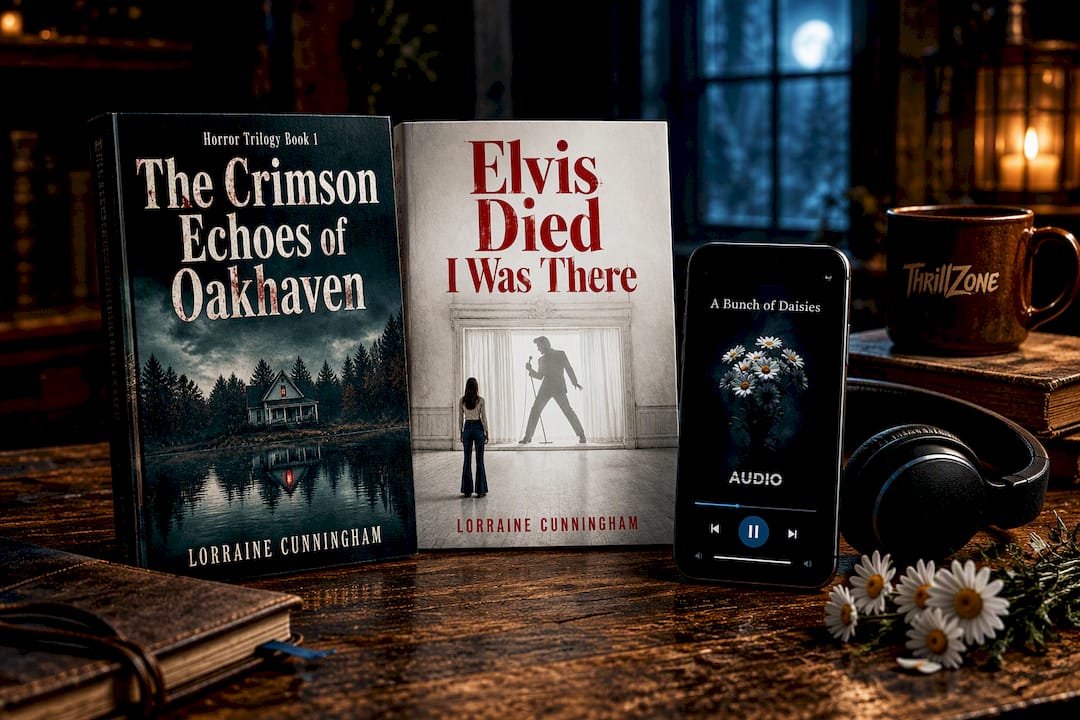
Body horror books make the body itself the source of terror, turning transformation, mutation and the loss of bodily autonomy into the engine of dread. This is a curated list of recommended titles, from literary classics to transgressive modern novels, and we include The Crimson Echoes Of Oakhaven (Book 1) from our own catalog.


TL;DR:

  • Choose The Metamorphosis or The Vegetarian for milder unease; try Annihilation, Parasite, or The Cipher for moderate intensity, and The Troop for graphic horror.
  • Check content notes for injury, medical procedures, pregnancy or childbirth horror, eating disorders, images of people harming themselves, sexual violence, and harm to children.
  • Choose Womb City or You Weren’t Meant to Be Human for themes of technology, identity, and bodily autonomy; The Troop focuses on parasitic mutation.
  • Read a preview chapter before buying, especially for The Crimson Echoes Of Oakhaven, and stop if a theme crosses your personal limit.

Thrillerhorrorsuspense
thrillerhorrorsuspense.store
Preview Before You Buy
Explore horror and suspense e-books, with exclusive chapters to sample before buying and genre categories to help you find your next read.

Browse horror e-books

Table of Contents

What is body horror, and how is it different from other horror?

Body horror is defined by the graphic, often visceral transformation, mutilation or violation of the human form, which turns the body into something alien or grotesque. According to genre analyses on Wikipedia, it commonly works as an allegory for social issues such as bodily autonomy, capitalism and technological encroachment. The fear is not what lurks outside you. It is what is happening to you, in your own flesh, while you can do nothing about it.

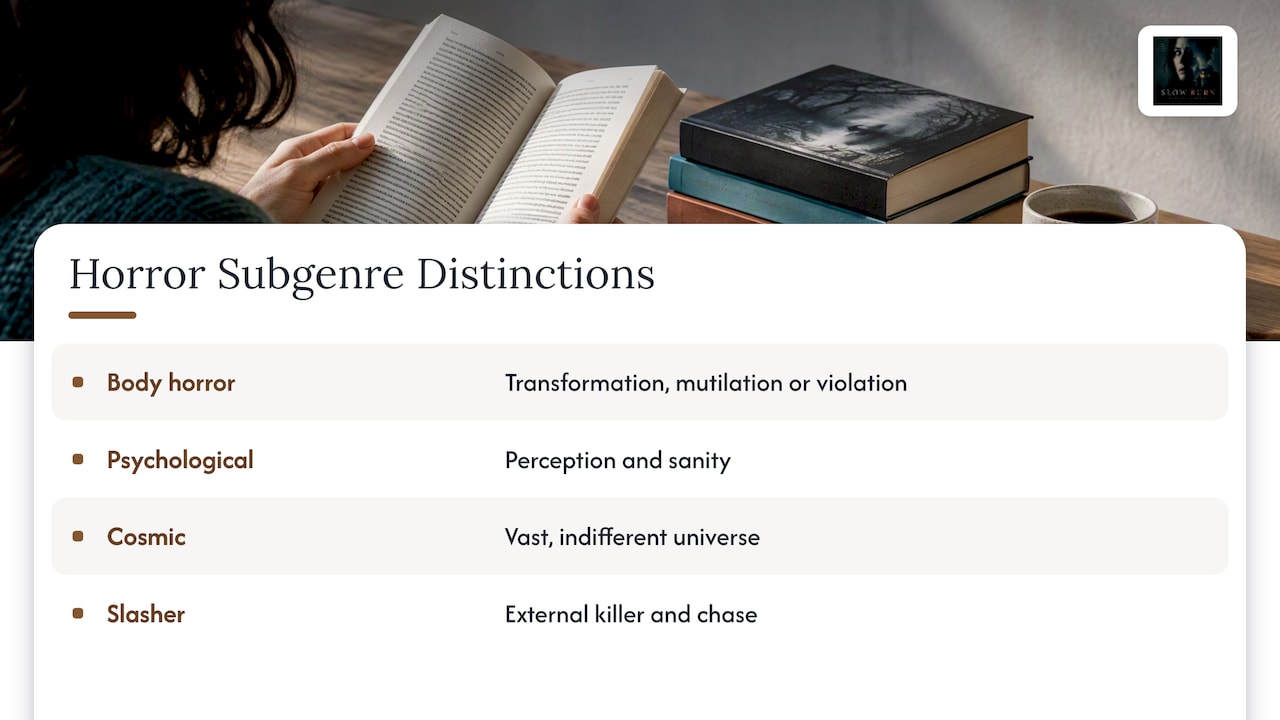
That separates it from its neighbors. Psychological horror works on perception and sanity, and the threat may never touch the body at all. Cosmic horror makes the universe too vast and indifferent for human comprehension. Slasher fiction centers on an external killer and a chase, and major outlets note that slasher traditions follow their own conventions, which shape reader expectations differently than body horror does. Plenty of great books blend these modes, but body horror keeps the flesh at the center.

Two examples help anchor the definition. Franz Kafka’s The Metamorphosis is the classic: a man wakes as an insect, and the horror lies in how his family and his own body slowly stop treating him as human. Han Kang’s The Vegetarian is the modern literary example, in which one woman’s refusal to eat meat becomes a transformation that her family, and eventually her body, cannot contain. Both show how a changed body exposes everything the people around it were trying not to see.
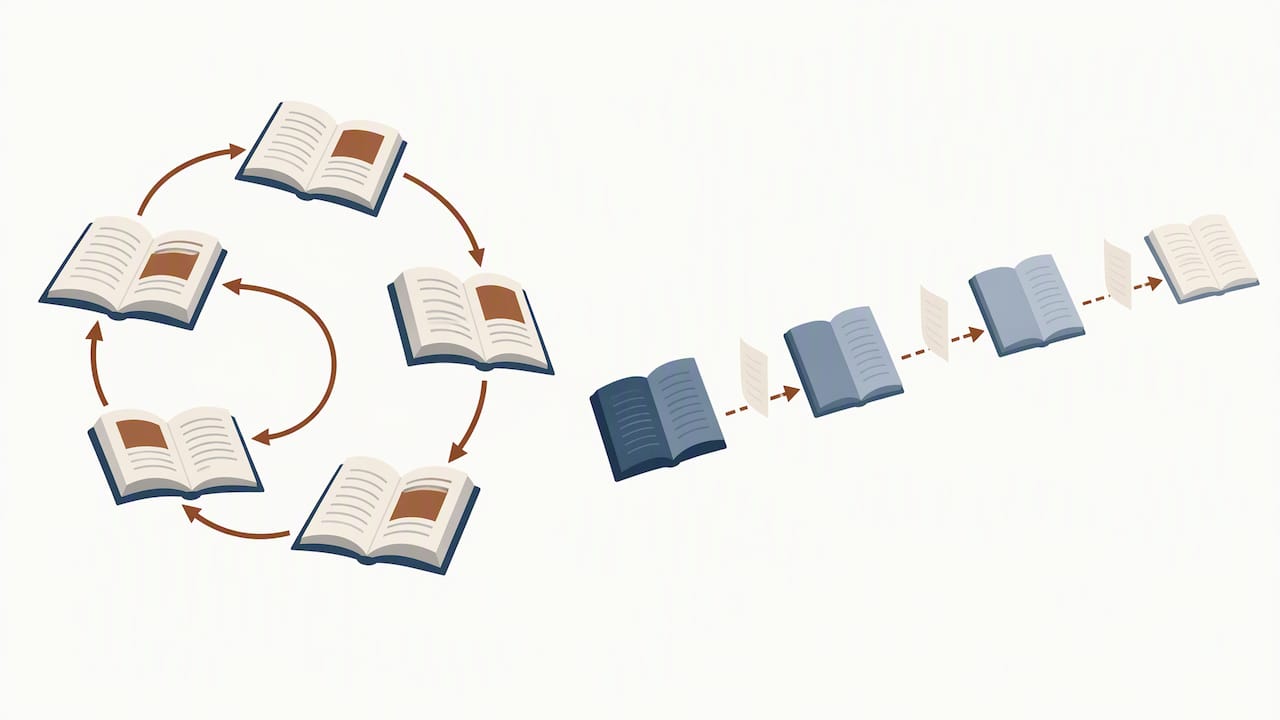
What is body horror, and how is it different from other horror? — overview diagram

What techniques and themes should you expect?

Body horror relies on a handful of recurring devices, and knowing them helps you judge intensity before you commit.

Transformation is the foundation: a body changes shape, species or substance. Invasion adds something foreign, such as a parasite, an infection or an implant. Mutation makes the change permanent and often progressive. Grotesque detail is the sensory layer, with prose that lingers on texture, fluid and smell. Underneath all four runs an escalation of dread: the protagonist’s loss of bodily control maps directly onto narrative tension, so each chapter takes a little more from them. Books built on that slow loss tend to leave a deeper mark than books built on a single shocking scene.

The themes are rarely random. Writers use the body to explore bodily autonomy, capitalism and technology, and critics note that recent entries keep pushing the genre’s boundaries. Scholarship on the female Gothic body argues that women’s bodies have long been depicted as sites of both monstrosity and power, a lens that informs a good deal of contemporary work.

Trigger warnings matter here. Common content includes graphic injury, medical procedures, pregnancy and childbirth horror, eating disorders or food aversion, self-harm imagery, sexual violence, and harm to children. If any of these are hard for you, check a book’s content notes before you start, and read the preview chapter first.

Which body horror books should you read?

Here are recommended titles, mixing classics, literary prize territory and modern transgressive work. Each entry says what the book is, why it counts as body horror and who it suits best.

  • The Metamorphosis by Franz Kafka. A short novella about a traveling salesman who wakes up transformed into a giant insect. The body horror is quiet and relentless: the physical change is established from the start, and the story follows its social and emotional consequences. Best for readers new to the subgenre who want a brief, foundational text.

  • The Vegetarian by Han Kang. A woman stops eating meat after a disturbing dream, and her family responds with escalating violence while her body changes in ways that blur human and plant. It is a widely cited modern example and appears among The Guardian’s notable body horror novels, noted for combining literary merit with disturbing content. Best for readers who prefer prize-caliber prose and allegory over gore.

  • The Troop by Nick Cutter. Five boys and a scoutmaster on a remote island meet a starving stranger carrying something parasitic. The body horror is explicit and sustained, with infection spreading through bodies and group loyalty alike. Best for readers who want visceral, high-intensity horror and can handle harm to young characters.

  • Womb City by Tlotlo Tsamaase. A near-future story of a woman bound to a surveillance-saturated society where bodies are controlled and commodified, highlighted by critics as pushing the genre’s boundaries. The body is the site of both horror and resistance. Best for readers who like speculative fiction with a political edge.

  • You Weren’t Meant to Be Human by Andrew Joseph White (2025). A recent entry the same critics point to as expanding what the subgenre can do, treating bodily transformation as a way to talk about identity and autonomy. Best for readers who want a contemporary voice and a story where the flesh is also a battleground for selfhood.

  • The Cipher by Kathe Koja. Two lovers discover a strange hole in a storage-room floor, and its influence rewrites their bodies and relationship. Named among top-tier recommendations in the research behind this list, it is a landmark of surreal, transgressive horror. Best for readers who enjoy dread that is hypnotic rather than splattery.

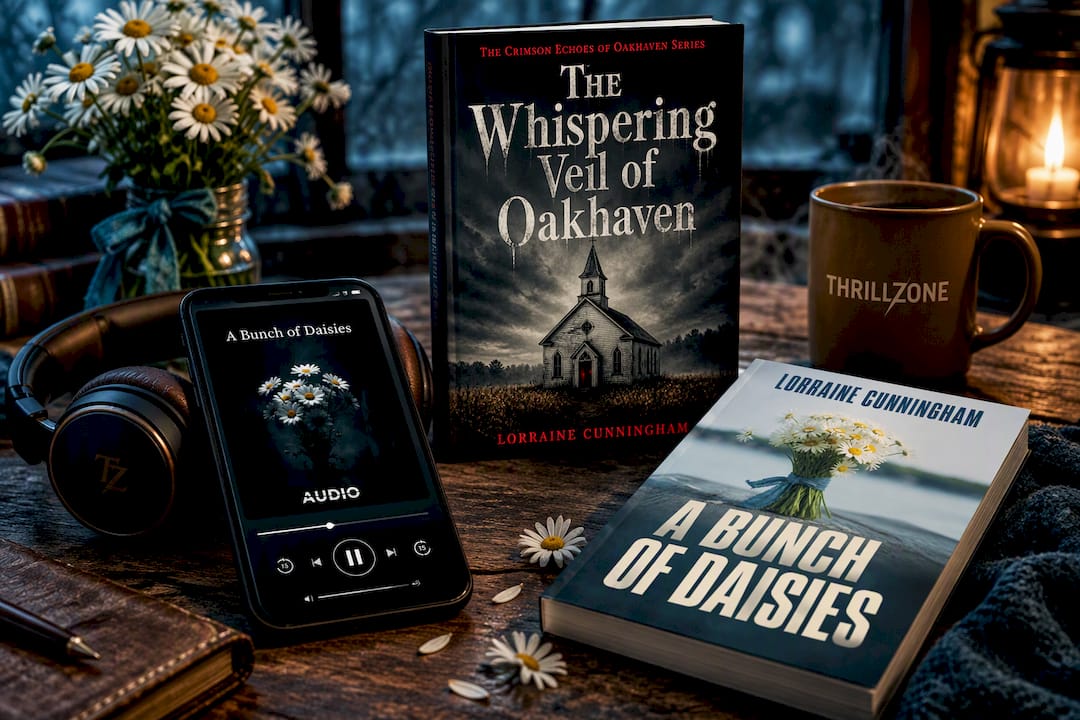
  • The Crimson Echoes Of Oakhaven (Book 1). The first book in the series we carry in our catalog, a horror e-book you can sample before buying. We list it here as part of our own selection, and its fit depends on your taste for slow-building, atmospheric dread, which is why we encourage reading the preview chapter first. Best for readers who like to try a new author with low risk. You can find it on its product page.

  • Frankenstein by Mary Shelley. The ancestor of the form: a body assembled from parts, a creator horrified by his own work. The horror lies in what flesh can be made to do and who gets to decide. Best for readers who want to see the roots of the subgenre.

  • The Fly (short story) by George Langelaan. The story behind the famous film follows a scientist whose teleportation experiment fuses him with an insect, and it shows how a few pages can carry a complete transformation arc. Best for readers who want a short, sharp, classic entry.

  • Annihilation by Jeff VanderMeer. An expedition into a zone where nature rewrites everything, including the people sent to study it. Bodies change slowly and strangely, closer to wonder than gore. Best for readers drawn to weird fiction and unsettling beauty.

  • Parasite by Mira Grant. A medical thriller premise in which engineered tapeworms live inside nearly everyone, and the question is what they want. It leans on infection and medical dread more than extreme imagery. Best for readers who like science-driven horror with a thriller pace.

  • Her Body and Other Parties by Carmen Maria Machado. A short story collection in which women’s bodies are dissected, erased and rewritten by the world around them. The horror is intimate and often feminist in its aim. Best for readers who prefer short formats and literary experimentation over a single long descent.

Prize recognition shows how far the subgenre has traveled. The Booker Prizes have run a feature on body horror books nominated for the Booker and International Booker, which shows the crossover into literary prestige.

How do you pick the right body horror book for you?

Start with your tolerance, then match theme and format.

  1. Mild tolerance: Choose narrative or psychological edge over graphic imagery. The Metamorphosis and The Vegetarian disturb through situation more than gore. The New York Times beginner guide advises starting with milder or classic works and names Shirley Jackson, Victor LaValle and T. Kingfisher as accessible entry points.
  2. Moderate tolerance: Try Annihilation, Parasite or The Cipher, where the transformation is vivid but the prose keeps you at a slight distance.
  3. Extreme tolerance: Go to The Troop, where graphic transgression is part of the design.
  4. By theme: Pick Womb City or You Weren’t Meant to Be Human for political and social allegory, The Troop for visceral mutation, and The Metamorphosis for surreal metamorphosis.
  5. By format: Choose a novella or a story collection such as Her Body and Other Parties if you want intensity in small doses, and a full novel if you want sustained dread.

Pro Tip: Always read the preview chapter before buying an e-book, and stop reading the moment a theme crosses your personal line. We offer previews so you can try a book’s voice and intensity first, and our guide to finding psychological horror by mood with preview chapters walks through the practice.

Why can you trust this list?

This list leans on public critical evidence rather than our taste alone. The Guardian’s roundup of five notable body horror novels highlights The Vegetarian as a major example, and the Booker Prizes’ coverage of nominated body horror shows the subgenre reaching literary prestige. Coverage at the University of Rochester points to recent releases such as Womb City and You Weren’t Meant to Be Human as pushing the genre forward.

For transparency: we specialize in digital horror, thriller and suspense e-books, and we let readers preview exclusive chapters before purchase. That is why this list pays so much attention to tolerance and entry points. We want you to choose with your eyes open.

How has body horror evolved in literature?

Body horror did not start with modern paperbacks. Gothic fiction was already preoccupied with flesh, and scholarship on Gothic corporeality links depictions of persecuted bodies to wider institutional and social violence. In that tradition the body works as a text on which a society writes its fears.

Gothic fiction gave the subgenre foundational images. Frankenstein made the assembled body a moral problem, and later Victorian tales of doubles, diseases and degeneration kept the flesh unstable. Kafka stripped the apparatus away. There is no laboratory in The Metamorphosis, only a body that has changed and a family that must live with it.

Later writers pushed toward explicit, transgressive treatments, while pulp and genre fiction supplied infections, parasites and mad science. In recent years, literary fiction has embraced the form, with prize committees and critics treating books like The Vegetarian as serious art. Contemporary authors now use it for questions about identity, surveillance and autonomy, which is why the subgenre keeps finding new readers.

Which authors shaped the subgenre?

A few names recur whenever critics trace the line. Mary Shelley established the creator and the created body as a horror engine. Franz Kafka showed that a single physical change, treated without explanation, can carry a whole social critique. Their influence runs through nearly everything that followed.

Among modern writers, Han Kang demonstrated that body horror can sit comfortably inside literary fiction and prize conversations. Nick Cutter proved the commercial appetite for unflinching, parasitic horror. Kathe Koja helped define the hypnotic, transgressive strain, in which bodies change under the influence of something never fully explained. Jeff VanderMeer brought a weird-fiction sensibility, where transformation is as strange and beautiful as it is frightening.

Newer voices are widening the field. Tlotlo Tsamaase and Andrew Joseph White, both singled out by critics, bring perspectives on technology, identity and bodily autonomy that earlier generations rarely centered. Carmen Maria Machado’s story collection shows how the form can be bent toward intimate, feminist ends. Together these writers show that the subgenre is less a fixed formula than a toolkit.

What symbols and motifs show up again and again?

Certain images recur because they work. Insects and parasites stand for what lives off us or inhabits us without consent, from Kafka’s insect to Cutter’s infection. Skin is the border between self and world, so tearing, shedding or replacing it signals a crisis of identity. Mouths and eating carry questions of appetite, control and refusal, which is central to The Vegetarian.

Pregnancy and wombs appear whenever a story is about being used or occupied by something else, and Tsamaase’s title puts the motif up front. Doors, holes and thresholds mark the point where something enters the body or the world, as in The Cipher. Mirrors and the moment of recognizing your changed reflection give the reader a front-row seat to the protagonist’s horror.

Medical settings are another favorite, with surgeries, tests and diagnoses showing the body treated as an object. Our guide to medical thriller books you can sample before you buy covers the thriller side of that territory. Because scholars read persecuted bodies as stand-ins for institutional violence, many of these motifs carry a second meaning: whoever controls the body in the story usually stands for someone who controls bodies in life.

Why does body horror captivate readers?

Part of the pull is psychological. Fear in a safe setting lets you rehearse your worst anxieties, and nothing is more personal than the body. Reading about a transformation you cannot stop is a controlled way to feel what it would be like to lose control, and then close the book.

Part of it is cultural. Because body horror functions as an allegory for societal trauma and bodily autonomy, readers often find their own pressures reflected in the monstrous. Novelist Heather Parry frames the genre as a vehicle for social critique rather than merely gore, and editor Natasha Qureshi observes that contemporary pressures around bodily autonomy and AI are expanding its relevance.

There is also craft. The best books use an escalation of dread, so the protagonist’s slipping control becomes the engine of the plot. Readers who finish them often describe a lingering unease, a kind of physical awareness that follows them for days. That mix of discomfort, meaning and momentum is why people keep coming back, even when they swear the last book was too much.

How does body horror differ in books and in film?

Film shows; books make you imagine. A camera can hold on a transformation and force you to look, which is why cinema leans on practical effects, makeup and shock. A page cannot do that, so prose body horror depends on voice, detail and the reader’s own mind, which is often more personal than anything on screen.

Interiority is the biggest difference. A novel can place you inside the changing body, with its sensations, its denial, and its slow understanding. The Metamorphosis works largely because we stay close to a man processing his situation, and The Vegetarian is told through the people around its protagonist, so the strangeness stays out of reach. Film struggles to match that closeness.

Pacing differs too. A movie delivers its dread in a continuous viewing, while a book lets you set it down, which can intensify the effect because the dread follows you into the rest of your day. Reader expectations also differ across media, since genre roundups note that cinema and literature develop distinct conventions. If film body horror is too graphic for you, books are often an easier way in, because you control the intensity of every image.

What societal fears does body horror reflect?

Body horror tends to track whatever a culture is anxious about, because the body is where those anxieties land. Questions of bodily autonomy, capitalism and technological encroachment show up again and again, as bodies are controlled, commodified or invaded.

Medical and reproductive control are constant subjects, from forced procedures to the sense that your own body is not entirely yours. Scholarship on the female Gothic body shows how women’s bodies have long carried these fears. Infection and contagion stories channel worries about public health and the stranger who might carry something. Technology stories, such as Tsamaase’s surveillance-heavy future, ask what happens when systems can see, track and alter us.

Identity is a growing theme as well. Recent novels use transformation to explore who gets to decide what a body is allowed to be, and the pressure of AI is giving the old fears new shapes. When you read body horror critically, ask what the change in the body stands in for. The answer is usually a fear the author could not state any other way.

Editor perspective: why does body horror resonate?

I read body horror for the same reason I flinch at it: nothing else makes the stakes so personal. A haunted house can be left, but a body cannot. That is why the best books in this list stay with me long after the plot has faded, and why they feel more relevant every year as technology and politics keep pressing on questions of who controls our flesh. My advice is simple. Sample first, read slowly, and put the book down the moment it stops feeling like a challenge and starts feeling like harm.

— lorraine

Where can you preview and buy body horror e-books?
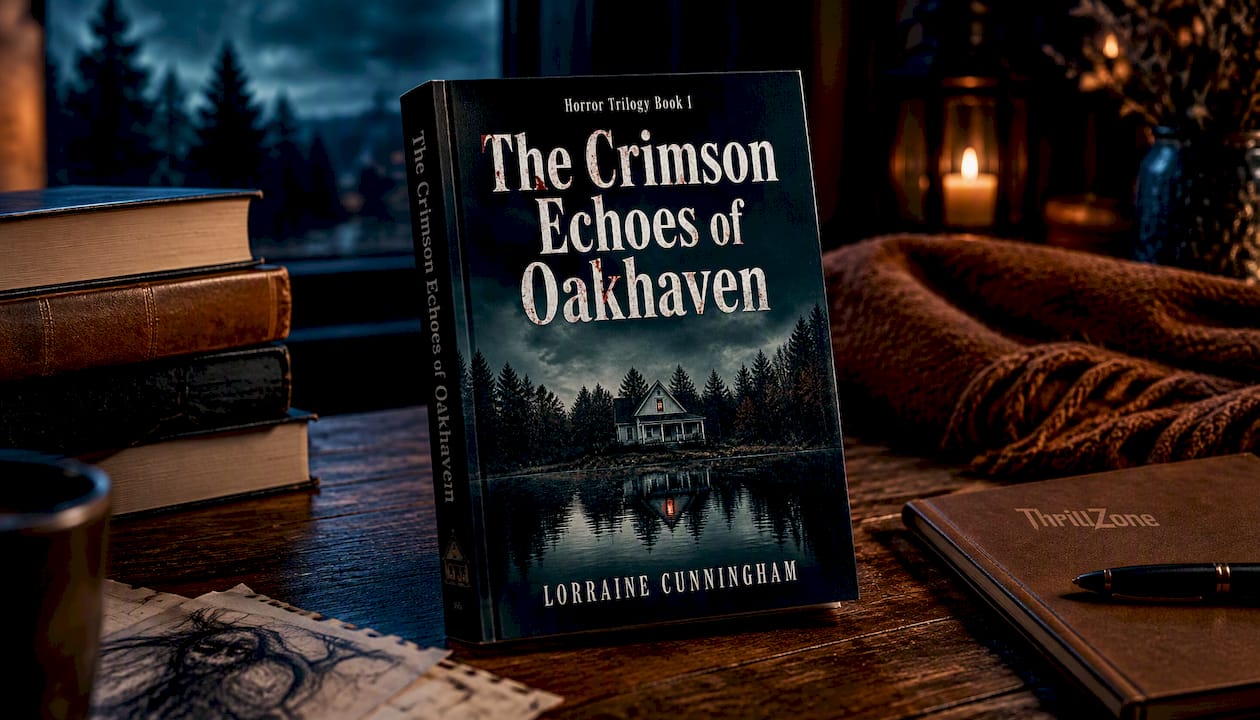
The Crimson Echoes Of Oakhaven (Book 1)

We let you read exclusive preview chapters before you buy, so you can test a book’s voice and intensity. Our featured title, The Crimson Echoes Of Oakhaven (Book 1), is part of the list above, and you can sample it today. To browse more, head to our horror collection, explore our thriller collection, or see the full range of e-books. Pick a preview, see how it feels, and buy only when you are ready.

FAQ

What are some good smutty horror books?

Body horror and erotic horror overlap, but they are not the same thing. Sexual content in this subgenre is usually transgressive rather than romantic, as in Kathe Koja’s The Cipher, where obsession and bodily change intertwine. Check content notes before reading, because the material can be intense.

What are some good books about the human body?

For fiction that puts the body at the center, try Han Kang’s The Vegetarian, Franz Kafka’s The Metamorphosis and Carmen Maria Machado’s Her Body and Other Parties. The Guardian roundup is another good starting point.

What qualifies as body horror?

Body horror features the graphic transformation, mutilation or violation of the human form, usually as a source of fear and often as an allegory for social issues such as bodily autonomy. If the body itself is the threat or the victim, the book qualifies.

What is the darkest Stephen King book?

Darkness is subjective, and readers disagree widely. For body-focused dread in King’s work, readers often point to his more visceral novels and stories, but if you want a beginner-friendly path into horror more broadly, the New York Times guide recommends starting with milder or classic authors.

Sources

Locked Room Mysteries: Three Picks, Plus Clues to Watch For

A locked-room mystery stages a crime that looks physically impossible, then promises a logical, non-supernatural answer. Born with Edgar Allan Poe and perfected in the Golden Age of detective fiction, the form rewards close reading because the author owes you a fair chance to solve it. That fairness contract is the real hook: when the solution lands, the clues were there all along.


TL;DR:

  • A closed circle in a snowbound house, island, train, or ship limits suspects to those present, shifting attention toward motive, opportunity, and relationships.
  • Fair play means the culprit appears early and the detective’s decisive clues reach readers too; solutions should rely on evidence rather than coincidence or supernatural forces.
  • Check what witnesses actually verified about doors, windows, or chimneys; repeated details, odd timings, and single witness claims often expose assumptions behind the sealed room.
  • Common explanations include a false lock, a room sealed after the death, hidden passages, mistaken timelines, remote mechanisms, or a death misread as an accident or suicide.
  • Before buying, sample a preview chapter to see whether the author’s voice and pacing suit you; the store offers digital thrillers, horror, and suspense.

Thrillerhorrorsuspense
Find Your Next Suspenseful Read
Browse digital thrillers, horror, and suspense, and sample exclusive preview chapters before choosing a book.

Browse the book collection

Table of Contents

Where did locked room mysteries come from?

The tradition is old enough to have its own scholarly arguments. Edgar Allan Poe’s “The Murders in the Rue Morgue” (1841) is widely cited as the first locked-room mystery, though Robert Adey credits Sheridan Le Fanu’s 1838 story as an earlier example. Either way, the shape was set early: a sealed space, a dead body, and a detective who refuses to accept that the impossible has happened.

The form grew through the nineteenth century and into the next. The locked-room mystery entry on Wikipedia names Gaston Leroux’s “The Mystery of the Yellow Room” and the Sherlock Holmes stories “The Speckled Band” and “The Adventure of the Empty House” among the early and influential examples. These stories taught readers to expect a puzzle presented honestly, with the apparent impossibility driving the detective toward a rational explanation rather than a ghost.

The genre peaked during the Golden Age of detective fiction, from the 1920s through the 1950s. That era hardened the conventions you will meet in the next sections, and it produced the book that a 1981 survey of 17 experts voted the best locked-room mystery of all time: John Dickson Carr’s The Hollow Man, published in the US as The Three Coffins, according to the same University of Maryland source.

The subgenre never went away. It continued through the twentieth century with writers such as Edward D. Hoch, and in the twenty-first century it keeps turning up in novels, short stories, and visual media that reuse locked-room mechanics. A quick tour of where you will find the form today:

  • Classic short fiction: Poe, Le Fanu, and the Holmes canon, where the puzzle fits into a short story.
  • Golden Age novels: Carr and his contemporaries, who built whole plots around a single impossible scene.
  • Short-story specialists: Hoch, whose tradition of compact impossible crimes suits readers who like a solution in one sitting.
  • Film and television: sealed-house and sealed-train setups that borrow the same logic.
  • Visual novels and games: interactive mysteries where you collect the clues yourself and name the culprit.

What ties these together is the promise. Whatever the medium, the impossible has a possible explanation, and the story is built so that you could, in principle, have found it first.

How does a closed circle shape the puzzle?

A closed circle is a close cousin of the locked room. Instead of sealing a space, the author seals a group. The closed circle of suspects is a literary device in which a crime occurs within an isolated group, so the culprit must be one of the people present. It is often paired with locked-room puzzles to narrow the investigative focus.

The classic settings share one feature: nobody can leave, and nobody new can arrive.

  • The country house: a snowed-in or storm-cut estate with a handful of guests and staff.
  • The island: a stretch of water that works as a wall.
  • The train: a moving corridor of compartments with a fixed passenger list.
  • The ship or yacht: a floating village with nowhere to run.

Isolation does three jobs at once. First, it shrinks the suspect pool to a number you can actually track, which is what makes solving along possible. A detective story with too many equally plausible suspects can feel like a lottery. A story with a small group and one locked door is a logic problem.

Second, it raises the stakes. If the killer is among the people at the dinner table, every conversation carries risk, and every friendly gesture might be a performance. The tension comes from proximity rather than from chases.

Third, it focuses attention inward. Because outsiders are ruled out, motive, opportunity, and relationships between the characters do the heavy lifting. You stop asking “who could have gotten in?” and start asking “which of these people could have done it, and how?”

Authors vary the recipe in useful ways:

  • Small cast: a limited number of suspects makes every character a serious candidate and every alibi worth testing.
  • Larger group: a crowd of guests allows for red herrings and hidden relationships, but demands sharper bookkeeping from the author.
  • Setting-driven mechanics: a train offers timetables and stops, an island offers tides and boats, a mansion offers servants’ passages and thick walls. The place often supplies the trick.

When a locked room sits inside a closed circle, you get a double constraint: the crime scene was sealed, and the pool of people who could have sealed it is small. That combination is why so many readers consider it the purest form of the puzzle.

What are the fair-play rules of a locked room mystery?

Golden Age writers did not just entertain readers; they argued about the terms of the game. Guidelines by Ronald Knox and S. S. Van Dine became famous. Both exist to enforce fair play, and the locked-room mystery literature treats that spirit as central to the form. The University of Maryland’s overview of the genre’s history frames the Golden Age as the period when these expectations settled in.

Stripped of the specifics, the fair-play contract comes down to a handful of promises:

  1. Every clue the detective uses is shown to the reader. The author may hide a clue in plain sight, but never behind a curtain.
  2. The solution is logical. It follows from the evidence without leaps of coincidence or sudden new facts.
  3. The culprit appears early. You should have met the guilty party before the final chapters, not discover them as a stranger.
  4. No supernatural rescue. Ghosts, curses, and unexplained powers cannot be the answer, because the whole genre depends on a rational explanation.
  5. The detective does not hide discoveries. Whatever the sleuth knows at the reveal, you had a fair shot at knowing too.

These rules are guidelines more than laws, and the best authors enjoy testing them. Agatha Christie’s The Murder of Roger Ackroyd is a classic example of an author both following and subverting the genre’s expectations while remaining technically fair: the subtle clues are discoverable on rereading. That is the standard to hold any locked-room story to. A good twist survives a second look.

Pro Tip: Watch for details the author mentions twice, odd timings that do not quite add up, and objects described with more care than the scene needs. In a fair-play puzzle, strange precision is usually a clue.

Repeated details, timing, and a precise object

A useful reading habit is to pause when the detective announces that the room was sealed. Ask what exactly was checked: the door, the window, the chimney, the floor? Authors tend to be careful about what the witnesses verified and vague about what they assumed. The gap between those two is often where the solution lives.

How do authors make an impossible crime possible?

Behind every sealed room is a mechanism, and the mechanisms fall into recognizable families. Knowing them will not spoil a good book; it will make you a sharper reader and make the author’s craft easier to admire. Here are the main categories, each with a cue to watch for:

  • Not actually locked: the door appears secured but was tricked, such as a bolt manipulated from outside or a lock that never fully engaged. Cue: unusually detailed descriptions of hardware, or a witness who “heard” a key rather than saw one.
  • Locked after the fact: the room was open when the crime happened and sealed later, often by someone who “discovered” the body. Cue: the person who breaks in controls the story of what they found.
  • Hidden entrances or panels: a secret passage, a sliding wall, or a flaw in the architecture. Cue: a house with a history, odd measurements, or an unexplained gap between rooms.
  • Timeline tricks: the victim died earlier or later than everyone believes, so the apparent alibi collapses. Cue: clocks, deliveries, and “last seen alive” statements that rest on one witness.
  • Mechanism from outside: strings, melting ice, or a device that acts at a distance, so the killer was elsewhere when the death occurred. Cue: a stray object, an unexplained puddle, or a wire that nobody mentions until late.
  • Disguised suicide or accident: the crime looks like self-harm, which explains the sealed room because no killer was ever required. Cue: a death scene that is tidy in the wrong places.
  • Misreported evidence or witness error: someone saw what they expected to see, or lied. Cue: a key fact resting on a single person’s word.

Fair authors plant these clues in the scene description itself. The trick is to read the setup as a puzzle rather than as atmosphere. If a narrator lingers on a window latch, a rug pulled out of place, or a cup of tea going cold, ask what job that detail does. Good puzzle writers rarely include a detail that does nothing.

Mechanisms also depend on the era. A Golden Age author can rely on heavy bolts, servants who sleep through noise, and rooms that really can be sealed. A modern author has to work around phones, cameras, and forensic science, which has pushed writers toward fresh twists. Some build digital or virtual locked rooms, such as a system that logs every entry yet still records a crime. Others engineer alibis so that a person is verifiably elsewhere while their actions reach the scene by other means.

The pleasure of the form is the same across all of these. You are given an impossibility and a fair set of facts, and the answer is a way of seeing the facts differently. When it works, you do not feel cheated. You feel like you should have gotten there first.

Start with the foundations, then branch out to newer work and to our own catalog. If you want a quick guide to the genre, the Chicago Public Library’s list of locked room mysteries for amateur sleuths is a good example of the kind of reading list curious sleuths use to find their next book.

Classics that define the genre

  • “The Murders in the Rue Morgue” by Edgar Allan Poe: the story most often credited as the first of its kind, and still a model of the sealed-room setup.
  • “The Mystery of the Yellow Room” by Gaston Leroux: an early, influential novel built around a chamber no one could have entered or left.
  • “The Speckled Band” and “The Adventure of the Empty House”: two Sherlock Holmes cases that show how the form works at short length.
  • “The Hollow Man” (published in the US as “The Three Coffins”) by John Dickson Carr: the book experts voted the best locked-room mystery in that 1981 survey.
  • “The Murder of Roger Ackroyd” by Agatha Christie: a masterclass in fair play and in how far an author can stretch it.

Contemporary and cross-media picks

  • Edward D. Hoch’s short stories: compact impossible crimes that suit a single sitting.
  • Visual novels and mystery games: interactive puzzles where you gather the evidence yourself and commit to an answer.
  • Recent novels and films: many borrow sealed-house and sealed-train setups, so look for any story that traps its characters and asks how.

From our catalog

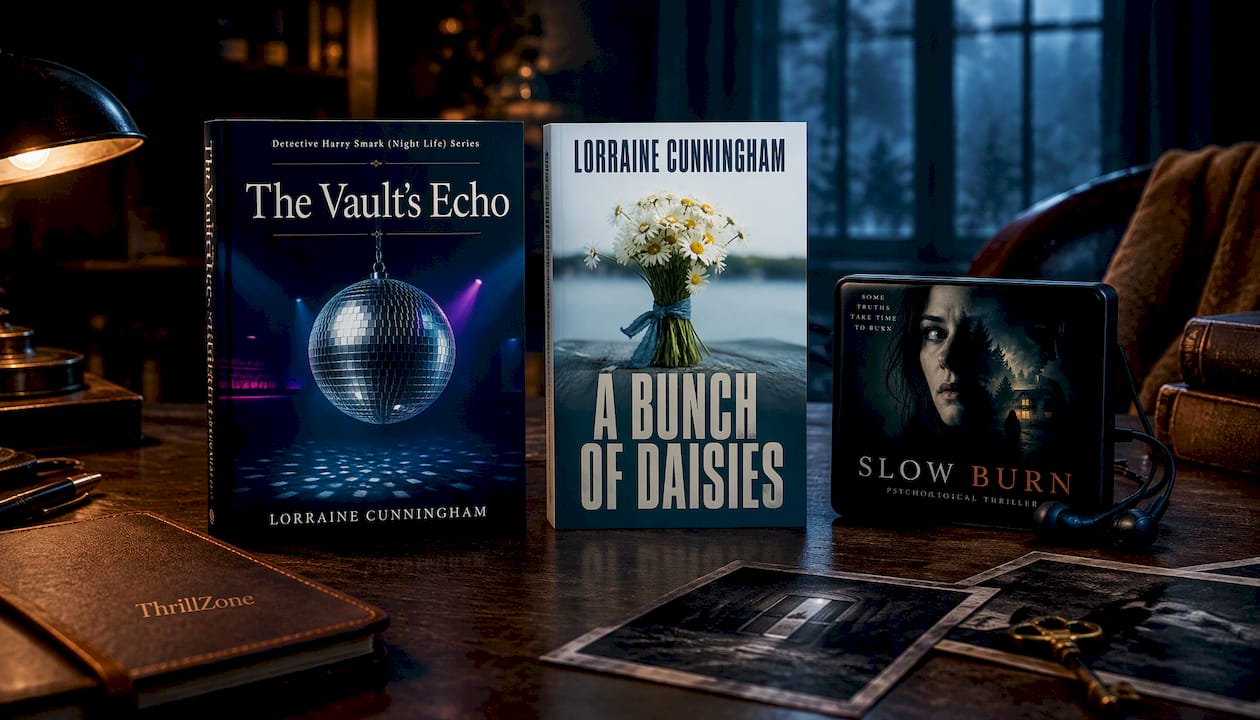
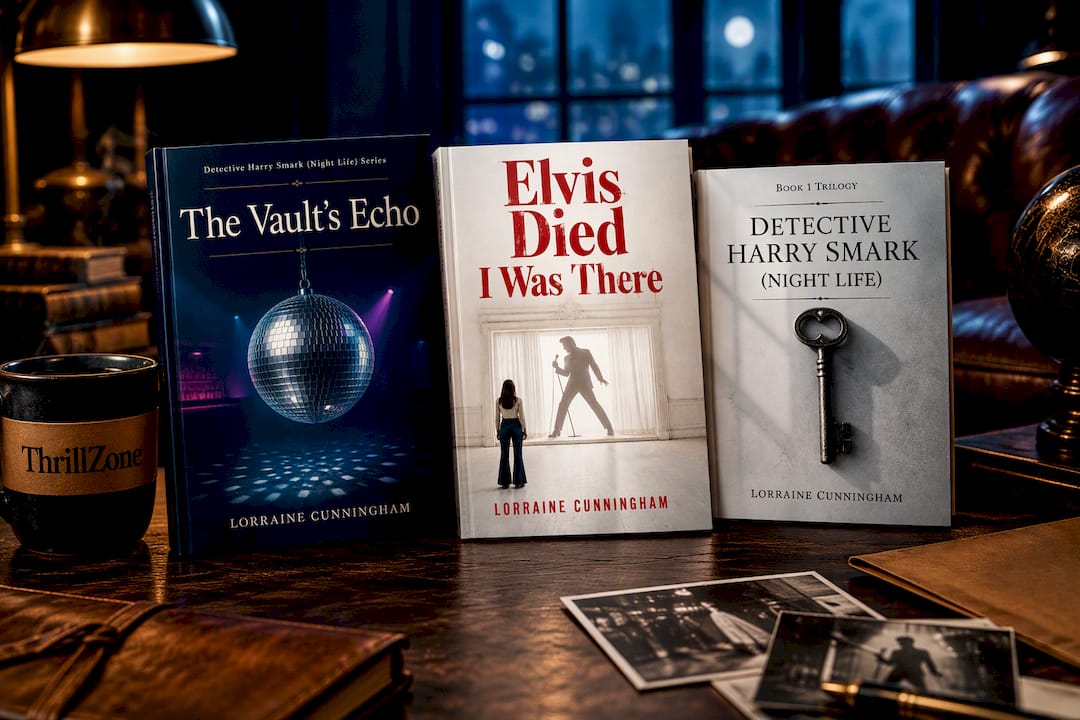
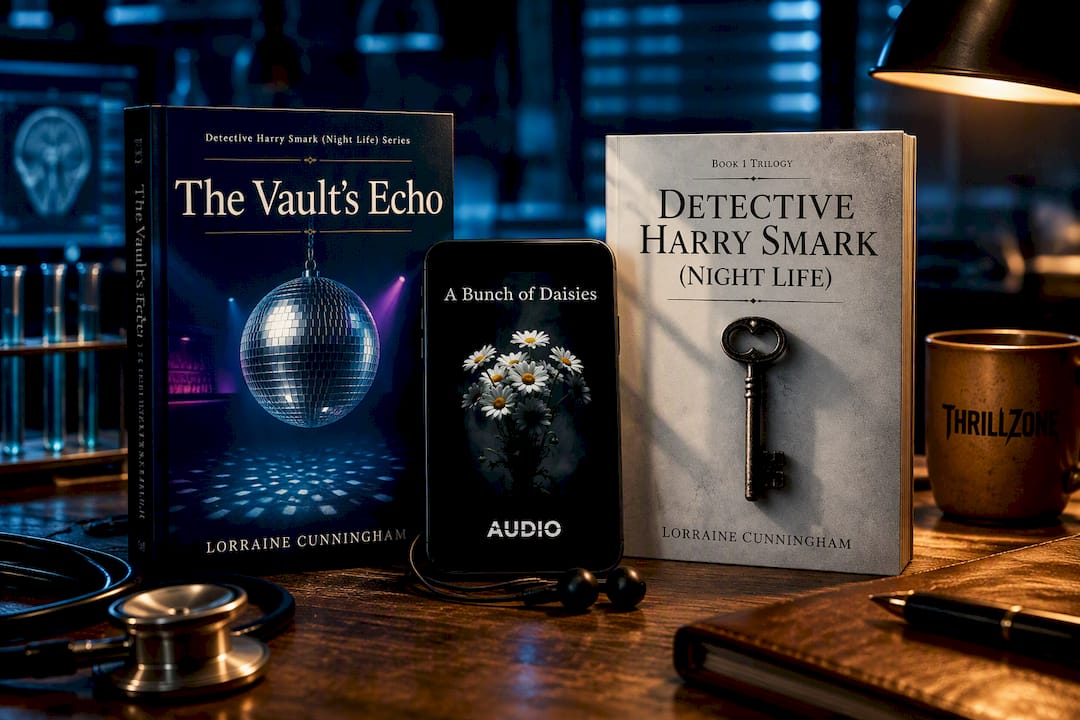
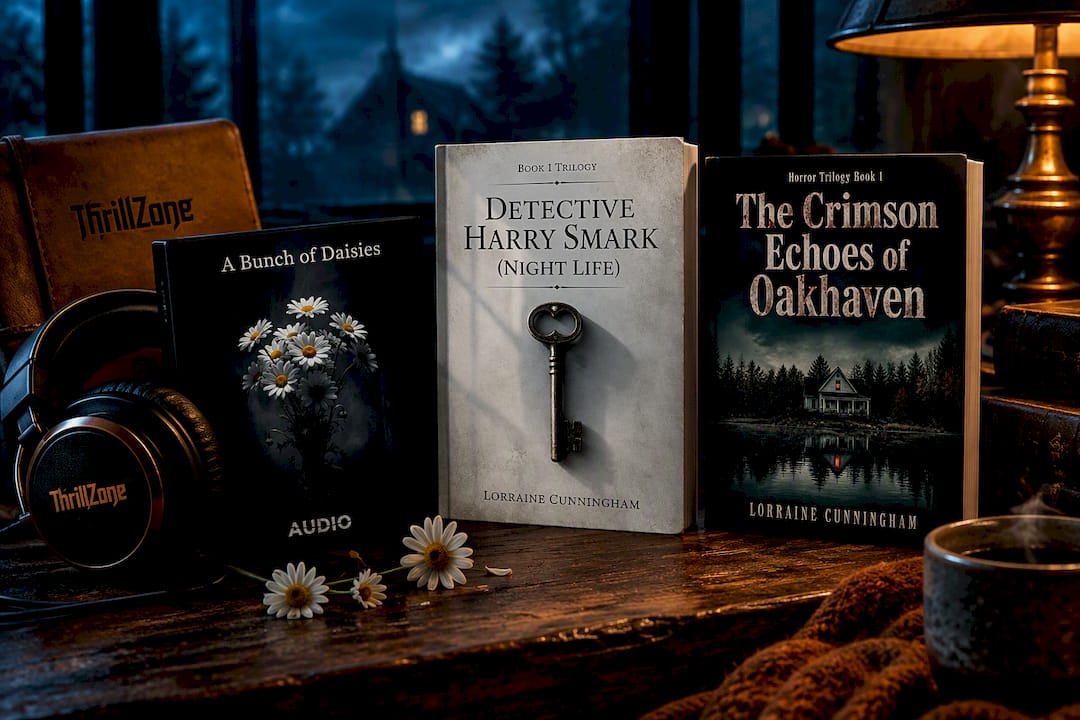
  • Detective Harry Smark (The Vault’s Echo Book 2): a detective thriller for readers who like to follow a sleuth through a case where the facts refuse to line up, which is exactly the itch locked-room fans want scratched.
  • A BUNCH OF DAISIES: an e-book for readers who enjoy suspense that rewards attention to small details.
  • A Bunch Of Daisies Audio: the audio edition, a good fit if you prefer to take your suspense in your headphones on a commute or a walk.

Before you buy, you can sample titles with a preview chapter. Our post on preview chapters for domestic thrillers shows how sampling works, and if you like your puzzles short, our thriller novella picks are built for finishing in one sitting.

Why we curate locked room mysteries

I keep coming back to this form for a simple reason: it respects the reader. A good locked-room story does not ask you to trust the author blindly. It lays everything on the table and dares you to see it. The best ones leave a small, pleasant sting when the answer arrives, the feeling of having looked straight at the solution without noticing.

What makes a title satisfying, to my eye, is balance. The impossibility has to be genuinely puzzling, the clues have to be genuinely fair, and the solution has to be simple enough to feel inevitable once it is spoken. A trick that needs a diagram and a footnote tends to impress less than one that fits in a sentence.

That is also why we lean on preview chapters. Suspense is a matter of taste, and a first chapter tells you quickly whether an author’s voice and pacing suit you. Sampling before you buy means you spend your time on books that actually hook you, and it gives newer authors a fair hearing.

Browse our thriller shelves, pick a title that sounds like your kind of puzzle, and read the opening pages. If the sealed door at the start makes you lean closer, you have found your next book.

— lorraine

Where can you sample and buy these titles?

Detective Harry Smark (The Vault's Echo Book 2)

You can sample titles with a preview chapter before buying. Read a preview chapter and decide whether the mystery has you before you spend anything. Buying and downloading is a short, simple process, and our whole store is built around digital thriller, horror, and suspense reading.

[CTA_IMAGE_PLACEHOLDER]

Ready to start? Here are your next steps:

Pick one, read the preview chapter, and see whether the door stays shut.

FAQ

What is the most famous locked room mystery?

Edgar Allan Poe’s “The Murders in the Rue Morgue” (1841) is widely cited as the first and remains the best-known. In a 1981 survey of 17 experts, John Dickson Carr’s The Hollow Man (published in the US as The Three Coffins) was voted the best, according to the University of Maryland.

What is the most controversial Agatha Christie book?

Many readers point to The Murder of Roger Ackroyd. It is often discussed because it bends the genre’s expectations while staying technically fair, with subtle clues that can be found on rereading.

How do you solve a locked room mystery?

Treat the scene description as evidence. Note what the witnesses actually verified versus what they assumed, watch for repeated details and odd timings, and run through the usual solution families: a trick lock, a hidden entrance, a timeline error, or a mechanism worked from outside.

Which John Dickson Carr novel is considered the best?

The Hollow Man, published in the US as The Three Coffins. A 1981 expert survey rated it the best locked-room mystery of all time, as reported by the University of Maryland.

Sources

Splatterpunk eBooks: Look Beyond Big Stores, Sample a Chapter

The fastest places to find splatterpunk eBooks are curated indie horror stores, creator-direct marketplaces, and library e-lending apps, in that order. Before you buy anything, sample a preview chapter: it is the single best way to judge whether the gore level and voice match what you want. Our recommended path is simple: check indie stores first, then creator platforms, then library loans, sampling previews at every stop.


TL;DR:

  • Search curated indie horror stores first for new releases; check author storefronts next for DRM free editions or exclusive chapters mainstream retailers may miss.
  • Library apps such as Libby and OverDrive offer no cost borrowing, but availability depends on local licenses; free downloads elsewhere should match official promotions.
  • Follow small press catalogs, publisher newsletters, and Splatterpunk Awards shortlists; anthology contents can introduce unfamiliar authors before you commit to a collection.
  • Favor titles where graphic violence serves a distinct voice and thematic thread; gore used only for shock can signal weaker craft.

Thrillerhorrorsuspense
Preview Your Next Horror Read
Explore digital horror, thriller, and suspense e-books, with exclusive chapters to sample before deciding what to read.

Browse the e-books

Table of Contents

Where to buy or download splatterpunk eBooks

Curated indie stores built around extreme horror tend to carry the newest splatterpunk releases before mainstream retailers catch on. These storefronts group titles by intensity and theme rather than burying them in a generic horror category, which makes browsing far more useful when you already know you want transgressive, no-limits fiction.

Creator-direct marketplaces are the second channel worth checking. Many splatterpunk authors sell eBooks straight from their own sites or small-press storefronts, sometimes DRM-free, often with exclusive chapters or bonus content you will not find anywhere else. Buying this way also puts more of your money directly toward the writer.

Mainstream retailers stock plenty of horror, but their splatterpunk coverage has gaps. Algorithm-driven storefronts tend to surface the same handful of well-known names while independent and small-press splatterpunk gets lost in a sea of generic horror tags.

Libraries round out the list. Many library systems carry extreme horror titles in their digital catalogs, searchable under tags like “horror, extreme” or “splatterpunk” once you know to look for them.

  • Search curated indie horror storefronts first for the newest and most specialized titles.
  • Check creator-direct marketplaces for DRM-free copies and author-exclusive content.
  • Use mainstream retailers as a backup for well-known, widely distributed titles.
  • Search your library’s digital catalog using extreme horror or splatterpunk tags.

Pro Tip: Search your library catalog and any store’s search bar using both “splatterpunk” and “extreme horror” since cataloging varies widely between platforms.

How do you find free or legally discounted splatterpunk eBooks?

Free splatterpunk eBooks exist, but they are almost always tied to a limited window rather than a permanent giveaway. Indie stores occasionally run free book weeks or short promotional giveaways to introduce readers to new authors, and these are worth watching if you are building a reading list on a budget.

Library e-lending apps such as OverDrive and Libby let you borrow extreme horror titles the same way you would borrow a mainstream novel, with no purchase required. Availability depends on what your local library system has licensed, so it is worth checking back periodically if a specific title is not yet in the catalog.

Author and publisher newsletters sometimes include limited-time free downloads or early access to new releases, and community-curated free lists can point you toward legitimate offers. Vet any list carefully though: a free copy of a well-known splatterpunk novel is rare outside of official promotions, and permanently “free” uploads of major titles are usually unauthorized.

  • Watch for limited-time free book weeks on curated indie storefronts.
  • Borrow extreme horror titles through library apps like OverDrive or Libby.
  • Subscribe to author or small-press newsletters for early access and giveaways.
  • Treat community “free ebook” lists with caution and confirm legitimacy before downloading.

How do you discover indie authors and small presses in the genre?

Indie and small-press splatterpunk rarely gets algorithmic promotion, so finding it takes a bit of intentional searching. The good news is that the genre leaves clear signals once you know what to look for.

  1. Look for themed drops, staff picks, and anthologies explicitly tagged “extreme” on indie storefronts, since these curated sections surface specialized work that generic horror categories bury.
  2. Follow individual author pages and small-press catalogs directly, since many splatterpunk writers announce new releases there before anywhere else.
  3. Pay attention to the Splatterpunk Awards, known informally as the Bernies, which KillerCon organizers established in 2018 to recognize novels, novellas, anthologies, and collections in the genre.
  4. Subscribe to publisher newsletters and set alerts on your favorite indie storefronts so new releases land in your inbox automatically.
  5. Sample anthology tables of contents before buying a collection, since this is often the fastest way to discover several new authors at once.

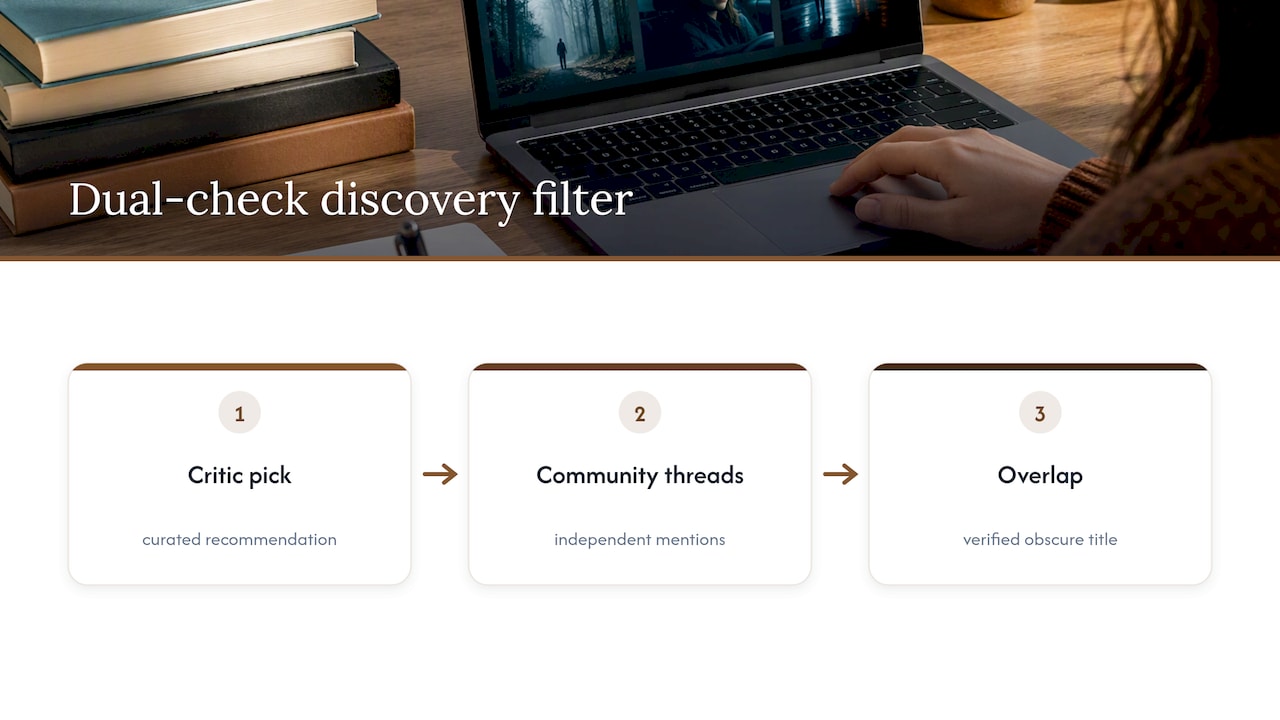
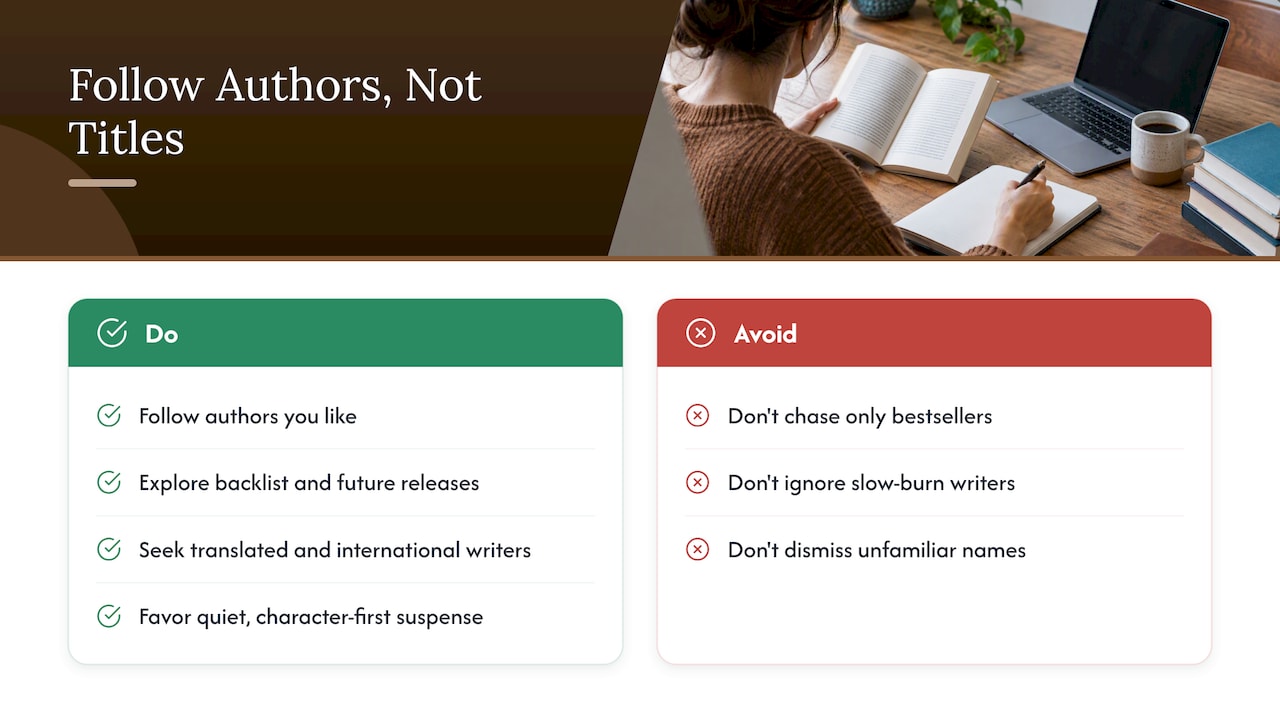
These habits compound over time. A reader who follows small presses and checks award shortlists once a year will end up with a far deeper reading list than someone relying on bestseller charts alone.

A starter showcase: titles worth previewing

If you want somewhere concrete to start sampling, our storefront features three titles built around the preview-first habit described above.

The eBook titles offer preview chapters so you can gauge intensity and voice before committing to the full purchase.

For orientation on the genre’s roots, some names come up constantly: Clive Barker, whose Books of Blood helped define the style in the mid-1980s, and Jack Ketchum, often cited alongside him as a foundational voice. These are useful reference points, not a shopping list.

Pro Tip: Read the preview chapter before checking the price. If the voice and intensity grab you in the sample, the purchase decision takes care of itself.

What is splatterpunk, exactly?

Splatterpunk is a movement within horror fiction that emerged in the 1980s, defined by graphic depictions of violence and a countercultural, no-limits attitude toward storytelling. The term was coined in 1986 by David J. Schow, partly as a semi-ironic response to the cyberpunk label, and it has been recognized in Random House’s Webster’s Unabridged Dictionary since 1996.

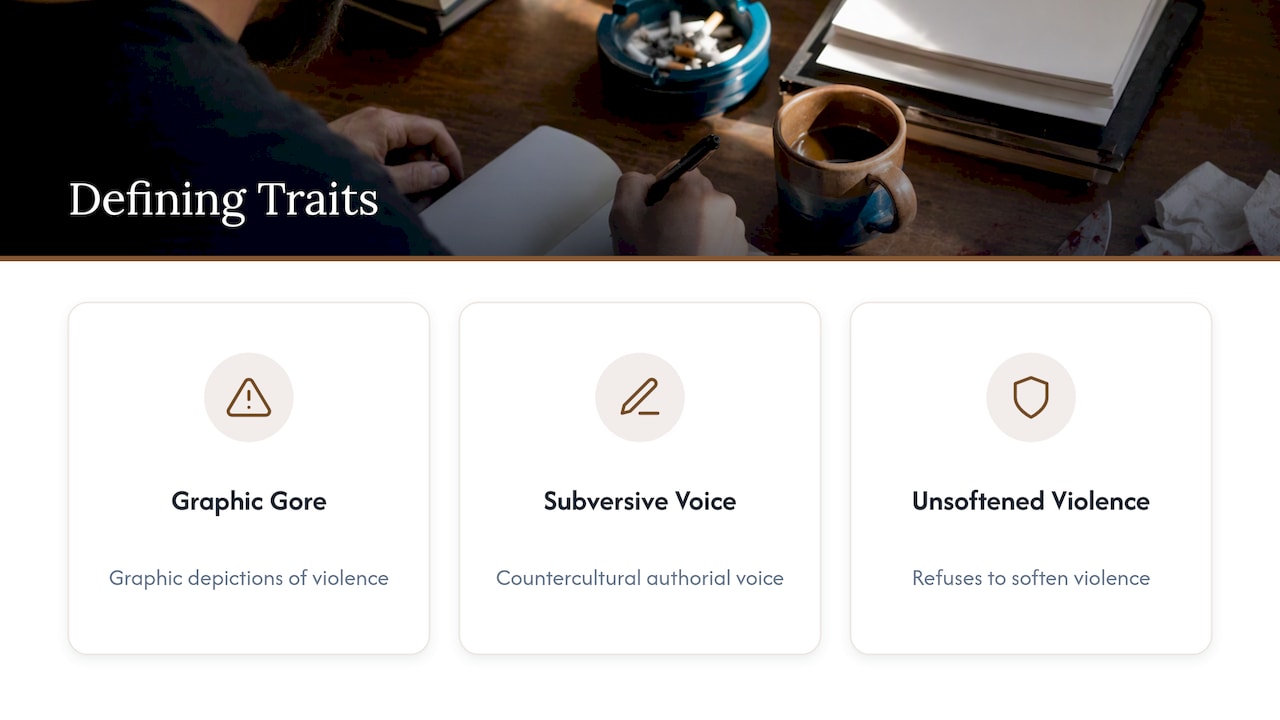
The style emerged as a deliberate reaction against suggestive, restrained horror, embracing hyperintensive content specifically to break predictable genre conventions. Key traits include graphic gore, a subversive or countercultural narrative voice, and a refusal to soften violence for the reader’s comfort.

Three visual anchors for splatterpunk's defining traits

Over time, the label has broadened into a catch-all often used interchangeably with “extreme horror.” Purists argue that original splatterpunk is defined less by gore volume and more by a ferocious, subversive authorial voice, a distinction John Skipp has drawn by describing the movement as a spontaneous eruption of artistic voices rather than a fixed checklist of content.

How do you tell a quality splatterpunk eBook from generic gore?

Writing style is the clearest signal. A strong splatterpunk eBook pairs graphic content with a distinct, confident narrative voice rather than relying on shock value alone to carry the story. If the gore feels like the only thing happening on the page, that is usually a sign of weaker craft.

Thematic depth matters just as much. The best entries in the genre use violence to say something about power, the body, or social decay rather than treating it as decoration. Look for a clear thematic thread running through the plot, not just escalating set pieces.

Publication credibility rounds out the picture. Small presses with a track record, author pages with consistent output, and titles that show up in curated indie stores or on award shortlists tend to signal a more serious commitment to the genre than a one-off self-published file with no other context. A preview chapter lets you check all three of these before you spend a dollar.

Getting the best reading experience across devices

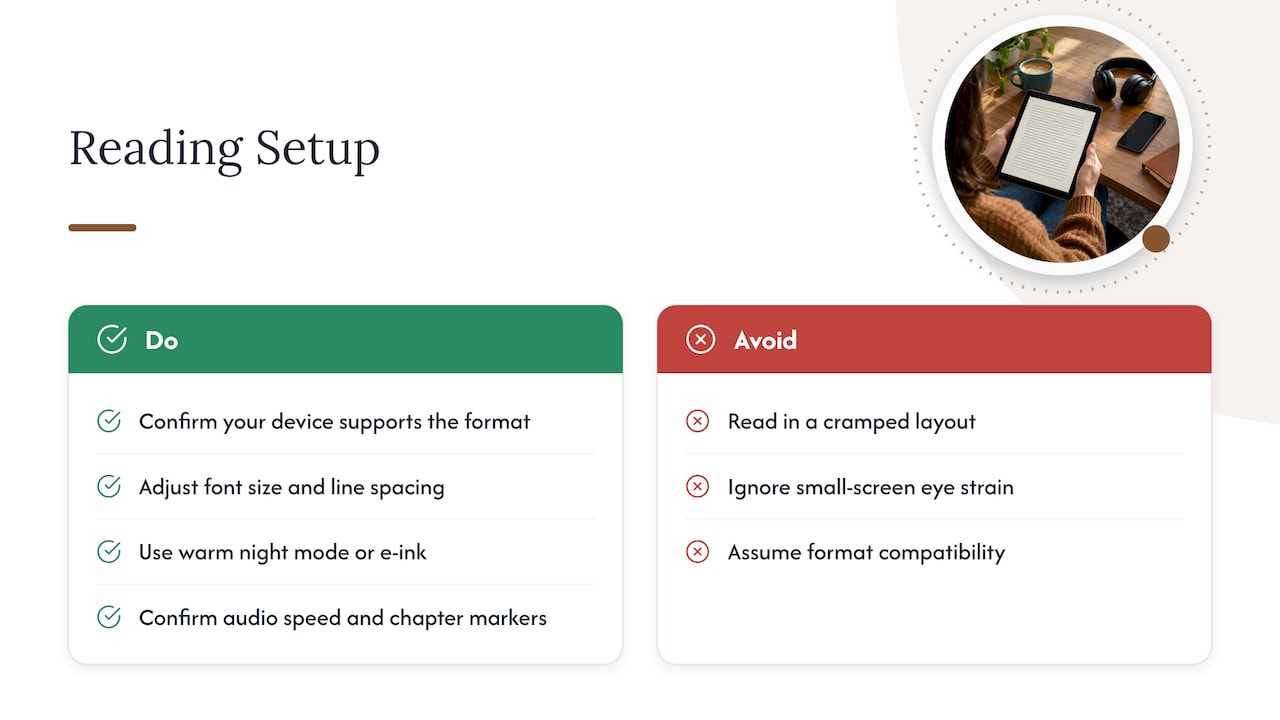
Most splatterpunk eBooks come as standard EPUB or MOBI files, which read well on dedicated e-readers, tablets, and phone apps alike. Before buying, check which format a store offers and confirm your device or app supports it: EPUB works broadly across apps like Apple Books and Google Play Books, while some dedicated e-readers prefer their own native format.

Adjusting font size and line spacing matters more for splatterpunk than for lighter genres, since dense, intense prose can feel exhausting to read in a cramped layout. Most reading apps let you control this, so take a minute to set it up before diving into a long session.

If you are reading on a phone, consider your lighting setup too. Extreme horror often works best read in dim conditions, but eye strain builds fast on a small screen, so a warm-toned night mode or a dedicated e-reader with an e-ink display can make longer sessions far more comfortable.

For audio titles, confirm your app supports variable playback speed and chapter markers, since being able to jump back to a scene you want to revisit matters more in dense, voice-driven audio horror than in typical audiobooks.

Getting the best reading experience across devices — overview diagram

Why previews change how you choose extreme horror

Splatterpunk asks a lot of its readers, and a cover description rarely tells you whether the voice inside will land. Previewing a chapter before buying settles that question fast, which is why we treat it as the most useful habit in this entire guide, more useful than any star rating or review.

Curated indie stores and creator-direct marketplaces also matter more than people assume. They surface the risk-taking, voice-driven writing that mainstream retailers tend to overlook entirely.

— lorraine

We built our storefront around one idea: you should never have to guess whether a book’s intensity or voice will work for you before you pay for it. Every featured title offers a preview chapter upfront, which is the same habit this entire guide recommends.

The Crimson Echoes Of Oakhaven (Book 1)

Our current lineup includes titles worth sampling first:

Browse the full E-BOOKS catalog, or head straight to our Thriller and Horror collections, sample a preview chapter, and buy the one that grabs you.

FAQ

What is the most famous splatterpunk book?

Clive Barker’s Books of Blood is one of the most frequently cited works associated with the movement’s early years, alongside S.P. Somtow’s “Vampire Junction.” There is no single universally agreed “most famous” title, since the genre spans several decades and authors.

What books are considered splatterpunk?

Books considered splatterpunk typically combine graphic, visceral violence with a countercultural, subversive narrative voice rather than gore for its own sake. Works by Clive Barker, John Skipp, Craig Spector, David J. Schow, Edward Lee, Jack Ketchum, and Brian Keene are commonly cited as central to the category.

What is the point of splatterpunk books?

Splatterpunk emerged as a deliberate reaction against restrained, suggestive horror, using hyperintensive, graphic content to break predictable genre conventions rather than simply shock readers. The intent behind the style is as much about subverting expectations as it is about depicting violence.

Who publishes splatterpunk books?

Splatterpunk titles come from a mix of small presses, independent authors selling direct, and curated indie horror storefronts that specialize in extreme content. Mainstream publishers release some splatterpunk-adjacent work, but the genre’s newest and most transgressive titles tend to surface through indie and creator-direct channels first.

Where can I find splatterpunk ebooks to preview before buying?

Curated indie horror storefronts and creator-direct marketplaces are the most reliable places to find splatterpunk eBooks with preview chapters available. Our own storefront offers preview chapters on featured titles including The Crimson Echoes Of Oakhaven and ELVIS DIED I WAS THERE, so you can sample the voice before you commit to a purchase.

Sources

Once a couple of titles have clicked, a short reading list beats random browsing. Start with a longer novel, a short story collection, and an audio title to get a feel for how the genre works across formats.

Anthologies are a particularly efficient entry point since a single collection can introduce you to several authors at once. Browsing short story collections built for one-sitting reads is a practical way to sample multiple voices before committing to a full novel from any one of them.

If you prefer shorter, punchier reads over a novel-length commitment, a list of one-sitting horror novellas offers another low-risk way to build momentum. And if you want to diversify the voices in your list beyond the handful of names that dominate most “best of” roundups, a curated list of Black horror authors with preview chapters is worth a look.

The goal is not to read everything at once. A handful of titles sampled carefully, previews included, will teach you more about your own taste than random downloads ever could.

Unreliable Narrator Books: Sample Chapters, Fewer Spoilers

An unreliable narrator is a storyteller whose version of events the text itself undercuts, a device Wayne C. Booth named and that the Oregon State guide to literary terms explains as requiring readers to read past bias to find the real story. Below, we group the best unreliable narrator books by mood and genre, map the main types of unreliability, and flag which titles are safe to research and which depend on a late twist.


TL;DR:

  • Research The Remains of the Day and House of Leaves freely; avoid spoilers for Gone Girl, We Were Liars, Shutter Island, and Fight Club.
  • Self deception and trauma tend to invite introspective rereading, while deliberate lies and limited cognition drive faster, plot focused thrillers.
  • For a short, intense read, Poe’s story takes under thirty minutes; Pale Fire and The Sound and the Fury reward slower, repeated reading.
  • Sample the first chapter before buying a book that depends on a late twist, since its voice can signal concealed instability without revealing the turn.

Thrillerhorrorsuspense
Explore Thrillers With a Sample Chapter
Browse digital horror, thriller, and suspense books, with exclusive chapters to preview before you buy.

Table of Contents

1. Curated picks across psychological thrillers and literary fiction

Psychological thrillers lean hardest on unreliable narration because doubt drives suspense. Gone Girl by Gillian Flynn splits the story between two narrators whose competing versions of a marriage both bend the truth, and it is widely regarded as a key work exemplifying dueling unreliability. The Girl on the Train by Paula Hawkins uses a narrator whose drinking clouds her memory, a case of limited cognition rather than deliberate deceit. We Need to Talk About Kevin by Lionel Shriver filters a mass shooting through a mother’s letters, where grief and guilt distort what she chooses to reveal.

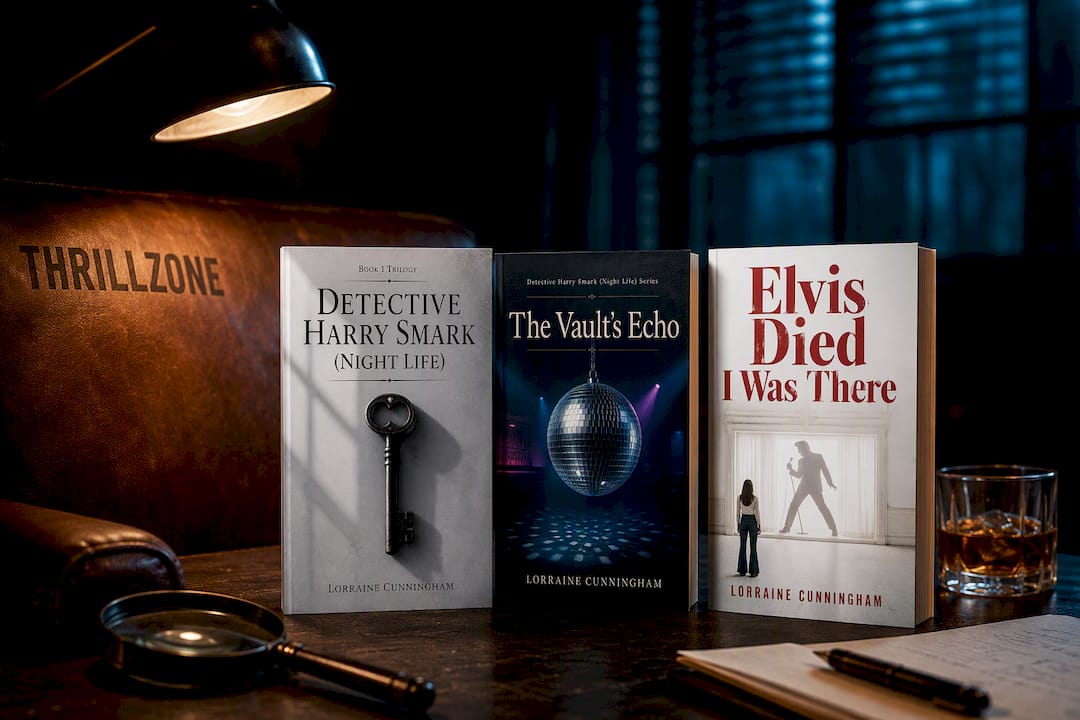
Detective Harry Smark (Night Life Book 1), available through ThrillerHorrorSuspense.store, fits readers who want a noir detective whose own account of a case shows signs of unreliability, and a preview chapter is available before purchase. Its sequel, Detective Harry Smark (The Vault’s Echo Book 2), found at this product page, continues exploring the narrator’s faltering reliability, and it also offers a sample chapter.

Literary classics built the template modern thrillers borrow from. Lolita by Vladimir Nabokov gives the deliberate liar a seductive, lyrical voice that readers must actively resist. The Remains of the Day by Kazuo Ishiguro shows self-deception at work in a butler who reconstructs his past to avoid facing it. The Catcher in the Rye by J.D. Salinger filters adolescence through a narrator whose grief and anger shape every judgment he makes about other people.

Contemporary fiction keeps expanding what unreliability can do. Fight Club by Chuck Palahniuk builds its entire structure around a narrator who has split his own identity without realizing it. My Sister, the Serial Killer by Oyinkan Braithwaite uses a narrator whose loyalty to her sister warps her account of violence into something closer to inconvenience. ELVIS DIED I WAS THERE, available at ThrillerHorrorSuspense.store, features a narrator whose claims about witnessing a famous death increasingly strain credibility, with a preview chapter available for readers to sample the voice first.

Coming-of-age and YA fiction often use unreliable narration to dramatize how young narrators misread their own circumstances. The Perks of Being a Wallflower by Stephen Chbosky gives readers a narrator whose letters slowly reveal trauma he has not named even to himself. We Were Liars by E. Lockhart uses memory loss to delay a reveal that reframes everything that came before it.

Experimental fiction stretches unreliability into form itself. House of Leaves by Mark Z. Danielewski nests multiple unreliable narrators inside footnotes and typographic tricks, so the unreliability becomes structural rather than psychological. Pale Fire by Vladimir Nabokov turns a scholarly commentary into the vehicle for a narrator’s obsession, letting the apparatus of annotation become the lie itself.

A few more worth naming by mode and fit:

  1. American Psycho by Bret Easton Ellis: a narrator whose violent claims may be delusion, suited to readers who want ambiguity that never fully resolves.
  2. The Tell-Tale Heart by Edgar Allan Poe: a short, intense study in a narrator insisting on his own sanity while proving the opposite.
  3. Life of Pi by Yann Martel: a survival story that offers two competing versions of events and lets the reader choose which to believe.
  4. The Sound and the Fury by William Faulkner: four narrators of varying cognitive reliability, demanding patience but rewarding it with structural depth.
  5. Atonement by Ian McEwan: a narrator whose guilt reshapes a childhood misunderstanding into fiction that masquerades as memory.
  6. Shutter Island by Dennis Lehane: a detective narrator whose investigation and sense of reality come apart together.

If domestic thrillers with dueling perspectives are your preferred register, our roundup of twelve domestic thrillers with preview chapters groups more titles in that specific vein.

2. What kind of unreliable narrator are you reading?

Narratology generally treats reliability as a spectrum rather than a binary label, and the Duke University Press overview of narrative unreliability maps several formal approaches scholars use to classify it. Four modes cover most of what you will encounter:

  • Self-deception: the narrator believes their own distortion, as with the butler in “The Remains of the Day” who reconstructs the past to protect himself from it.
  • Deliberate lying: the narrator knows the truth and withholds or twists it, the mode Humbert Humbert works in “Lolita.”
  • Limited cognition: memory, intoxication, youth or impairment narrow what the narrator can accurately report, as in “The Girl on the Train.”
  • Traumatic distortion: grief or shock reshapes the account without full awareness, visible in “We Need to Talk About Kevin.”

Readers dynamically shift their trust in a narrator as a story unfolds, and a recent mixed-methods study on reader responses to unreliable narration found that the order in which information arrives changes how much suspicion a reader attaches to a narrator’s claims. That has a practical consequence: a book that reveals its narrator’s unreliability early invites you to read for how the distortion works, while one that saves the reveal for a twist invites you to read for whether you can catch it first.

Self-deception and traumatic distortion tend to produce slower, more introspective books built for close rereading. Deliberate lying and limited cognition tend to drive plot-forward thrillers where the pleasure comes from catching the gaps in real time.

Two narrative paths show contrasting reading experiences

3. Spoilers and reading strategy: research freely or go in blind?

Some unreliable narrator novels announce their unreliability on page one; others hinge entirely on a reveal you do not want spoiled. Sorting your reading list by this distinction saves you from accidental spoilers while still letting you prepare for the books that reward preparation.

Safe to research before reading:

  • “The Remains of the Day,” “The Catcher in the Rye,” and “House of Leaves” declare their narrators’ limitations early, so background reading adds context rather than ruining a reveal.
  • “Pale Fire” and “The Sound and the Fury” are structurally unconventional enough that knowing the setup in advance makes the first chapters easier to follow.

Better to avoid spoilers:

  • “Gone Girl,” “We Were Liars,” and “Shutter Island” depend on a late turn that changes how every earlier chapter reads, so reviews and plot summaries are worth skipping.
  • “Fight Club” belongs in this group too, since its structural twist is the whole engine of the book.

Pro Tip: Read the first chapter of a suspected twist-driven book as a free preview before buying, since a few pages of voice usually tell you whether the narrator’s tone is hiding something without giving away what.

When you do want secondhand opinions, search for “spoiler-free review” rather than a general discussion thread, and stop reading the moment a comment references “the ending” or “the reveal.”

4. Matching your mood and available time to the right pick

Quick reads for a single sitting or a weekend:

  1. “The Tell-Tale Heart” delivers its entire unreliable confession in under thirty minutes and suits anyone who wants concentrated intensity without a time commitment.
  2. “Detective Harry Smark (Night Life Book 1),” available with a preview chapter, moves at thriller pace and fits a reader who wants noir doubt without a long investment.

Dense literary fiction for slower, rereadable sessions:

  1. “Pale Fire” and “The Sound and the Fury” both reward multiple passes and suit readers who enjoy puzzling out form as much as plot.
  2. “The Remains of the Day” asks for patience with a quiet narrator whose self-deception unfolds gradually rather than through incident.

Binge-friendly series for readers who want to stay with one voice:

  1. The Detective Harry Smark series, including Detective Harry Smark (The Vault’s Echo Book 2), previewable here, gives you a recurring narrator whose reliability keeps shifting across installments.
  2. Readers who finished Gillian Flynn’s catalog and want more of the same tension can check our list of authors like Gillian Flynn with preview chapters for similar voices in a similar register.

5. Why trust this guide: curation and publisher previews

This list comes from pairing established literary unreliable narrators with newer thriller titles that use the same device, so that readers moving between the two traditions have a map rather than a cold start.

  • Every original title in this guide offers a preview chapter, so you can judge the narrator’s voice before paying for the full book.
  • The catalog stays narrow by design, covering thriller and horror rather than spreading across every genre, which keeps each recommendation closer to a direct match.
  • In-house titles like “ELVIS DIED I WAS THERE” and both Detective Harry Smark books sit alongside classic picks specifically so a reader who liked Nabokov’s unreliable narrators has a contemporary thriller equivalent to try next.

Preview chapters exist precisely because that gap can be hard to judge from a cover description alone, and sampling the first pages tells you more about a narrator’s trustworthiness than any summary can.

6. When unreliable narration is most satisfying

The best unreliable narrator books earn their twist rather than ambush you with it. The pleasure is retrospective: you finish, think back over the early chapters, and realize the clues were visible the whole time. That second read, even if it is only a mental rewind rather than a literal reread, is where most of the payoff lives.

I’d rather recommend a book that rewards a careful reread than one that only works once. When you discuss these books with other readers, lead with the narrator’s mode of unreliability rather than the reveal itself. It keeps the conversation useful without ruining the discovery for someone else, and it is also why sampling a preview chapter before committing tends to save you from the wrong book at the wrong moment.

— lorraine

7. Try preview chapters and exclusive originals from ThrillerHorrorSuspense.store

We built our catalog around one specific frustration: buying a thriller only to find the narrator’s voice does not land for you. Detective Harry Smark (The Vault's Echo Book 2)

Our storefront lets you read a sample chapter of original titles before you buy, helping you judge an unreliable narrator’s voice firsthand instead of guessing from a blurb. The catalog stays focused on thriller and horror, so every title you browse is already in the genre you came for.

  • Detective Harry Smark (The Vault’s Echo Book 2) continues the series with the same narrator further off balance, sample it first.
  • ELVIS DIED I WAS THERE follows a narrator whose claims grow stranger the closer you look, read a preview chapter.

Browse the full E-BOOKS collection to start sampling, and download your pick instantly once you find the voice that fits.

FAQ

What is an unreliable narrator in fiction?

An unreliable narrator is a storyteller whose account the text itself does not fully endorse, a term coined by Wayne C. Booth and explained in the Oregon State guide to literary terms. Readers have to read past the narrator’s bias, memory gaps or outright lies to recover what actually happened.

What book does Stephen King regret writing?

Stephen King asked that his novel “Rage,” published under the pen name Richard Bachman, be taken out of print after it was linked to real-life school shootings, a decision detailed in Slate’s reporting on the book’s history. The withdrawal is often cited as an example of an author pulling a work for public-safety reasons rather than literary ones.

What is the most controversial book of all time?

There is no single agreed-upon answer, since controversy depends on era, culture and context, and claiming one definitive title would overstate what any source actually establishes. Works get labeled controversial for very different reasons, from banned content to real-world harm linked to a book’s reception, as with the Stephen King example above.

What are some movies with unreliable narrators?

Film adaptations of unreliable narrator novels, along with original screenplays built on the same device, use techniques like twist reveals, shifting flashbacks or narration that contradicts what the camera shows. The underlying device matches what you find in print: a narrator whose account the story eventually undercuts, which is the same definition that applies to unreliable narration in fiction.

How do I know if a narrator is unreliable?

Look for gaps between what a narrator claims and what other characters or events in the story suggest, since detecting unreliability is partly an interpretive act readers perform as they go. Signs include inconsistent details, a narrator who other characters openly doubt, or a voice that seems too insistent on its own version of events.

Sources

Folk Horror Books: Classics, New Regions, and a Preview Chapter

This guide collects the folk horror books worth your time, from the genre’s early landmarks to new releases reshaping it. You’ll find novels and anthologies grouped by tone and setting, a checklist for matching a book to your mood, and one editorial pick from our own catalog alongside the preview-chapter option that makes sampling low-risk.


TL;DR:

  • For slow, atmospheric dread with little action, try Midwinter or The Willows; choose The Wicker Man for a story with a faster plot.
  • If you want to compare traditions before committing, The Mammoth Book of Folk Horror gathers historical and newer stories in one volume.
  • The Bog Wife locates inherited family bargains in Appalachia, while Harvest Home and The Wicker Man draw on British rural customs and conflict with outsiders.
  • Match your choice to your tolerance for ambiguity, preferred setting, and reading commitment, since a novel of 200 pages differs from a dense anthology.
  • The Crimson Echoes Of Oakhaven follows a town whose buried history drives events locals accept as inevitable, echoing the community secrets in Harvest Home.

Thrillerhorrorsuspense
thrillerhorrorsuspense.store
Explore Folk Horror Through a Preview
Browse digital horror and suspense titles, including The Crimson Echoes Of Oakhaven, and sample exclusive chapters before buying.

Browse folk horror titles

Table of Contents

Folk horror runs on dread that grows out of place, custom, and the sense that something older than the characters is still awake. The picks below span decades and regions, and each one earns its spot for a specific reason.

The Willows and The Wendigo (Algernon Blackwood) sit near the root of the genre. Blackwood’s wilderness fiction predates the term “folk horror” by decades, but his landscapes behave like living antagonists, which is exactly the move later writers borrowed. Readers who want to see where the atmosphere of dread in nature started should begin here.

The Great God Pan (Arthur Machen) pairs ancient pagan survival with Victorian unease about what science and rationalism can’t explain. Machen’s influence shows up in nearly every subsequent folk horror writer who treats old gods as still-active forces rather than metaphors.

Harvest Home (Thomas Tryon) is a mid-century classic built around a seemingly idyllic New England farming town with a harvest ritual that turns sinister. It fits the genre because it stages the clash between an outsider’s modern skepticism and a community’s unbroken folk practice, which Adam Scovell’s framework identifies as a core structural feature of the subgenre. Readers who like a slow build and a last-act gut punch will want this one.

The Wicker Man novelization (Robin Hardy and Anthony Shaffer) gives readers the source material behind one of folk horror’s most referenced films. It works as a standalone read for anyone who wants the plot beats of isolated-island paganism without relying on having seen the movie first.

Midwinter (Fiona Melrose) is a quieter, contemporary entry set on an English farm, where grief and rural isolation blur into something closer to haunting. It suits readers who want folk horror’s mood without an overt supernatural payoff.

The Bog Wife (Kay Chronister) is an Appalachian and eco-gothic novel built around a family’s generations-old compact with the bog that sustains their land. The ancestral bargain and the bog’s active presence make it a strong modern example of folklore functioning as both plot engine and horror source, and it’s a natural next step for readers who finish Harvest Home wanting an American setting.

Shallow water and rooted plants in an Appalachian bog

The Man of Wind and Moss leans into cover copy and comparisons that place it squarely in the pagan-ritual, rural-dread lane contemporary publishers now market deliberately as folk horror. It fits readers who want a newer release with the genre’s classic ingredients: isolated setting, old ritual, modern intruder.

The Mammoth Book of Folk Horror is the anthology to own if you want range in one volume. It collects both historical pieces from writers like Machen, Blackwood, and M. R. James and newer contributions, which makes it useful for seeing the subgenre’s full arc without committing to a dozen separate novels.

The Crimson Echoes Of Oakhaven (Book 1), available through our e-books catalog, follows a town whose buried history resurfaces through a series of events that locals treat as inevitable rather than strange. It earns a place on this list because it leans on the same mechanism that defines the genre: a community’s folklore isn’t background color, it’s the thing actually driving the plot. Readers who liked Harvest Home’s slow unraveling of a town’s secret or The Bog Wife’s ancestral-bargain structure will find familiar footing here, and the preview chapter option lets you confirm the pacing suits you before buying.

  • Blackwood and Machen: foundational atmosphere and pagan-survival themes.
  • Tryon and Hardy/Shaffer: mid-century ritual-and-outsider classics.
  • Melrose and Chronister: contemporary, regionally distinct takes.
  • The Mammoth Book of Folk Horror: one-volume survey of the whole tradition.
  • The Crimson Echoes Of Oakhaven: a community-folklore-driven pick from our own catalog.

2. How do you pick the right folk horror book for your mood?

Not every folk horror book delivers the same experience, and matching the right one to your current mood saves you from abandoning a book that’s objectively good but wrong for the moment.

Work through this short checklist before you commit to a title:

  1. Decide how much ambiguity you can tolerate: some books resolve their horror, others leave the ending deliberately unsettled.
  2. Pick your setting preference: isolated British countryside, Appalachian backwoods, or a fictional American town.
  3. Consider pace: literary slow-burns like Midwinter reward patience, while plot-driven books like The Wicker Man move faster.
  4. Check length and density: a 200-page novel is a different commitment than a dense anthology.
  5. Match format to your sampling habit: a standalone novel versus a collection you can read story by story.

Three quick reader profiles help narrow things further. If you want slow dread with minimal action, Midwinter or the atmospheric sections of The Willows fit best. If you want folklore driving an active plot with real stakes, Harvest Home, The Bog Wife, or The Crimson Echoes Of Oakhaven deliver that. If you’d rather sample many voices before committing to one novel, The Mammoth Book of Folk Horror or a short story collection gets you there fastest. Readers who already gravitate toward slow, atmospheric dread in other subgenres may also recognize their taste in this mood-based checklist for Mexican Gothic fans.

Pro Tip: Use a preview chapter before buying any unfamiliar folk horror title. It takes five minutes and tells you more about pacing and tone than any blurb can.

3. What are the main subgenres and regional flavors of folk horror?

Folk horror isn’t one flavor. Recent scholarship reframes it as a genuinely global field, with distinct regional traditions shaped by local landscape and belief systems rather than a single British template.

  • British pastoral folk horror: isolated villages, old customs, and a clash between modern outsiders and entrenched ritual. Harvest Home and The Wicker Man novelization both sit here.
  • Appalachian and rural gothic: American backwoods settings where family and land are bound by inherited, often unspoken, compacts. The Bog Wife is the clearest example on this list.
  • Southern and eco-horror: folklore entangled with environmental anxiety, where the land itself carries menace tied to human neglect or exploitation.
  • Anthologies and collected fiction: not a region but a format that lets you sample multiple traditions in one book, which makes a volume like The Mammoth Book of Folk Horror one of the most efficient entry points for a newcomer deciding which regional flavor suits them.

4. Why these picks: curator notes and practical next steps

These recommendations are curated by lorraine, drawing on both canonical scholarship and current reader consensus from communities like Goodreads shelves and r/horrorlit, where folk horror titles get tagged and discussed consistently enough to reveal which books actually hold up.

Our preview chapter feature exists for exactly the uncertainty this genre creates: tone varies wildly between a slow literary novel and a plot-forward ritual thriller, and reading a few pages first beats guessing from a cover. For breadth, start with an anthology. For a focused read you can finish in a sitting or two, choose a single ebook and sample its opening before buying.

4. Why these picks: curator notes and practical next steps — overview diagram

5. A personal note on reading folk horror

Folk horror works on me the way an old family story does: you know it’s been shaped and reshaped, yet it still lands. What I value most is the unease that lingers after the book ends, the sense that the ritual or belief at its center didn’t stop existing just because the last page did. If you’re picking a first read, start with Harvest Home on a quiet evening when you’ve got nowhere to be afterward.

— lorraine

6. Preview our catalog and start with The Crimson Echoes Of Oakhaven

We built our catalog around a simple idea: you shouldn’t have to guess whether a book fits your taste before you pay for it. Every title on Thrillerhorrorsuspense comes with a preview chapter, so you can read the opening pages of a folk horror novel the same way you’d flip through a paperback in a store.

The Crimson Echoes Of Oakhaven (Book 1)

  • Preview chapters let you check pacing and tone before buying.
  • Our horror and thriller collections sit alongside our original titles for easy browsing.
  • The Crimson Echoes Of Oakhaven (Book 1) follows a town whose folklore drives its plot, a fit for readers who just finished this list wanting something similar.

If the community-and-folklore thread running through Harvest Home or The Bog Wife is what pulled you in, The Crimson Echoes Of Oakhaven is worth previewing next.

FAQ

What is the best folk horror book?

There’s no single consensus “best,” since reader taste splits between slow literary dread and plot-driven ritual horror. Harvest Home and The Wicker Man novelization are the two most frequently cited starting points across reader communities and scholarship alike.

What is considered the scariest book ever written?

This depends heavily on personal tolerance and genre preference, so there’s no agreed-upon single answer. Within folk horror specifically, readers most often point to Harvest Home or The Great God Pan for sustained dread rather than jump scares.

What is considered folk horror?

Folk horror is horror that treats folklore, local custom, or rural belief as a thematic and aesthetic engine, not just a backdrop. Adam Scovell’s formal criteria describe it as work that uses folklore to create the arcane, stages a clash with modernity, and often generates new folklore of its own.

Who are some famous folk horror authors?

Arthur Machen and Algernon Blackwood are widely credited as foundational influences, with M. R. James often grouped alongside them in anthology scholarship. Contemporary writers including Kay Chronister and Thomas Tryon have extended the tradition into American and modern settings.

Sources

Authors Like Stephen King: Match His Style, Preview Before Buying

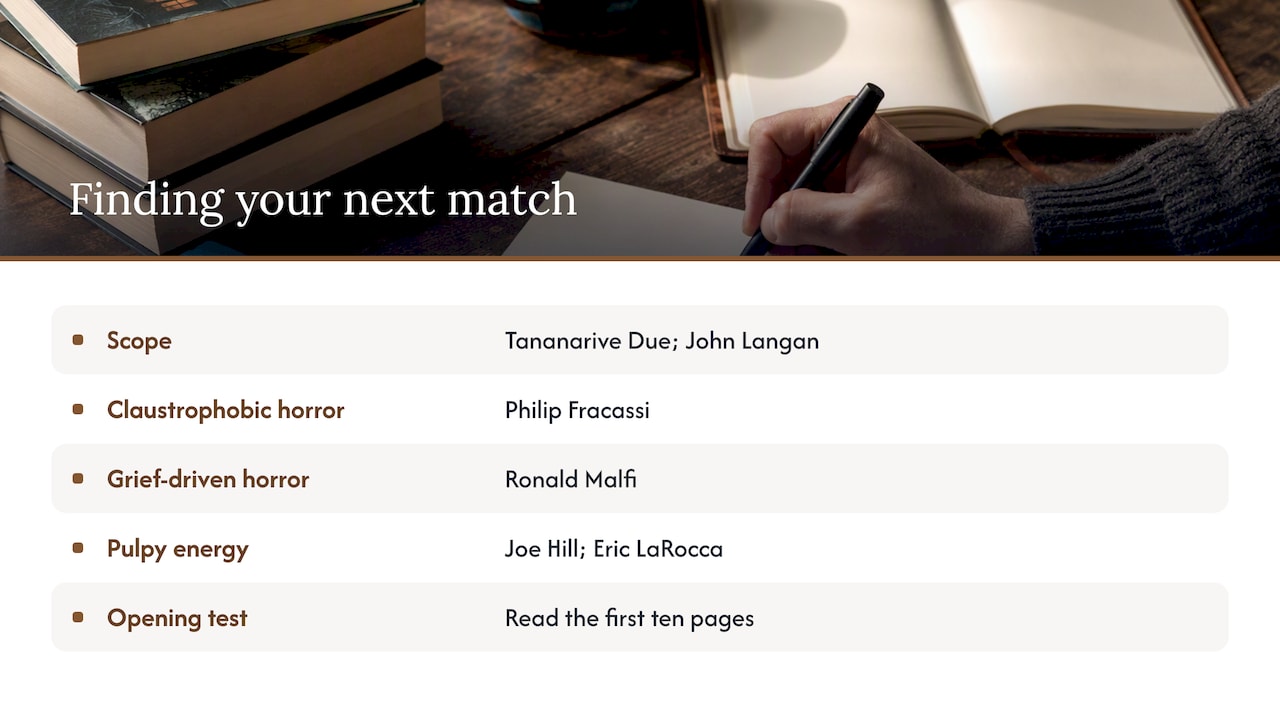
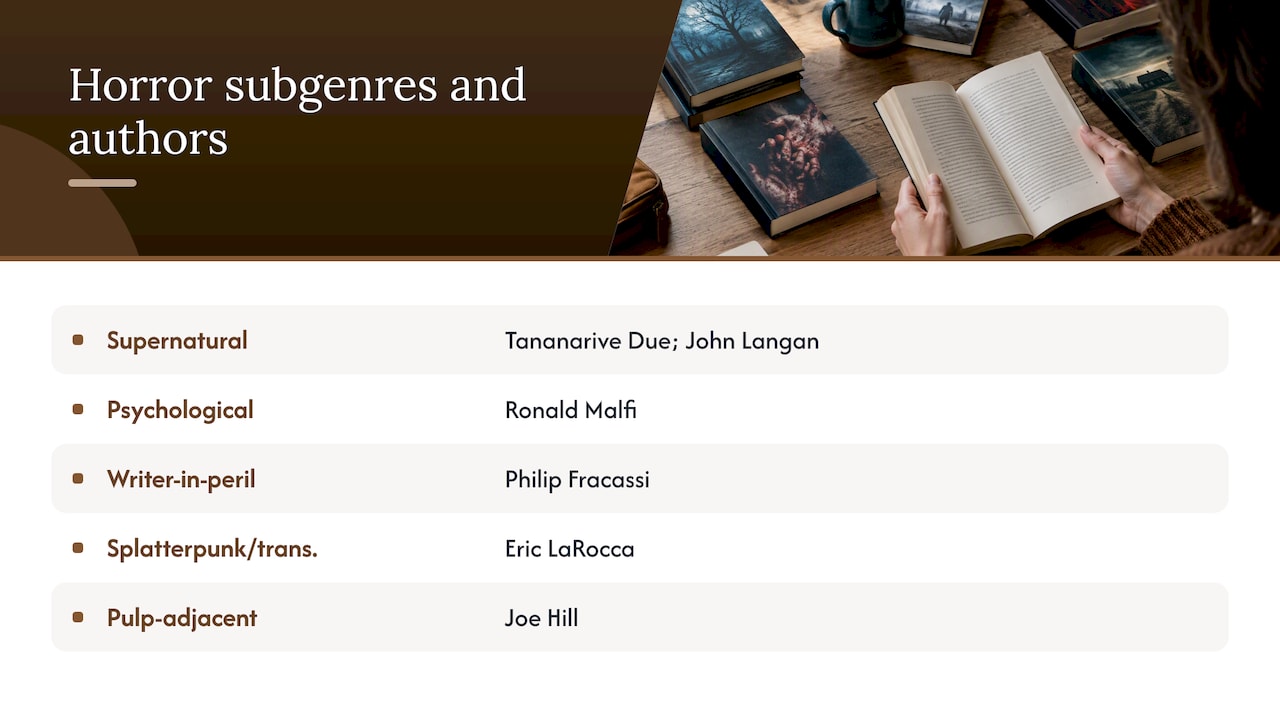
If you love Stephen King, start with Tananarive Due, Ronald Malfi, John Langan, Philip Fracassi, and Joe Hill, and pick up Due’s The Reformatory first. These writers share King’s gift for character-first dread, small-town menace, and prose that reads like a friend telling you something terrifying at 2 a.m. Below, we break down the full shortlist, a starter book for each, and how to choose your next read with confidence.


TL;DR:

  • Readers who loved It or The Stand should try Due or Langan for folklore, broad scope, and slow reveals; Misery fans should choose Fracassi’s Gothic.
  • Ronald Malfi’s Come with Me suits readers who prefer quiet, grief driven suspense, as memory and obsession build psychological dread instead of action.
  • Philip Fracassi’s Gothic centers on a novelist whose ambition threatens his sanity, making it a close fit for readers drawn to writer in peril horror.
  • Eric LaRocca’s Things Have Gotten Worse Since We Last Spoke is shorter and more transgressive, suited to readers seeking rawer horror than King’s mainstream novels.
  • Read the first ten pages before buying: a direct, conversational narrator and domestic detail can reveal whether the book’s voice and pacing suit you.

Thrillerhorrorsuspense
thrillerhorrorsuspense.store
Find Your Next Dread-Filled Read
Browse digital horror, thriller, and suspense ebooks, with exclusive chapters to preview before you decide what to buy.

Browse the ebook collection

Table of Contents

Each author below earns a spot because of a specific match to something King does well: voice, setting, pacing, or the particular flavor of dread. We paired each with one starter book and a quick read on who in King’s audience will love them most.

  1. Tananarive Due, start with The Reformatory. Due writes historical horror that blends real injustice with supernatural menace, echoing the moral weight King brings to books like The Shining.

    • King fans will recognize a ghost story grounded in grief and systemic cruelty rather than cheap scares.
    • Best for readers who loved the social conscience running through It and The Green Mile.
  2. Ronald Malfi, start with Come with Me. Malfi writes grief-soaked suspense where the horror creeps in sideways, much like King’s slower-burn novels.

    • King fans will recognize a narrator who processes loss in real time, with dread building through memory and obsession.
    • Best for readers who prefer King’s quieter, character-driven work like Bag of Bones over his action-heavy novels.
  3. John Langan, start with The Fisherman. Langan specializes in cosmic horror wrapped in folksy, conversational narration, a structure that rewards patience the way King’s longer novels do.

    • King fans will recognize nested stories, local legend, and a narrator who sounds like he’s talking to you across a diner table.
    • Best for readers who loved the slow reveal and cumulative dread of It or Pet Sematary.
  4. Philip Fracassi, start with Gothic. Fracassi writes directly in the tradition of the cursed writer and the price of ambition, a theme King returns to often. His novel Gothic wears that influence openly, channeling the writer-in-peril plot King fans know from Misery and The Shining, with the same attention to character dread.

    • King fans will recognize the “creator as victim” setup and a slow unraveling of sanity tied to creative obsession.
    • Best for readers drawn to King’s stories about writers losing their grip on reality.
  5. Joe Hill, start with Heart-Shaped Box. Hill writes with a voice that blends pulpy horror instincts with literary structure, and the family resemblance to King’s style is impossible to miss once you know it.

    • King fans will recognize sharp dialogue, rock-and-roll grit, and supernatural objects that carry real menace.
    • Best for readers who want King’s early paperback energy updated for a contemporary audience.
  6. Eric LaRocca, start with Things Have Gotten Worse Since We Last Spoke. LaRocca writes shorter, rawer horror that leans into transgressive and visceral territory, a tone King explored in his grittier early work. In a PopHorror interview, LaRocca discusses writing deliberately uncomfortable, transgressive fiction, a useful signal for readers who want horror with teeth.

    • King fans will recognize the willingness to go to uncomfortable emotional places without flinching.
    • Best for readers who loved King’s rawer early novels like Carrie and want something with a harder edge and a shorter page count.

For readers who gravitate toward interior, mood-driven horror, our guide to psychological horror books by mood breaks down titles with preview chapters so you can match tone before buying. And if you want to taste several of these substyles without committing to a full novel yet, our one-sitting horror novella roundup is built for exactly that.

Stephen King himself has sold more than 400 million books worldwide, a scale that explains why so many writers work in his shadow and why finding the right substyle match matters more than finding a generic “King clone.”

2. Why These Authors Feel Like Stephen King

The resemblance isn’t accidental. These writers share a handful of specific techniques that readers can learn to spot on their own, long before they finish a first chapter.

  • Character interiority: King spends pages inside a character’s head before anything scary happens, and Ronald Malfi does the same, letting grief and obsession build the dread.
  • Conversational voice: King’s narrators sound like real people telling a story out loud, a quality John Langan captures through nested, folksy narration in The Fisherman.
  • Small-town setting: Domestic, specific places with real history ground the horror, something Tananarive Due uses to devastating effect in The Reformatory.
  • Writer-in-peril or creator-as-victim: King returns to this often, and Philip Fracassi’s Gothic channels it directly through a novelist’s unraveling ambition.
  • Moral and social subtext: The best horror says something beyond the scare, a quality critics point to when they compare King’s cultural role to Charles Dickens, noting that his blend of conversational narration and social realism is genuinely hard to copy.

You can spot these in a blurb or a first chapter: look for a narrator who talks directly to you, local names and places instead of generic settings, and stakes that start at home before they go cosmic.

3. Meet Lorraine, Your Curator for This List

This list comes from a reading life built around horror, thriller, and suspense, curated specifically for readers who already know what King does well and want it again without the guesswork.

  • Lorraine curates these recommendations with an eye toward matching reading experience, not just genre labels, a distinction that matters more than most “best horror authors” lists admit.
  • Every pick above connects to a specific King strength (voice, setting, theme) rather than a vague “if you like scary books” logic.
  • We offer a preview-chapter feature that lets you read the opening pages of select titles before paying, which lowers the risk of a purchase that doesn’t match your taste.

Pro Tip: Use the preview chapter to check the narrator’s voice and pacing in the first few pages. If it reads like someone talking to you rather than describing events at a distance, that’s a strong King-style signal.

4. How to Pick Which Similar Author or Book to Try Next

Start with what you loved most about the King book that hooked you. If it was It or The Stand, you want scope and found-family dynamics, so Tananarive Due or John Langan will feel closer than a shorter, punchier writer. If it was Misery or The Shining, you want claustrophobic, character-trapped horror, which points you toward Philip Fracassi.

If you prefer King’s quieter, grief-driven side (Bag of Bones, Lisey’s Story), Ronald Malfi is the clearest match. If you want the pulpy energy of his earliest paperbacks, Joe Hill or Eric LaRocca deliver that faster, rawer hit.

A practical test: read the first ten pages. King-like fiction tends to announce itself early through a character-focused opening and a narrator willing to digress into domestic detail before the plot kicks in. If a sample doesn’t give you that within a few pages, it’s probably not the right substyle match, no matter how good the premise sounds. This is exactly why sampling before buying matters more in horror than in most genres: tone carries the book as much as plot does.

4. How to Pick Which Similar Author or Book to Try Next — overview diagram

5. What Makes Stephen King’s Style Distinct

King’s signature isn’t really the monsters. It’s the setup before them: ordinary people in specific, lived-in places, given enough page time that their fear becomes yours. His bibliography spans horror, fantasy, and realistic fiction, and many of his biggest titles, including Carrie, The Shining, It, and Misery, have been adapted for film and television, a track record that helped revive horror as a mainstream genre in the late 20th century.

Stylistically, King favors a conversational narrative voice, close third-person or first-person perspectives that let you live inside a character’s anxiety, and small Maine towns rendered with enough specific detail that they feel real before anything supernatural shows up. He also returns often to writers and creators as protagonists, using their vulnerability to explore themes of addiction, ambition, and isolation. Critics have noted that this combination of popular appeal and genuine literary craft is part of why he’s often described as a writer who bridges both audiences, a quality that makes him difficult to imitate and worth studying before you pick your next author.

6. Which Horror Subgenre Matches Your Taste

Horror isn’t one thing, and neither is King’s catalog, so the authors above split cleanly across a few subgenres worth knowing.

Supernatural horror, ghosts, curses, and ancient evils, is where Tananarive Due and John Langan do their best work, both using folklore and history to make the supernatural feel earned rather than arbitrary. Psychological horror, where the scares come from a character’s crumbling mind, is Ronald Malfi’s territory, with grief and obsession doing the heavy lifting instead of monsters.

The writer-in-peril subgenre, King’s own recurring specialty, belongs to Philip Fracassi, whose Gothic puts creative ambition and sanity on a collision course. Splatterpunk and transgressive horror, rawer and more visceral, is Eric LaRocca’s lane, useful for readers who want King’s grittier early instincts pushed further. And pulp-adjacent horror with a rock-and-roll edge is Joe Hill’s strength, blending supernatural objects with sharp, contemporary dialogue.

Five horror subgenres matched with authors

Knowing which lane you prefer makes browsing faster and cuts down on mismatched purchases, which is exactly what preview chapters are built to prevent.

7. Exploring Crossover Authors for Blended Genres

If you like King’s horror but also want crime plotting or fantasy scope, a few crossover paths are worth exploring. Horror blended with crime fiction tends to favor tight pacing and a detective or investigator figure dropped into supernatural territory, a structure that rewards readers who want mystery mechanics alongside dread. Horror blended with fantasy, meanwhile, leans into mythology and world-building, closer to King’s Dark Tower side than his small-town horror side.

Readers who want that blend should look for books marketed as “dark fantasy” or “supernatural thriller” rather than straight horror, since those labels usually signal more plot scaffolding and less pure atmosphere. Our thriller versus horror breakdown walks through exactly this kind of genre-blend decision in more detail, useful if you’re not sure which shelf your next read should come from. The short version: if you want answers and resolution, lean thriller-horror blends; if you want mood and myth, lean horror-fantasy blends.

8. What This List Gets Right That Most Don’t

Most “authors like Stephen King” lists are really just horror authors with no explanation of why they match. That’s the gap worth naming: a recommendation only helps if it tells you which part of King you’re actually chasing, the slow-burn dread of It, the claustrophobic terror of Misery, or the pulpy violence of his early paperbacks.

The conventional advice treats King as one flavor, when he’s really four or five distinct writers across his career. A reader who loved The Shining and a reader who loved Christine want different things, even though both are “Stephen King books.” Matching substyle to substyle, the way this list does, is more useful than matching genre label to genre label.

What I’d prioritize first: read the opening pages before anything else. Voice tells you more in two paragraphs than a blurb tells you in two hundred words, and it’s the single best predictor of whether a book will actually scratch the itch a King novel left behind.

— lorraine

Try Preview Chapters First on Our Shelves

We built our catalog around the exact problem this list solves: knowing an author’s style before you spend money on the wrong book. Two titles worth sampling directly are ELVIS DIED I WAS THERE, an original thriller with a preview chapter available, and Martha’s Tide, a character-driven horror title with the same atmospheric, small-town dread that draws readers to King in the first place.

Thrillerhorrorsuspense

  • Both titles let you read a free opening chapter before buying, so you can check voice and pacing the same way we recommend doing with any new author.
  • The sample-then-decide flow is simple: open the preview, read a few pages, and buy only if the narrator’s voice matches what you’re after.
  • Browse our full horror collection or thriller collection to find more titles with the same preview option.

If you want a quicker taste of creature-driven horror specifically, our partner roundup of curated creature feature ebooks with previews is a good next stop. Start with either featured title above, or head to our full e-book catalog to browse everything we carry.

FAQ

What book does Stephen King regret writing?

King has spoken publicly about mixed feelings toward certain early or rushed works over the years, though no single title is universally cited as his definitive regret. Readers curious about his full catalog can review his major works, including Carrie, The Shining, It, and Misery, through his Britannica biography.

What author was rejected 23 times?

This often-cited detail is frequently attributed to Stephen King regarding early submissions of his work, though exact rejection counts vary across retellings and aren’t confirmed in primary biographical sources. What’s well documented is that he built a prolific career afterward, selling more than 400 million books worldwide.

Is Stephen King one of the greatest writers?

Critics often place King among the most significant popular writers of his generation, with some comparing his broad cultural reach and narrative craft to Charles Dickens. His ability to bridge mass appeal and literary technique is a major reason so many readers look for authors who write similarly.

Who are some famous horror book authors?

Beyond Stephen King, well-known horror authors include Tananarive Due, John Langan, Ronald Malfi, Philip Fracassi, and Joe Hill, each known for a different substyle within the genre. Readers can explore starter titles from each through our curated recommendations above.

How can I sample an author before buying their book?

Many digital bookstores, including ours, offer preview chapters that let you read the opening pages of a title before purchase. This approach helps you judge narrator voice and pacing in advance, which is especially useful when trying a horror author for the first time.

Sources

Medical Thriller Books: Sample Before You Buy, From Coma to CRISPR’d

If you want classic scientific dread, read The Andromeda Strain; for clinical hospital procedural tension, read Coma; and for contemporary biotech paranoia, try CRISPR’d. Each suits a different mood, and we have lined up a compact list below, plus a quick checklist so you can sample before you buy.


TL;DR:

  • Choose by subgenre: biotech plots use emerging science, hospital procedurals focus on institutional conspiracies, and psychological medical thrillers feature unreliable narrators inside the system.
  • Authors who are physicians or science journalists tend to handle procedures credibly; short chapters favor pace, while longer chapters often allow more procedural detail.
  • Preview a chapter before buying because it reveals pacing better than a book summary, and retailers, author pages, and library digital collections offer samples.
  • If you prefer suspense delivered by narration, A Bunch Of Daisies Audio lets you hear a clip before buying through its product page.

Thrillerhorrorsuspense
Find Your Next Suspenseful Read
Browse digital horror, thriller, and suspense e-books, with exclusive chapter previews to help you sample a story before buying.

Browse the e-book collection

Table of Contents

Curated List: Best Medical Thriller Books With Blurbs and Availability

A strong medical thriller list mixes the genre’s founding texts with newer titles that reflect how medicine itself has changed. Here is a working shortlist, organized loosely from classic to contemporary, with a note on how to sample each one before committing.

  • The Andromeda Strain by Michael Crichton: a research team races to contain an organism from space before it wipes out a town, and the clinical, almost documentary tone still reads as one of the genre’s foundational texts. Check library digital loans or an e-book retailer for a sample.
  • Coma by Robin Cook: a medical student uncovers a hospital conspiracy tied to patients who never wake from routine surgery, and this 1977 premise still anchors the hospital-procedural subgenre. Most major e-book platforms carry a preview.
  • Harvest by Tess Gerritsen: a transplant surgeon starts asking where the organs on her hospital’s list are actually coming from, and the answer pulls her into a trafficking plot that critics point to as a genre touchstone. Available in e-book and audiobook formats at most retailers.
  • CRISPR’d by Judy Foreman: a gene-editing breakthrough becomes a weapon in the wrong hands, and this is a current example of biotech paranoia done well, grounded in real gene-editing technology rather than invented science. A preview chapter is listed on the author’s own book page.
  • A Conspiracy of Data by SA Lonky: written from a physician-author perspective, it pits a clinician’s gut instinct against an algorithm making life-or-death calls, which gives the conflict real procedural weight.

If you also want our own catalog in the mix, three titles preview well for readers who like detective-driven tension alongside medical and crime elements. Detective Harry Smark (The Vault’s Echo Book 2) follows the investigator into a case where the evidence trail runs straight through a hospital record system, and the preview chapter on the product page shows the pacing before you commit. Detective Harry Smark (Night Life Book 1) sets up the character for readers who want to start from book one, with the same preview-chapter option. For a voice-driven read, A Bunch Of Daisies Audio works well if you prefer tension delivered through narration rather than the page, and the sample audio clip on the product listing lets you check the narrator’s pacing first.

Why Medical Thrillers Work: Defining Traits Readers Love

A medical thriller earns its name through a specific mix: a clinical setting that feels authentic, an ethical dilemma with no clean answer, and a protagonist who has insider access to the system being exposed. That insider view, usually a physician, nurse, or researcher, is what lets the plot move past the hospital’s front desk and into rooms a layperson could never reach.

Three defining medical thriller traits

Reader vulnerability does most of the emotional work. The strongest entries in the genre weaponize the reader’s own fear of hospitals and medical authority, turning a routine procedure into a source of dread because the reader already half-believes it could happen to them.

Plausibility matters as much as plot. Too much procedural detail can slow the pacing, while too little makes the danger feel invented rather than discovered. The balance is part of why classics like Coma still set the template that newer titles work against.

How to Pick Your Next Medical Thriller

Matching a book to your mood takes about five minutes if you work through a short checklist before you buy.

  1. Pick your subgenre first: biotech thrillers lean on emerging science, hospital procedurals lean on institutional cover-ups, and psychological medical thrillers lean on an unreliable narrator inside the system.
  2. Check the author’s background. Physicians and science journalists tend to write procedural detail that holds up under scrutiny without burying the plot.
  3. Read the preview chapter before buying. It tells you more about pacing than any back-cover summary.
  4. Go audiobook if you want voice-driven tension, since a strong narrator can heighten a slow-burn medical mystery that might drag on the page.
  5. Scan chapter length. Short, clipped chapters usually signal a faster read, while longer chapters often carry more procedural depth.

Pro Tip: When realism matters most, favor physician-authors or science-journalist authors; when pace matters most, favor novels known for short, fast-moving chapters.

You can preview chapters directly on product pages, borrow digital samples through Delaware library digital collections, or check retailer samples before you commit to a purchase.

Editor Perspective and Catalog Highlights

Our selection approach weighs three things: medical or procedural realism, how high the narrative stakes actually climb, and whether the pacing holds up past the first act. Alongside the genre’s classics, our own catalog offers Detective Harry Smark (The Vault’s Echo Book 2), Detective Harry Smark (Night Life Book 1), and A Bunch Of Daisies Audio, each with a preview chapter or sample clip on its product page so you can check the fit before buying.

Preview and Buy: Sample Before You Commit

Detective Harry Smark (The Vault's Echo Book 2)

We built our storefront around one idea: you should be able to read a chapter before you spend money on a book that might not land for you. Checkout is a straightforward digital purchase, and the full catalog spans both of the genres we focus on.

If techno-thrillers or legal thrillers also interest you, our posts on curated techno thrillers and legal thriller audiobooks cover similar ground with the same preview-first approach.

A Curator’s Take on Medicine, Morality, and Fiction

What keeps pulling me back to this genre is the gap between what medicine promises and what it can actually deliver under pressure. The best medical thrillers live in that gap, and the physicians-turned-authors tend to write it most convincingly because they have stood in the room where the decision gets made. My own pick is Harvest: the transplant-list premise still unsettles me because it is close enough to real hospital bureaucracy to feel possible. Read a preview chapter first and see if the voice grabs you the way it did me.

— lorraine

FAQ

What should I read if I want a medical thriller?

Start with a classic like The Andromeda Strain or Coma for a grounded, procedural feel, or try CRISPR’d if you want a contemporary biotech threat built on real gene-editing science. Preview chapters on retailer and publisher pages let you check the tone before buying.

What is considered the biggest medical mystery in thriller fiction?

There is no single title crowned as the genre’s biggest mystery, but Coma is widely cited as a foundational premise, a hospital cover-up tied to patients who never wake from surgery, that shaped how later medical thrillers build their conspiracies.

What are some of the best medical thriller novels to start with?

The Andromeda Strain, Coma, and Harvest are commonly named as essential entries in the genre, and newer titles like CRISPR’d extend the same tension into current biotech concerns.

What defines a medical thriller as a genre?

A medical thriller centers on high-stakes tension inside hospitals, labs, or research facilities, usually built around an ethical dilemma or a healthcare system hiding something dangerous, a pattern that has anchored the genre since its earliest classics.

How do I know if a medical thriller will feel realistic?

Authors with medical or science-journalism backgrounds tend to balance technical accuracy with readable pacing, since too much jargon can slow a story down. Reading a preview chapter is the fastest way to judge whether the balance works for you.

Sources

Underrated Thrillers: 7 Films, Book Previews, and Forum Finds

Start tonight with Mojave, the forgotten psychological thriller that critics still point to years after release, and for your next book, sample the opening chapter before you commit. Reading a preview tells you more about pacing and voice than any star rating. Below, we round up community-tested movie and book picks, plus the methods people actually used to find them.


TL;DR:

  • Choose by mood: Circle offers claustrophobic, one room tension; Wheelman delivers a near real time heist, while Milk & Serial is free on YouTube.
  • For unfamiliar books, sample the opening chapter to judge voice and pacing; previews suit translated fiction, slow burn domestic suspense, and dark academia.
  • Before buying or streaming, cross check a critic curated pick against forum recommendations; independent overlap helps distinguish favorites from titles with weak word of mouth.
  • Set watchlist alerts and revisit ebook previews because hidden gems can appear and disappear without notice.

Thrillerhorrorsuspense
Find Your Next Suspense Read
Browse digital horror, thriller, and suspense books, with exclusive chapters to preview before you buy.

Browse thriller books

Table of Contents

1. Curated list of underrated thriller movies to watch

Mood and setting matter more than box office numbers when you are hunting for a genuinely overlooked thriller. The picks below come from critic roundups and the kind of word-of-mouth praise that keeps circulating in forums long after a film leaves theaters.

  • Mojave (2015): a messy but magnetic cat-and-mouse story carried by committed performances that make it worth streaming on Netflix despite its uneven reception.
  • Milk & Serial (2024): a microbudget thriller that built its audience through a free YouTube release and now holds a cult following.
  • Play Misty for Me: an early entry in the obsession thriller genre, recommended on critic lists for its slow-burn dread.
  • One Hour Photo: a quiet, character-driven thriller built almost entirely on a single unsettling performance.
  • Circle: a containment thriller set in one room, built on tension and moral dilemma rather than special effects.
  • Wheelman: a lean, nearly real-time heist thriller that critics praise for its commitment to craft over spectacle.
  • Blow the Man Down: a small-town crime thriller that got buried by release timing against larger studio releases the same season.

Mix these into your queue by mood: pick Circle for a tight, claustrophobic night in, or Mojave when you want a flawed but unforgettable character study. Most of these titles sit on major streaming platforms or indie services, though a few, like Milk & Serial, live entirely on free upload channels.

2. Curated list of underrated thriller books to read

Books face an even steeper discovery problem than film, since there is no trailer to hook you in thirty seconds. That is where sampling a first chapter earns its keep, letting you judge tone and voice before you spend a dollar.

  • The Good Son: a tightly wound psychological thriller that editors highlight as deserving a far wider readership.
  • The Inugami Curse: a classic of Japanese detective fiction, foundational to the genre but still underread outside its home market.
  • International and translated titles in general, since language and market barriers keep many strong suspense novels from reaching English-language readers.
  • Slow-burn domestic thrillers, a subgenre worth exploring through curated roundups like this collection of preview-ready picks.
  • Tech-driven suspense novels, where a quick sample chapter helps you confirm the technical premise does not overshadow the characters, as covered in this guide to tech thriller picks.
  • Dark academia thrillers, a niche subgenre where sampling the opening pages helps you gauge atmosphere before buying.

When you are deciding between a thriller and something closer to horror in tone, a short comparison like this one can help you match the book to your mood. Preview-chapter access, now common among digital publishers, has become one of the most reliable ways to judge an unfamiliar author before committing.

3. How readers and viewers actually find underrated thrillers

Finding a genuine hidden gem usually takes more than one search. These are the methods that consistently work.

  1. Follow community threads on Reddit and genre forums, where crowd-verified recommendations surface titles that algorithms tend to bury.
  2. Check critic-curated roundups from outlets like Collider and GamesRadar+, which compile long, well-reasoned lists.
  3. Sample before you commit: read a preview chapter for a book or watch a short clip of a microbudget film before buying or streaming.
  4. Set watchlist alerts on your streaming apps and check e-book preview tools regularly, since hidden gems often appear and disappear from availability without much notice.

Pro Tip: Cross-reference a critic’s pick against a forum thread before buying. If both independently recommend the same obscure title, it is almost certainly worth your time.

4. What makes a thriller “underrated,” and why it gets overlooked

Strong thrillers get buried for reasons that have little to do with quality. Creatively, the best overlooked titles commit fully to mood, lean on character-focused intensity, and often use unconventional structure instead of a predictable three-act build, as seen in critic-compiled lists of psychological thrillers.

On the market side, poor marketing, a bad release window, and a lack of star power all play a role, as Blow the Man Down discovered when it released against bigger studio pushes. A niche, uncompromising tone, like the one that defines Wheelman, can also keep a genuinely strong thriller out of the mainstream conversation entirely.

5. Publisher showcase: preview chapters and curated picks from Thrillerhorrorsuspense

Our preview-chapter feature is designed around the idea that readers want to sample a book’s atmosphere and writing before they buy, especially for a new or lesser-known author. This approach helps titles find the right readers instead of getting lost in a crowded catalog.

Three original picks worth starting with:

6. Community-sourced recommendations worth following

Forum threads and comment sections remain one of the most consistent places to find a genuinely underrated thriller, movie or book. Unlike an algorithm-driven “recommended for you” list, a thread full of personal favorites reflects what people actually finished and loved, not just what they clicked.

The pattern tends to repeat across Reddit threads, Quora answers, and genre-specific forums: someone asks for an underrated pick, and the replies pile up with titles that rarely show up on mainstream “best of” lists. That crowd-sourced nature is part of what makes these threads valuable. A title that keeps getting mentioned independently, in different threads, by different people, has usually earned its reputation the hard way, through word of mouth rather than a marketing budget.

A useful filter is to combine a critic’s pick with a forum thread’s verification. When a curated recommendation and a community thread both point to the same obscure title, that overlap tends to weed out titles that are simply overhyped without being memorable. This dual-check approach works whether you are hunting for a film to stream tonight or a book to sample before buying, and it costs nothing but a few minutes of scrolling.

Critic and forum recommendations converge on a title

7. Underrated thriller authors worth following

Beyond individual titles, certain authors consistently write books that deserve more attention than they get. Writers working in translated or international suspense fiction face the steepest climb, since language and distribution barriers keep many strong manuscripts from reaching a wider English-language audience until a curator or editor champions them.

The same pattern shows up in domestic suspense writing. Authors who favor slow-burn tension over twist-a-minute plotting often get passed over by readers chasing the latest bestseller list, even when their craft is sharper. If you found value in The Good Son or The Inugami Curse, look for other authors working in the same vein, quiet, character-first suspense rather than high-concept thrillers built around a marketing hook.

Following an author rather than a single title is one of the more reliable discovery habits. Once you find a writer whose pacing and voice match your taste, their backlist and future releases become a much safer bet than starting from zero with an unfamiliar name.

7. Underrated thriller authors worth following — overview diagram

Why community curation beats algorithmic charts for hidden gems

I lean on critic lists for craft and structure, but the threads are where I find the titles that actually stuck with readers. A recommendation that survives months of forum conversation has passed a tougher test than any star rating. If you have a hidden gem that belongs on a list like this, say so in the comments, and when in doubt, read the first chapter before you decide. It costs nothing and saves you from a book that never matches your taste.

— lorraine

Try preview chapters and curated thrillers at Thrillerhorrorsuspense

We built our storefront around one idea: you should know what a book feels like before you pay for it. Our preview-chapter feature lets you sample the opening pages of a title before buying, which is especially useful when you are trying an author for the first time.

A Bunch Of Daisies Audio

Start with our three featured originals, A Bunch Of Daisies, A Bunch Of Daisies Audio, and The Whispering Veil Of Oakhaven (Series Book 2), or browse the full Thriller collection to find your next hidden gem.

FAQ

What are the 10 best thrillers?

There is no single agreed-upon list, since “best” depends heavily on subgenre and personal taste. Critic roundups like GamesRadar+’s psychological thriller list offer a strong starting point, and cross-checking those picks against community threads tends to surface the titles that hold up best over time.

What is the most underrated psychological thriller?

Mojave is frequently cited by critics as one of the most overlooked psychological thrillers in recent memory, largely because of its committed performances despite an uneven script. One Hour Photo and Play Misty for Me also appear repeatedly on critic-curated lists for the same reasons.

What are some underrated thriller series worth watching?

Series entries like The Whispering Veil Of Oakhaven reward readers who enjoy continuing a story across multiple books rather than a single standalone plot. Previewing the first chapter of a series opener is a reliable way to judge whether the tone fits before committing to the full run.

What are the top 10 underrated movies?

Within the thriller genre specifically, titles like Mojave, Milk & Serial, Circle, and Wheelman consistently appear on critic lists of overlooked films. These span psychological drama, microbudget indie, containment thriller, and heist subgenres, so the right pick depends on the mood you are after.

What makes a thriller book or movie underrated?

A thriller usually gets labeled underrated when strong craft, mood, and performance fail to translate into wide recognition due to marketing, release timing, or niche tone rather than any flaw in the work itself. Checking both editor picks and community threads helps separate genuinely overlooked work from titles that simply did not connect with readers or viewers.

Sources

Start Here: 20 Serial Killer Thrillers, 10 Series, Plus Paired Ebooks

If you only watch a handful of serial killer thrillers this year, start with The Silence of the Lambs for pure psychological menace, Se7en for a procedural gut-punch, Zodiac for true-crime obsession that never resolves, and Mindhunter for a clinical look at how profiling was born. Each covers a different mood: character study, chase, mystery, and method. Full ranked lists for movies and series follow below.


TL;DR:

  • If gore bothers you, choose Zodiac or Mare of Easttown; I Saw the Devil and Henry: Portrait of a Serial Killer depict violence against victims.
  • Choose Mindhunter or True Detective’s debut for a complete single season; later True Detective seasons vary, and Mindhunter’s first season has tighter focus.
  • A profiler, unsolved case, or killer interviews usually signals a psychological procedural; masked killers, cabins, and survivor stories point toward slasher territory.
  • Dexter is strongest through its first four seasons, including the Trinity Killer arc; longtime fans generally advise stopping before later seasons dilute the premise.
  • Choose a film for a two hour commitment, or try The Fall or Manhunt: Unabomber for a weekend limited series; both offer patient procedural storytelling.

Thrillerhorrorsuspense
Pair Your Watchlist With a Thriller
Browse digital thriller, horror, and suspense ebooks, with exclusive chapters to preview before you buy.

Browse the ebook collection

Table of Contents

The Best Serial Killer Thriller Movies, Ranked

Great serial killer films earn their reputation through direction, performance, and a willingness to sit inside discomfort rather than rush past it. This list leans toward psychological depth over shock value, mixing eras and countries so you can match a pick to your mood.

  1. The Silence of the Lambs (1991): Jonathan Demme’s film remains the template for the profiler story, pairing Clarice Starling’s investigation with Hannibal Lecter’s manipulation; tense rather than gory, and the gold standard for psychological focus.
  2. Se7en (1995): David Fincher’s grim procedural follows two detectives chasing a killer who stages murders around the seven deadly sins; the ending is genuinely upsetting, so brace for a bleak final act.
  3. Zodiac (2007): Fincher again, this time tracking the real unsolved Zodiac killer case through decades of obsessive investigation; slow-burn and almost entirely free of violence on screen, built instead on dread and frustration.
  4. Psycho (1960): Alfred Hitchcock’s film invented much of the vocabulary later serial killer stories still use, from the unreliable sense of safety to the twist reveal; tame by modern standards but essential viewing for context.
  5. American Psycho (2000): Christian Bale’s Patrick Bateman satirizes 1980s corporate narcissism as much as it depicts violence; darkly comic, with gore that’s stylized rather than realistic.
  6. Memories of Murder (2003): Bong Joon-ho’s Korean procedural, based on a real unsolved case, mixes dark comedy with genuine despair as rural detectives fumble toward a killer they never fully catch, a critical favorite for expanding the subgenre past Hollywood convention.
  7. I Saw the Devil (2010): A Korean revenge thriller that pushes cat-and-mouse structure to brutal extremes as a grieving fiancé hunts the killer who murdered his partner; intensely violent and emotionally punishing, not for casual viewing.
  8. Mindhunter’s cinematic cousin, Manhunter (1986): Michael Mann’s first adaptation of Thomas Harris’s Red Dragon introduced the clinical, blue-lit aesthetic that influenced every profiler drama that followed.
  9. The Night of the Hunter (1955): An eerie, fable-like film about a predatory preacher stalking two children; more atmosphere than violence, and a clear ancestor of the modern psychological thriller.
  10. M (1931): Fritz Lang’s early sound film about a child murderer hunted by both police and criminals still feels modern in its moral ambiguity and crowd psychology.
  11. Monster (2003): Charlize Theron’s transformation into Aileen Wuornos grounds the film in tragedy and survival rather than spectacle, a character study more than a thriller in the traditional sense.
  12. Prisoners (2013): Denis Villeneuve’s missing-children drama functions as a slow-burn serial killer mystery with a detective (Jake Gyllenhaal) whose methodical patience contrasts with a father’s desperation.
  13. The Vanishing (1988): The original Dutch version, not the American remake, builds unbearable tension around a disappearance and ends with one of the subgenre’s most disturbing final scenes.
  14. Peeping Tom (1960): Michael Powell’s film about a killer who films his victims predates and arguably outclasses many later voyeuristic thrillers in its psychological unease.
  15. Henry: Portrait of a Serial Killer (1986): A low-budget, docudrama-style film loosely inspired by Henry Lee Lucas; deliberately flat and nihilistic, with no catharsis and no investigator to root for. Significant content warnings apply.
  16. No Country for Old Men (2007): The Coen Brothers’ Anton Chigurh functions as a serial killer by any practical definition, and the film’s spare dialogue and sudden violence redefined menace for a generation of thrillers.
  17. Dirty Harry (1971): An early template for the detective-versus-killer dynamic, with Scorpio as a thinly fictionalized Zodiac stand-in and Harry Callahan as the procedural’s morally compromised hero.
  18. The Bone Collector (1999): A more mainstream, accessible procedural pairing a paralyzed forensic expert with a field detective; less prestige than Se7en, but a solid entry point for newer fans.
  19. Kiss the Girls (1997): Based on James Patterson’s Alex Cross novels, this one leans procedural and accessible, a good pick when you want investigation without extreme grimness.
  20. The Girl with the Dragon Tattoo (2011, US version): David Fincher’s adaptation blends a journalist’s investigation with a hacker’s skill set, widening the profiler formula to include outsiders working alongside police.

The Best Serial Killer TV Shows and Limited Series

Television gives the subgenre room that film can’t: full seasons to build procedural detail, character psychology, and dread that accumulates episode by episode rather than peaking once.

  1. Mindhunter (2017 to 2019): Built around real FBI profilers interviewing incarcerated killers, the show maintains what critics describe as a cold and precise tone that puts the investigators’ psychological toll on equal footing with the killers’ pathology. Both seasons hold up, though season one’s focus is tighter.
  2. True Detective, Season 1 (2014): Matthew McConaughey and Woody Harrelson’s Louisiana murder investigation remains the high point of the anthology series; later seasons vary in quality, so start here and treat the rest as optional.
  3. Hannibal (2013 to 2015): NBC’s stylized, operatic take on Thomas Harris’s characters treats the killer’s psychology as central, with investigator Will Graham’s empathic gift making him as unsettling as Lecter himself.
  4. Dexter, Seasons 1 to 4 (2006 to 2009): The show’s strongest material covers its first four seasons, including the Trinity Killer arc; later seasons dilute the premise, and most longtime fans recommend stopping before the quality drops.
  5. Mr. Mercedes (2017 to 2019): A procedural adaptation of Stephen King’s novel trilogy, pairing a retired detective against a methodical killer in a cat-and-mouse structure that rewards patience.
  6. Criminal Minds (2005 to 2020): A long-running, case-of-the-week procedural built around the Behavioral Analysis Unit; more accessible and less bleak than Mindhunter, good for viewers who want structure over slow-burn atmosphere.
  7. The Fall (2013 to 2016): Gillian Anderson’s detective pursues a killer played by Jamie Dornan in a show that splits time between hunter and hunted, emphasizing psychological parallel rather than mystery.
  8. Mare of Easttown (2021): A small-town murder investigation that functions as character study first and procedural second, with Kate Winslet anchoring a grief-soaked community drama.
  9. The Night Of (2016): Less about a confirmed serial killer and more about the terror of wrongful suspicion, this limited series uses the genre’s investigative structure to interrogate the justice system itself.
  10. Mindhunter’s investigative cousin, Manhunt: Unabomber (2017): A limited series that dramatizes the forensic linguistics case against Ted Kaczynski, leaning hard into procedural method over violence.

If you only have time for one season of anything on this list, Mindhunter’s first run or True Detective’s debut season deliver the most complete experience without requiring a multi-season commitment.

What Separates a Serial Killer Thriller From a Slasher

The line between the two genres comes down to focus. Slashers center repeated, often graphic kills and treat victims, frequently teenagers, as the main event; serial killer thrillers instead spend their time on investigation, psychology, and consequence, with the killer’s method mattering as much as the body count.

A handful of recurring motifs signal which kind of story you’re in for:

  • Obsession: an investigator who can’t let the case go, often at the cost of relationships or sanity.
  • Ritual: a killer with a signature, pattern, or symbolic logic the story slowly decodes.
  • Cat-and-mouse structure: pursuit that unfolds over time rather than resolving in a single confrontation.
  • Moral ambiguity: investigators who bend ethics, or killers written with enough interiority to complicate easy judgment.

Production choices tip you off before the first scene even starts. Directors like David Fincher and Michael Mann bring a clinical, blue-gray visual palette and patient pacing that signals character study over spectacle, and sound design in these films tends toward silence and unease rather than jump-scare stings.

Pro Tip: Read the trailer or synopsis for words like “profiler,” “unsolved,” or “interviews”; those point to a psychological or procedural story, while words like “masked,” “cabin,” or “survivors” usually point to slasher territory.

A quick content note matters here too: several titles on these lists, particularly I Saw the Devil and Henry: Portrait of a Serial Killer, include sustained depictions of violence against vulnerable victims. Check a reputable parental-guide source first if that’s a concern.

How to Pick the Right Serial Killer Thriller for Tonight

Choosing well takes less than a minute once you know which four questions to ask yourself.

  • Tone: Do you want a psychological character study or a step-by-step procedural? Pick Silence of the Lambs for the former, Mindhunter for the latter.
  • Gore tolerance: Low tolerance points toward Zodiac or Mare of Easttown; high tolerance opens the door to I Saw the Devil or Henry.
  • Pacing: Slow-burn fans should try Memories of Murder or True Detective; those wanting tension that never lets up should try Se7en.
  • Realism: Based-on-true-events stories like Zodiac and Mindhunter hit differently than fictionalized ones like Hannibal.
  • Format: A two-hour commitment favors a film; a weekend binge favors a limited series like The Fall or Manhunt: Unabomber.

If you want cold, clinical method, choose Mindhunter. If you want a cathartic hunt with a gut-punch ending, choose Se7en. If you want unresolved dread that lingers for days, choose Zodiac.

The subgenre’s pull shows up in how often outlets revisit it: editorial rankings and year-over-year lists keep returning to the same core titles, which suggests sustained demand rather than a passing trend.

Whatever you choose, watch with a friend or in daylight hours if gore or sustained dread tends to affect your sleep. Several of these titles are built to stay with you longer than their runtime.

If a film or series leaves you wanting more of that same unease, the right book can extend the mood without repeating the same plot. We focus on psychological suspense and investigator-driven stories, and many titles offer preview chapters to sample before purchasing, so you can confirm the tone fits before spending anything.

Each product page includes an exclusive preview chapter, so you can sample the pacing and voice before committing, the same low-risk approach we write about for other subgenres. Browse the full Thriller collection for more in this vein.

The Directors and Creators Who Shaped This Subgenre

A handful of names recur across nearly every serious ranking of serial killer thrillers, and recognizing them helps you predict a project’s tone before you press play. David Fincher’s films, Se7en, Zodiac, and the Fincher-adjacent Mindhunter, share a visual language of muted color and patient pacing that signals psychological focus over shock, and his name alone is often enough to guarantee a procedural rather than a slasher.

Michael Mann brought a similar clinical sensibility to Manhunter in 1986, a film whose blue-lit aesthetic influenced how an entire generation of profiler stories would look. Bong Joon-ho took the subgenre in a different direction with Memories of Murder, folding dark comedy and social critique into what’s ultimately a story about failure to catch a killer, a structural choice that’s since influenced other unresolved-case dramas.

Thomas Harris deserves mention outside the director’s chair entirely: his novels, especially The Silence of the Lambs and Red Dragon, effectively invented the modern profiler narrative that Fincher, Mann, and countless television writers have been adapting and riffing on for decades. When a new project credits Harris as source material or cites his influence, that’s a reliable signal you’re getting a psychological study rather than exploitation.

The Directors and Creators Who Shaped This Subgenre — overview diagram

Why This Subgenre Keeps Captivating Audiences

Serial killer thrillers occupy a strange cultural position: deeply uncomfortable subject matter that audiences return to again and again, often specifically for the discomfort. Part of the appeal is control. Watching a fictional investigator impose order on chaos, however briefly, offers a kind of resolution that real unsolved cases rarely provide.

The subgenre also lets audiences safely explore the edges of human behavior. A well-made psychological thriller asks what separates the killer from the investigator chasing him, and that moral blurriness, seen in Hannibal’s Will Graham or Memories of Murder’s frustrated detectives, gives viewers something to chew on long after the credits roll.

Unsolved real cases amplify the pull further. Zodiac’s appeal rests partly on the fact that its central mystery was never officially closed, and that unresolved quality mirrors the genuine unease of true crime more than a tidy fictional ending ever could. The genre’s persistence across decades, from Psycho and M through Mindhunter and Mare of Easttown, suggests this isn’t a passing trend but a recurring way audiences process fear, curiosity, and the limits of justice.

Where to Start if You’re New to the Genre

Ease in rather than diving straight into the darkest titles on these lists. A sensible starting order builds tolerance and context before the heavier material.

Start with The Silence of the Lambs, which balances menace with enough craft and recognizability that it rarely feels gratuitous. From there, move to Mindhunter’s first season, which trades jump-scares for procedural patience and gives you the investigative vocabulary that shows up in nearly every later title on these lists. Se7en is a reasonable third stop once you’re comfortable with tension that doesn’t resolve kindly.

Save Zodiac for when you’re ready to sit with ambiguity, since its unsolved ending frustrates viewers expecting closure. International titles like Memories of Murder and I Saw the Devil are best saved for last, both because they assume some genre familiarity and because I Saw the Devil in particular escalates violence well beyond the Hollywood titles above it. Treat the rest of the lists above as a menu once you know which flavor, psychological, procedural, or true-crime-adjacent, you gravitate toward.

Recommended progression through serial killer thrillers

Author Perspective and Curation Notes

Putting these lists together meant weighing writing craft, psychological realism, direction, and performance over shock value or body count. A film earns a spot here because it does something smart with investigation, character, or ambiguity, not because it’s the most violent entry in its category.

My personal offbeat pick outside the obvious canon is Memories of Murder. It’s a procedural that admits defeat, and that honesty about failure makes it stick with you longer than most films that tie everything up neatly.

— lorraine

Sample a Chapter Before You Commit to Your Next Read

Choosing a new thriller sight unseen is a gamble, so every title in our catalog comes with a free preview chapter you can read before paying for anything.

Detective Harry Smark (Night Life Book 1)

Checkout is handled entirely online, with digital downloads available immediately after purchase, no shipping wait and no commitment beyond the price of the e-book itself.

FAQ

What are the top 10 serial killer thriller movies?

Critics and editorial rankings consistently place The Silence of the Lambs, Psycho, Se7en, Zodiac, and American Psycho among the strongest entries in the subgenre. International picks like Memories of Murder and I Saw the Devil frequently round out such lists for their thematic depth and craft.

What are some good thrillers about serial killers?

Strong starting points include The Silence of the Lambs for psychological depth, Se7en for a grim procedural chase, and Zodiac for true-crime-inspired obsession. Readers who enjoy investigator-driven prose can also try Detective Harry Smark (Night Life Book 1) for a similar tone in book form.

What are the top 10 serial killer series?

Mindhunter, True Detective’s first season, Hannibal, and Dexter’s early seasons are the most frequently cited series in the subgenre, with editorial lists often recommending specific standout seasons rather than entire multi-season runs. Criminal Minds and The Fall round out most comprehensive rankings.

What makes a good serial killer thriller?

A strong entry balances psychological depth, procedural detail, and restraint, prioritizing the investigator’s perspective and the killer’s logic over gratuitous violence. Direction and performance matter as much as plot, which is why directors like David Fincher and Michael Mann recur across so many critically favored titles.

How do serial killer thrillers differ from slasher movies?

Serial killer thrillers typically focus on investigation, psychology, and the toll a case takes on detectives, while slasher films center on repeated, often graphic kills with less interest in procedural method. The distinction helps explain why Silence of the Lambs feels different from a film like Halloween despite both involving a killer.

Sources

Finish Thriller Novellas in One Sitting: Curated Picks with Previews

If you want a fast, high-tension read, start with Strange Case of Dr Jekyll and Mr Hyde for a classic, then move to A Bunch Of Daisies Audio, Detective Harry Smark (Night Life Book 1), and The Crimson Echoes Of Oakhaven (Book 1) for modern suspense built to finish in one sitting. Each pick trades length for intensity, so you get a full emotional arc without the slow middle stretch of a novel. Details, mood matches, and where to preview each one follow below.


TL;DR:

  • Most thriller novellas are designed to be finished in one sitting, typically between 17,500 and 40,000 words, ensuring sustained tension without filler.
  • Classic works like Dr Jekyll and Mr Hyde and Psycho remain foundational, offering compact psychological and horror narratives that still influence the genre.
  • Choosing a novella should depend on mood and subgenre preference, such as psychological dread, procedural crime, or twist-driven plots, with preview chapters helping prevent mismatched reading.
  • Modern publishers often favor independent and digital presses, making it easier to find recent strong thriller novellas that fit into quick, single-session reads.
  • Previewing the opening chapter or sample before purchasing reduces the risk of regret, especially with psychological thrillers where tone and pacing are crucial.

Thrillerhorrorsuspense
thrillerhorrorsuspense.store
Find Your Next Suspense Read
Browse exclusive thriller, horror, and suspense e-books, with preview chapters to help you choose before purchasing.

Browse suspense e-books

Table of Contents

Our shortlist of thriller novellas to read in one sitting

A good novella shortlist should match a story to your mood, not just hand you a stack of titles. Here are picks that cover psychological dread, crime procedural tension, and twist-driven plotting, each short enough to finish in an evening.

  • A Bunch Of Daisies Audio: an audio pick for commutes or late-night listening, suited to readers who want suspense that builds through voice and pacing rather than page-turning speed.
  • Detective Harry Smark (Night Life Book 1): a crime thriller for readers who want a procedural hook, a flawed investigator, and a plot that resolves tightly within novella length.
  • The Crimson Echoes Of Oakhaven (Book 1): a twist-driven psychological thriller for readers chasing atmosphere and a slow-burn reveal rather than immediate action.
  • Christmas Presents by Lisa Unger: a novella-length suspense story praised for fast pacing and a compact, high-tension package, good for a single sitting on a winter night.
  • Strange Case of Dr Jekyll and Mr Hyde: the foundational psychological-horror pick for readers who want dread built on character rather than gore.
  • Psycho by Robert Bloch: a compact crime-horror hybrid for readers who want shock value delivered without padding.

Pick by mood first, then by subgenre. A reader craving quiet unease should start with Jekyll and Hyde or The Crimson Echoes Of Oakhaven, while someone wanting procedural momentum should go straight to Detective Harry Smark. Readers who prefer listening over reading get a dedicated option in A Bunch Of Daisies Audio, which covers a format gap the others do not.

Classic thriller novellas worth reading first

Before the modern novella boom, a handful of short works set the template for psychological suspense and crime thrillers. These remain required reading for anyone building a novella habit.

  • Strange Case of Dr Jekyll and Mr Hyde by Robert Louis Stevenson: the defining Gothic psychological-horror novella, recommended for its compact treatment of human duality and still studied for how tightly it builds dread.
  • Psycho by Robert Bloch: commonly cited in genre analysis as a compact example of tight suspense, proof that a short crime-horror hybrid can outlast decades of imitators.

Both run short enough to finish in a few hours, and both appear repeatedly in academic and reference lists as foundational suspense novellas, which makes them a reliable entry point if you have never tried the form.

Why the novella form suits thriller and suspense readers

A novella sits between a short story and a full novel, typically 17,500 to 40,000 words, a range literary organizations and publishing guides use as their working definition. That length matters for thrillers specifically.

Critics describe the novella’s advantage as a kind of unity of impression, a single, tightly focused premise that does not dilute itself across subplots. For a thriller, that focus means the tension never has to compete with filler chapters or a sprawling cast.

Practically, that translates into three reader benefits: you can finish the story in one sitting, the tension stays sustained from the first page to the last, and sampling a new author costs you a fraction of the time a 400-page novel demands.

Why the novella form suits thriller and suspense readers — overview diagram

How to choose the right thriller novella for your mood

Picking the wrong novella for your mood is the fastest way to abandon a story halfway through, so narrow your choice with a few quick questions before you commit.

  1. Do you want psychological dread, a procedural crime hook, or a pure twist ending?
  2. How graphic do you want the violence, implied or on the page?
  3. Are you looking for a standalone story or the first book in a series like Night Life?
  4. Do you have twenty minutes or two hours, and does the page count match that window?
  5. Would you rather read or listen, since an audio pick changes the pacing experience entirely?

Pro Tip: Always preview the opening chapter and check the page count or estimated reading time before buying, since tone mismatches are the most common reason readers abandon a novella early.

How our catalog helps you sample before you buy

We built our catalog around one simple problem: thriller readers get burned by covers and blurbs that promise more than the book delivers. Every title in our Thriller collection includes preview chapters, so you can read the opening pages before you spend anything.

  • A Bunch Of Daisies Audio fits readers who want to sample a voice performance before committing to a full listen.
  • Detective Harry Smark (Night Life Book 1) lets you preview the investigator’s voice and the case setup before you decide if the series hooks you.
  • The Crimson Echoes Of Oakhaven (Book 1) offers a preview of its slow-burn atmosphere, useful for readers who want to confirm the pacing suits them.

Previewing a chapter before buying cuts down on the regret of a mismatched purchase, especially with psychological thrillers where tone makes or breaks the read.

How the thriller novella evolved as a literary form

The thriller novella did not start as a marketing category. It grew out of nineteenth-century Gothic fiction, where writers like Stevenson used short, controlled narratives to deliver maximum psychological impact without the padding a novel required. Strange Case of Dr Jekyll and Mr Hyde is the clearest early example of that approach succeeding commercially and critically.

By the mid-twentieth century, crime and horror writers adapted the form for pulp markets, where shorter length meant faster production and cheaper printing. Robert Bloch’s Psycho fits that era, compact enough for quick consumption but dense enough to leave a lasting impression.

Timeline of thriller novella evolution

Modern publishing shifted the novella’s fortunes again. Major publishers often find novellas harder to price and market than full novels, which pushed many strong thriller novellas toward independent presses and direct-to-reader ebook stores. That shift is exactly why niche digital catalogs now carry some of the freshest novella-length thriller writing, filling a gap traditional publishing left open.

A reading note on short thrillers today

I curate this shortlist by asking one question first: can I finish it in one sitting and still feel the ending land? Pacing and a clean final twist matter more to me than page count alone. My ritual is simple: pick a quiet hour, a single lamp, and no phone nearby, then let the novella do the rest.

— lorraine

We offer titles across horror and thriller, and every listing lets you read sample chapters before you spend a cent. That means you can confirm the voice and pacing fit your mood before buying, instead of gambling on a blurb.

A Bunch Of Daisies Audio

Start with Detective Harry Smark (Night Life Book 1) or browse the full Thriller collection to preview and download your next read today.

FAQ

What are the most famous novellas?

Famous novellas span genres, but in thriller and horror, Strange Case of Dr Jekyll and Mr Hyde and Psycho are among the most frequently cited for their lasting cultural influence. Both remain short enough to read in one sitting while delivering a complete psychological arc.

What is the best thriller story of all time?

There is no single agreed-upon “best” thriller, since rankings vary by reader taste and era. Among novella-length works, Strange Case of Dr Jekyll and Mr Hyde is consistently named as a defining example of concise psychological intensity.

What are the 10 best thriller books of all time?

Definitions of a definitive top ten vary widely across critics and reading lists, so no single canonical ranking exists. For readers focused on novella-length thrillers specifically, classics like Psycho and modern picks like Christmas Presents are commonly recommended starting points.

What are the 10 best thrillers of all time?

As with book rankings, “best thrillers of all time” lists differ by publication and reader preference, with no single authoritative version. If you want a shorter commitment, novella-length thrillers such as Strange Case of Dr Jekyll and Mr Hyde offer a reliable, widely cited entry point into the genre.

What counts as a novella versus a short story or novel?

A novella typically runs 17,500 to 40,000 words, longer than a short story but shorter than a full novel. That length lets a thriller sustain tension across a complete arc without the subplots a novel usually carries.

Sources

Verified by MonsterInsights