A locked-room mystery stages a crime that looks physically impossible, then promises a logical, non-supernatural answer. Born with Edgar Allan Poe and perfected in the Golden Age of detective fiction, the form rewards close reading because the author owes you a fair chance to solve it. That fairness contract is the real hook: when the solution lands, the clues were there all along.
TL;DR:
- A closed circle in a snowbound house, island, train, or ship limits suspects to those present, shifting attention toward motive, opportunity, and relationships.
- Fair play means the culprit appears early and the detective’s decisive clues reach readers too; solutions should rely on evidence rather than coincidence or supernatural forces.
- Check what witnesses actually verified about doors, windows, or chimneys; repeated details, odd timings, and single witness claims often expose assumptions behind the sealed room.
- Common explanations include a false lock, a room sealed after the death, hidden passages, mistaken timelines, remote mechanisms, or a death misread as an accident or suicide.
- Before buying, sample a preview chapter to see whether the author’s voice and pacing suit you; the store offers digital thrillers, horror, and suspense.
Table of Contents
- Where did locked room mysteries come from?
- How does a closed circle shape the puzzle?
- What are the fair-play rules of a locked room mystery?
- How do authors make an impossible crime possible?
- Which locked room mysteries should you read next?
- Why we curate locked room mysteries
- Where can you sample and buy these titles?
- FAQ
- Sources
Where did locked room mysteries come from?
The tradition is old enough to have its own scholarly arguments. Edgar Allan Poe’s “The Murders in the Rue Morgue” (1841) is widely cited as the first locked-room mystery, though Robert Adey credits Sheridan Le Fanu’s 1838 story as an earlier example. Either way, the shape was set early: a sealed space, a dead body, and a detective who refuses to accept that the impossible has happened.
The form grew through the nineteenth century and into the next. The locked-room mystery entry on Wikipedia names Gaston Leroux’s “The Mystery of the Yellow Room” and the Sherlock Holmes stories “The Speckled Band” and “The Adventure of the Empty House” among the early and influential examples. These stories taught readers to expect a puzzle presented honestly, with the apparent impossibility driving the detective toward a rational explanation rather than a ghost.
The genre peaked during the Golden Age of detective fiction, from the 1920s through the 1950s. That era hardened the conventions you will meet in the next sections, and it produced the book that a 1981 survey of 17 experts voted the best locked-room mystery of all time: John Dickson Carr’s The Hollow Man, published in the US as The Three Coffins, according to the same University of Maryland source.
The subgenre never went away. It continued through the twentieth century with writers such as Edward D. Hoch, and in the twenty-first century it keeps turning up in novels, short stories, and visual media that reuse locked-room mechanics. A quick tour of where you will find the form today:
- Classic short fiction: Poe, Le Fanu, and the Holmes canon, where the puzzle fits into a short story.
- Golden Age novels: Carr and his contemporaries, who built whole plots around a single impossible scene.
- Short-story specialists: Hoch, whose tradition of compact impossible crimes suits readers who like a solution in one sitting.
- Film and television: sealed-house and sealed-train setups that borrow the same logic.
- Visual novels and games: interactive mysteries where you collect the clues yourself and name the culprit.
What ties these together is the promise. Whatever the medium, the impossible has a possible explanation, and the story is built so that you could, in principle, have found it first.
How does a closed circle shape the puzzle?
A closed circle is a close cousin of the locked room. Instead of sealing a space, the author seals a group. The closed circle of suspects is a literary device in which a crime occurs within an isolated group, so the culprit must be one of the people present. It is often paired with locked-room puzzles to narrow the investigative focus.
The classic settings share one feature: nobody can leave, and nobody new can arrive.
- The country house: a snowed-in or storm-cut estate with a handful of guests and staff.
- The island: a stretch of water that works as a wall.
- The train: a moving corridor of compartments with a fixed passenger list.
- The ship or yacht: a floating village with nowhere to run.
Isolation does three jobs at once. First, it shrinks the suspect pool to a number you can actually track, which is what makes solving along possible. A detective story with too many equally plausible suspects can feel like a lottery. A story with a small group and one locked door is a logic problem.
Second, it raises the stakes. If the killer is among the people at the dinner table, every conversation carries risk, and every friendly gesture might be a performance. The tension comes from proximity rather than from chases.
Third, it focuses attention inward. Because outsiders are ruled out, motive, opportunity, and relationships between the characters do the heavy lifting. You stop asking “who could have gotten in?” and start asking “which of these people could have done it, and how?”
Authors vary the recipe in useful ways:
- Small cast: a limited number of suspects makes every character a serious candidate and every alibi worth testing.
- Larger group: a crowd of guests allows for red herrings and hidden relationships, but demands sharper bookkeeping from the author.
- Setting-driven mechanics: a train offers timetables and stops, an island offers tides and boats, a mansion offers servants’ passages and thick walls. The place often supplies the trick.
When a locked room sits inside a closed circle, you get a double constraint: the crime scene was sealed, and the pool of people who could have sealed it is small. That combination is why so many readers consider it the purest form of the puzzle.
What are the fair-play rules of a locked room mystery?
Golden Age writers did not just entertain readers; they argued about the terms of the game. Guidelines by Ronald Knox and S. S. Van Dine became famous. Both exist to enforce fair play, and the locked-room mystery literature treats that spirit as central to the form. The University of Maryland’s overview of the genre’s history frames the Golden Age as the period when these expectations settled in.
Stripped of the specifics, the fair-play contract comes down to a handful of promises:
- Every clue the detective uses is shown to the reader. The author may hide a clue in plain sight, but never behind a curtain.
- The solution is logical. It follows from the evidence without leaps of coincidence or sudden new facts.
- The culprit appears early. You should have met the guilty party before the final chapters, not discover them as a stranger.
- No supernatural rescue. Ghosts, curses, and unexplained powers cannot be the answer, because the whole genre depends on a rational explanation.
- The detective does not hide discoveries. Whatever the sleuth knows at the reveal, you had a fair shot at knowing too.
These rules are guidelines more than laws, and the best authors enjoy testing them. Agatha Christie’s The Murder of Roger Ackroyd is a classic example of an author both following and subverting the genre’s expectations while remaining technically fair: the subtle clues are discoverable on rereading. That is the standard to hold any locked-room story to. A good twist survives a second look.
Pro Tip: Watch for details the author mentions twice, odd timings that do not quite add up, and objects described with more care than the scene needs. In a fair-play puzzle, strange precision is usually a clue.
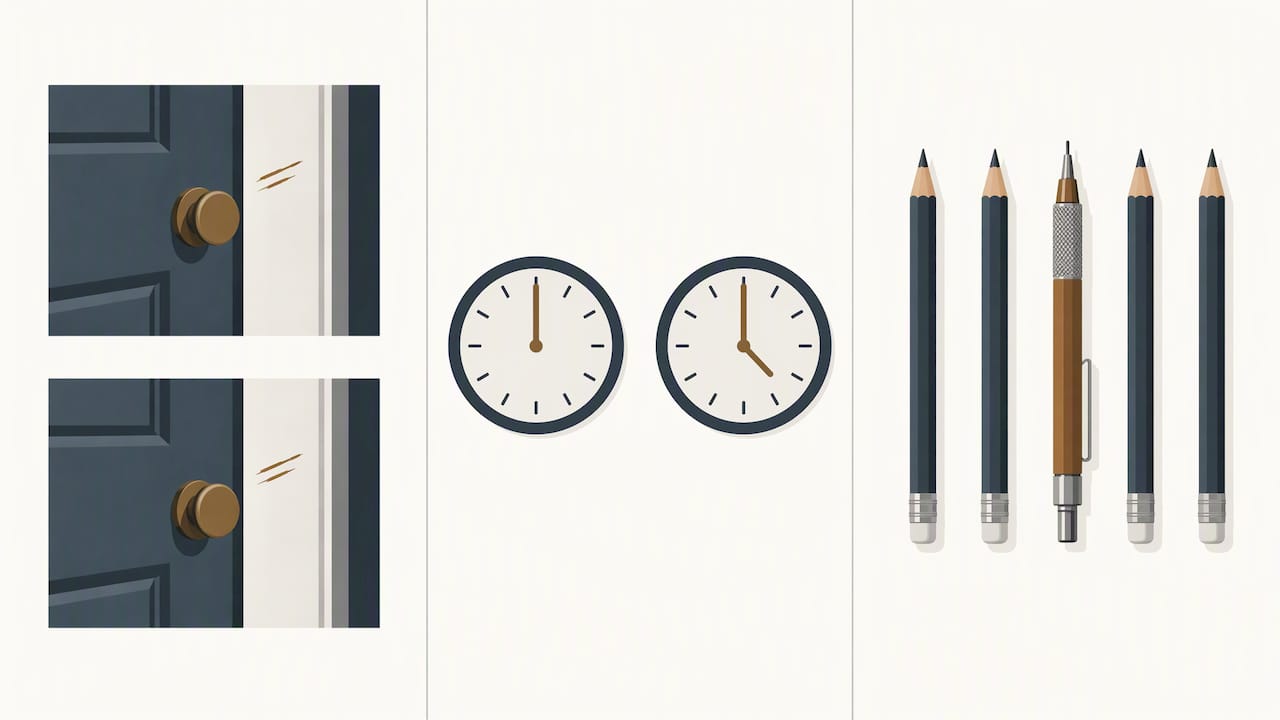
A useful reading habit is to pause when the detective announces that the room was sealed. Ask what exactly was checked: the door, the window, the chimney, the floor? Authors tend to be careful about what the witnesses verified and vague about what they assumed. The gap between those two is often where the solution lives.
How do authors make an impossible crime possible?
Behind every sealed room is a mechanism, and the mechanisms fall into recognizable families. Knowing them will not spoil a good book; it will make you a sharper reader and make the author’s craft easier to admire. Here are the main categories, each with a cue to watch for:
- Not actually locked: the door appears secured but was tricked, such as a bolt manipulated from outside or a lock that never fully engaged. Cue: unusually detailed descriptions of hardware, or a witness who “heard” a key rather than saw one.
- Locked after the fact: the room was open when the crime happened and sealed later, often by someone who “discovered” the body. Cue: the person who breaks in controls the story of what they found.
- Hidden entrances or panels: a secret passage, a sliding wall, or a flaw in the architecture. Cue: a house with a history, odd measurements, or an unexplained gap between rooms.
- Timeline tricks: the victim died earlier or later than everyone believes, so the apparent alibi collapses. Cue: clocks, deliveries, and “last seen alive” statements that rest on one witness.
- Mechanism from outside: strings, melting ice, or a device that acts at a distance, so the killer was elsewhere when the death occurred. Cue: a stray object, an unexplained puddle, or a wire that nobody mentions until late.
- Disguised suicide or accident: the crime looks like self-harm, which explains the sealed room because no killer was ever required. Cue: a death scene that is tidy in the wrong places.
- Misreported evidence or witness error: someone saw what they expected to see, or lied. Cue: a key fact resting on a single person’s word.
Fair authors plant these clues in the scene description itself. The trick is to read the setup as a puzzle rather than as atmosphere. If a narrator lingers on a window latch, a rug pulled out of place, or a cup of tea going cold, ask what job that detail does. Good puzzle writers rarely include a detail that does nothing.
Mechanisms also depend on the era. A Golden Age author can rely on heavy bolts, servants who sleep through noise, and rooms that really can be sealed. A modern author has to work around phones, cameras, and forensic science, which has pushed writers toward fresh twists. Some build digital or virtual locked rooms, such as a system that logs every entry yet still records a crime. Others engineer alibis so that a person is verifiably elsewhere while their actions reach the scene by other means.
The pleasure of the form is the same across all of these. You are given an impossibility and a fair set of facts, and the answer is a way of seeing the facts differently. When it works, you do not feel cheated. You feel like you should have gotten there first.
Which locked room mysteries should you read next?
Start with the foundations, then branch out to newer work and to our own catalog. If you want a quick guide to the genre, the Chicago Public Library’s list of locked room mysteries for amateur sleuths is a good example of the kind of reading list curious sleuths use to find their next book.
Classics that define the genre
- “The Murders in the Rue Morgue” by Edgar Allan Poe: the story most often credited as the first of its kind, and still a model of the sealed-room setup.
- “The Mystery of the Yellow Room” by Gaston Leroux: an early, influential novel built around a chamber no one could have entered or left.
- “The Speckled Band” and “The Adventure of the Empty House”: two Sherlock Holmes cases that show how the form works at short length.
- “The Hollow Man” (published in the US as “The Three Coffins”) by John Dickson Carr: the book experts voted the best locked-room mystery in that 1981 survey.
- “The Murder of Roger Ackroyd” by Agatha Christie: a masterclass in fair play and in how far an author can stretch it.
Contemporary and cross-media picks
- Edward D. Hoch’s short stories: compact impossible crimes that suit a single sitting.
- Visual novels and mystery games: interactive puzzles where you gather the evidence yourself and commit to an answer.
- Recent novels and films: many borrow sealed-house and sealed-train setups, so look for any story that traps its characters and asks how.
From our catalog
- Detective Harry Smark (The Vault’s Echo Book 2): a detective thriller for readers who like to follow a sleuth through a case where the facts refuse to line up, which is exactly the itch locked-room fans want scratched.
- A BUNCH OF DAISIES: an e-book for readers who enjoy suspense that rewards attention to small details.
- A Bunch Of Daisies Audio: the audio edition, a good fit if you prefer to take your suspense in your headphones on a commute or a walk.
Before you buy, you can sample titles with a preview chapter. Our post on preview chapters for domestic thrillers shows how sampling works, and if you like your puzzles short, our thriller novella picks are built for finishing in one sitting.
Why we curate locked room mysteries
I keep coming back to this form for a simple reason: it respects the reader. A good locked-room story does not ask you to trust the author blindly. It lays everything on the table and dares you to see it. The best ones leave a small, pleasant sting when the answer arrives, the feeling of having looked straight at the solution without noticing.
What makes a title satisfying, to my eye, is balance. The impossibility has to be genuinely puzzling, the clues have to be genuinely fair, and the solution has to be simple enough to feel inevitable once it is spoken. A trick that needs a diagram and a footnote tends to impress less than one that fits in a sentence.
That is also why we lean on preview chapters. Suspense is a matter of taste, and a first chapter tells you quickly whether an author’s voice and pacing suit you. Sampling before you buy means you spend your time on books that actually hook you, and it gives newer authors a fair hearing.
Browse our thriller shelves, pick a title that sounds like your kind of puzzle, and read the opening pages. If the sealed door at the start makes you lean closer, you have found your next book.
— lorraine
Where can you sample and buy these titles?
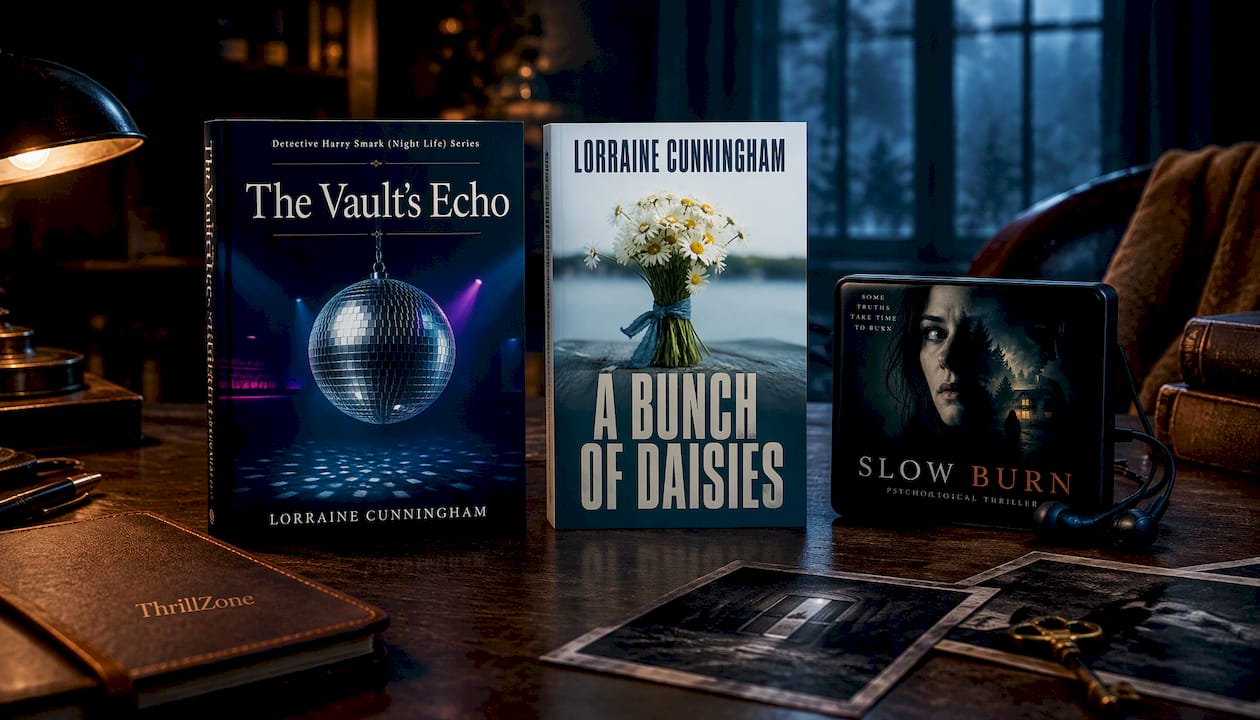
You can sample titles with a preview chapter before buying. Read a preview chapter and decide whether the mystery has you before you spend anything. Buying and downloading is a short, simple process, and our whole store is built around digital thriller, horror, and suspense reading.
[CTA_IMAGE_PLACEHOLDER]
Ready to start? Here are your next steps:
- Meet the detective in Detective Harry Smark (The Vault’s Echo Book 2).
- Try A BUNCH OF DAISIES in print-style e-book form, or listen to A Bunch Of Daisies Audio.
- Browse our full range of E-BOOKS, our Thriller collection, and our Horror collection.
Pick one, read the preview chapter, and see whether the door stays shut.
FAQ
What is the most famous locked room mystery?
Edgar Allan Poe’s “The Murders in the Rue Morgue” (1841) is widely cited as the first and remains the best-known. In a 1981 survey of 17 experts, John Dickson Carr’s The Hollow Man (published in the US as The Three Coffins) was voted the best, according to the University of Maryland.
What is the most controversial Agatha Christie book?
Many readers point to The Murder of Roger Ackroyd. It is often discussed because it bends the genre’s expectations while staying technically fair, with subtle clues that can be found on rereading.
How do you solve a locked room mystery?
Treat the scene description as evidence. Note what the witnesses actually verified versus what they assumed, watch for repeated details and odd timings, and run through the usual solution families: a trick lock, a hidden entrance, a timeline error, or a mechanism worked from outside.
Which John Dickson Carr novel is considered the best?
The Hollow Man, published in the US as The Three Coffins. A 1981 expert survey rated it the best locked-room mystery of all time, as reported by the University of Maryland.
Sources
Recommended
- Preview Chapters First: 12 Domestic Thrillers, 3 Exclusive Previews
- 10 Summer Thriller Reads to Pack, Preview Before You Buy
- Underrated Thrillers: 7 Films, Book Previews, and Forum Finds
- 15 One Sitting Horror Novellas to Read Tonight, Includes Previews