2026

Google Play Books Alternatives for Thriller and Horror Readers

The best alternative to Google Play Books depends on what you read and how you like to buy. Most readers end up with a mix of four things: a big general ebook store, a public library app, a free public-domain source, and a niche store built around one genre. If you read thrillers, horror and suspense, that last one is the piece that usually changes how you find your next book. Below is how each type works, what it costs you in time or money, and what to check before you commit.

Thrillerhorrorsuspense
thrillerhorrorsuspense.store
Find Your Next Dark Read
Browse thriller, horror, and suspense e-books, with exclusive chapters to preview before you buy.

Browse the e-book store

TL;DR

  • No single app replaces Google Play Books for everyone. Pick by need: broad catalog, free borrowing, free classics, or a curated genre shelf.
  • Library apps cost nothing with a card, but popular titles can mean a wait and loans expire.
  • Public-domain sources are free, but they mostly cover older works, not recent thrillers.
  • For genre fans, a store that lets you read a chapter before buying cuts the risk of a dud. That is what we built our store around.
  • Check file format, device support and whether you can sample first before you pay anywhere.

Table of Contents

Why readers look beyond Google Play Books

Google Play Books is a solid app. It lets you tap a Free Sample button in the app to preview a book, and the price shows on the Buy button when you are ready to purchase. It installs from the Play Store on Android and the App Store on iOS, as the same guidance explains.

So why leave, or add something? The reasons we hear from readers are practical:

  • The catalog is huge, and genre discovery is hard. In a store that sells everything, a good horror novel from a small author sits beside thousands of other listings.
  • You want a different device setup. Some readers prefer a dedicated e-reader, or a browser-only workflow.
  • You want to spend less. Borrowing and free sources cut the cost of a heavy reading habit.
  • You want a more curated shelf. If you only read dark fiction, a store that carries only dark fiction saves time.

None of these means the app is bad. They mean one app rarely does every job well.

The main types of ebook services

Here is a quick map before we go through each one.

Type of service Cost to you Best for Main trade-off
Large general ebook store Pay per book Widest selection, new releases Easy to get lost in the catalog
Public library app Free with a library card Heavy readers on a budget Holds on popular titles, loans expire
Public-domain library Free Classic horror and gothic fiction Few modern thrillers
Subscription reading service Monthly fee Readers who finish many books You may not own what you read
Genre-focused ebook store Pay per book Discovery in one genre, sampling first Smaller catalog by design

Large general ebook stores

These are the closest like-for-like swap. They sell nearly every mainstream title, they sync across phone, tablet and sometimes a dedicated reader, and most offer a free sample. The advantage is selection. The cost is that you pay full price for books you may abandon after a chapter if you skip the sample, and recommendations lean toward bestsellers.

If you stay with this type, get into the habit of reading the sample every time. A sample tells you more about voice and pacing than any blurb.

Public library apps

If you have a U.S. library card, you probably already have access to a free ebook service. Library ebook apps let you borrow ebooks, audiobooks and magazines with your card, and because libraries own a limited number of digital copies, popular titles can work like print books: you place a hold and wait. The same guide notes there are no late fees.

For a thriller reader, this is the best free option, with two things to plan around:

  1. Waitlists on new releases. A hot thriller can have a long queue. Put holds on several titles at once and read whichever arrives first.
  2. Expiring loans. You return the book when the loan ends. If you like to reread or annotate, you will want to own the books that matter to you.

Some library services use a different model, where you borrow instantly with no holds but each library caps how many titles you can borrow per month. Check your own library’s page for the current limit, since it varies by library.

Public-domain libraries

For classic horror, free is easy. Project Gutenberg offers tens of thousands of free ebooks, with a focus on older works whose U.S. copyright has expired. That covers the gothic tradition well, the sort of foundational ghost stories and monster tales that shaped the genre. It will not give you a thriller published in the last few decades.

Treat it as a supplement. It is a great way to read the roots of the genre at no cost.

Subscription reading services

A monthly fee for a rotating catalog suits people who read fast and do not mind borrowing instead of owning. The trade-off is the usual one with subscriptions: titles can leave the catalog, and what you can read depends on what the service has licensed. Work out how many books you finish in a month before deciding whether it beats buying individual titles.

Genre-focused ebook stores

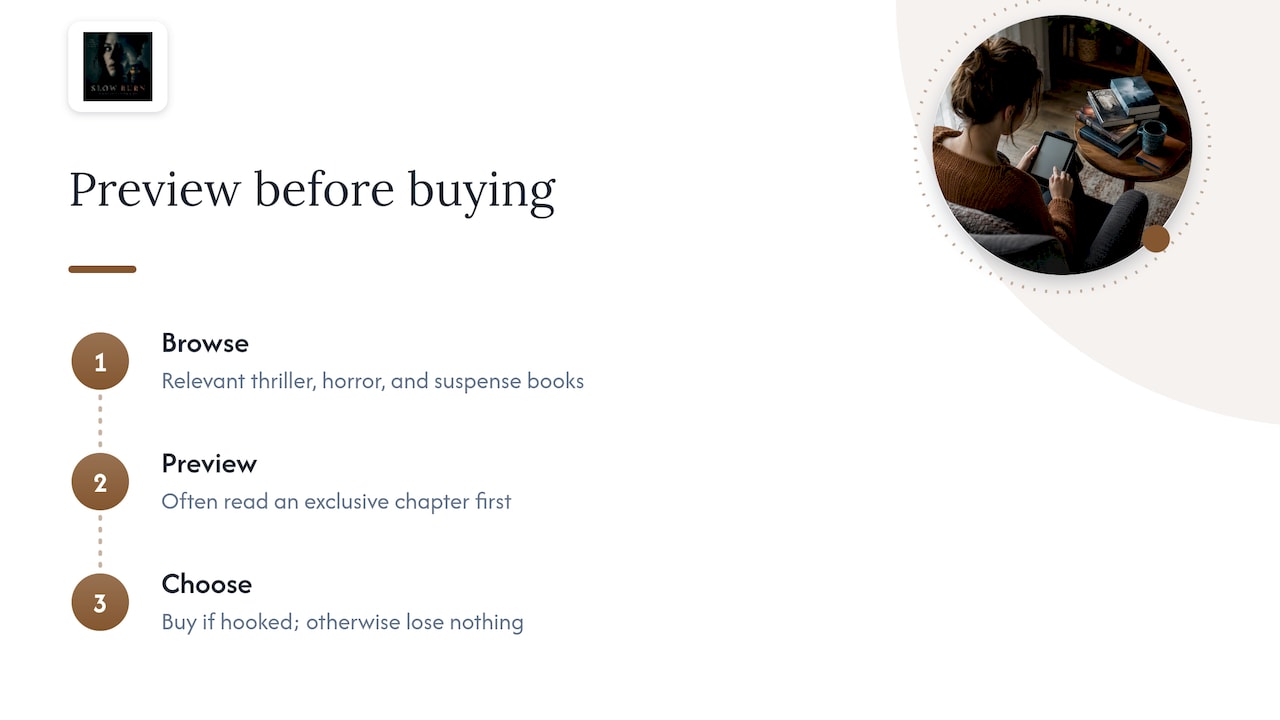
This is the type we run. A genre-focused store carries a narrower selection on purpose, so everything on the shelf is something a thriller, horror or suspense reader might want. The main benefit is discovery: you browse a shelf where every book is relevant, and you can often read an exclusive chapter before you pay.

That is the difference we think matters most for dark fiction. A scary book lives or dies on its opening chapters. If the voice grabs you, you buy. If it does not, you have lost nothing.
Genre-focused ebook stores

Preview before you buy: how it works across services

Sampling is the single best protection against wasted money, and almost every kind of service offers some version of it.

  • General stores usually give a free sample of the opening of a book. In Google Play Books, as noted above, that is the Free Sample button in the app.
  • Library apps work differently: the “preview” is simply borrowing the whole book, if it is available.
  • Genre-focused stores can feature exclusive chapters chosen by the seller, so you are reading a deliberate excerpt rather than a default cut.

When you read any sample, test three things:

  1. The first page. Does the voice pull you forward, or do you skim?
  2. The first hook. Thrillers should plant a question quickly. Horror should plant unease before it plants gore.
  3. The prose at your preferred pace. Short, punchy chapters suit a one-night read. Slow-burn atmosphere suits a long weekend.

Our own guides go deeper on this: how to pick ebook thrillers that keep you awake walks through what to look for in an opening, and psychological horror books by mood, with preview chapters helps if you want dread more than splatter.

Devices, apps and file formats

Before you move your reading anywhere, check that it works on the gear you own.

  • Phone and tablet apps are standard for stores and library services on both Android and iOS.
  • Dedicated e-readers are the most comfortable for long sessions, but support depends on the store and the file format.
  • Web browsers let you read without installing anything, which is handy on a work laptop or a shared computer.

On formats, EPUB is the common open standard. Google Play Books accepts EPUB 3.3, EPUB 3 and EPUB 2 and also works with PDFs, and many e-readers read EPUB natively. If you are building a library you want to keep, an open format gives you more freedom to move later than a locked one. Before you buy, look at the product page for the file format and for how the download works.

What to check when choosing for thrillers, horror and suspense

A general checklist works for any ebook service, but dark fiction adds a few extra questions.

Can you sample the genre you like?

A sample is essential for horror in particular, where tone is everything. A book can be marketed as a chilling thriller and read like a procedural. The opening pages tell you.

Is the shelf curated or just huge?

A big catalog is great when you know what you want. When you do not, a curated shelf does the sorting for you. Look for clear categories, such as thriller and horror, so you can browse by mood instead of scrolling.

Are there standalones?

Book club readers and casual readers often want a complete story without committing to a ten-book series. Our list of standalone suspense novels for one night is built for exactly that.

How easy is checkout and download?

A good digital store lets you buy and download in a few steps, with no account puzzles. Fewer steps means you start reading sooner, which matters when the mood strikes at 11 p.m.

What does a habit cost?

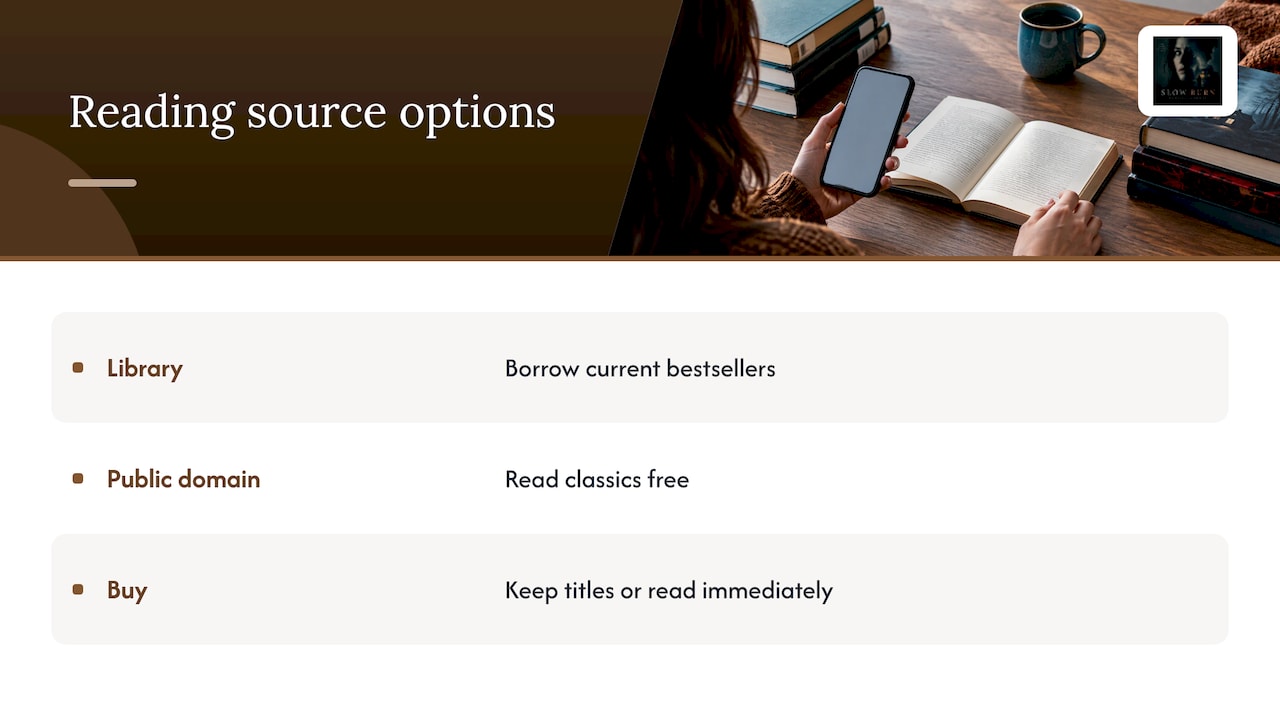
If you read a lot, mix sources. Borrow the bestsellers from your library, read classics free, and buy the books you want to keep or cannot wait for. We also keep a guide to thriller ebooks under five dollars for readers watching their budget.
Three ways to balance ebook reading sources

Does it help you find new authors?

This is where a niche store and a promotion-based discovery approach can beat a giant catalog. If you like finding writers before they are famous, see our piece on alternatives to the big discovery newsletters for horror, thriller and suspense.

A simple setup that works for most readers

You do not need to pick one winner. Here is a practical combination.

  1. Keep your general app for the books you already own and for titles you cannot find elsewhere.
  2. Add your library card for free reading of new releases, with holds placed in advance.
  3. Use a public-domain source when you want classic horror at no cost.
  4. Buy from a genre shelf when you want to discover something new and read a chapter first.

This keeps costs low, keeps your library portable, and means a bad book costs you a few minutes, not a purchase.

Our perspective

We built this store because we kept seeing the same problem: readers of dark fiction buy a book on the strength of a cover and a blurb, then find out three chapters in that the voice is not for them. In a catalog of millions, a small author with a strong first chapter rarely gets a fair look.

That is why we focus only on digital thrillers, horror and suspense, and why we put exclusive chapters in front of you before you buy. We think a preview is more honest than a promise. It lets the writing speak for itself, and it lets you decide with your own taste instead of ours.

Our selection includes original work, like our title Elvis Died I Was There, because we want readers to find voices they will not meet on a crowded general shelf. A tighter shelf also means that when you browse, nearly everything is something you might actually want to read.

If you already love your current app, keep it. We see our store as the place you go when you want a new author, a fresh storyline, or a book club pick you can sample first.

lorraine

Start with a chapter

If you want to try a genre-focused shelf, start where the tone is strongest. Our store carries digital thriller, horror and suspense ebooks, with exclusive chapters you can read before you decide. You can browse the full ebook shelf, or jump straight to a title such as Elvis Died I Was There.
Thrillerhorrorsuspense

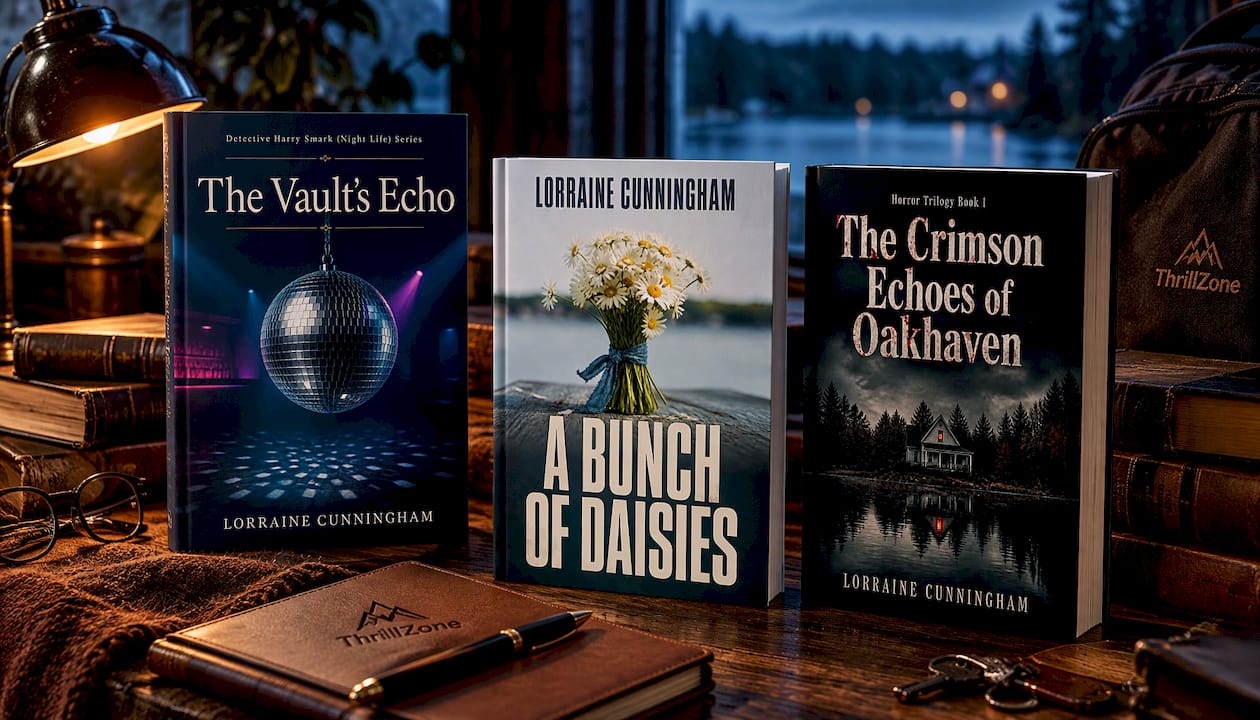
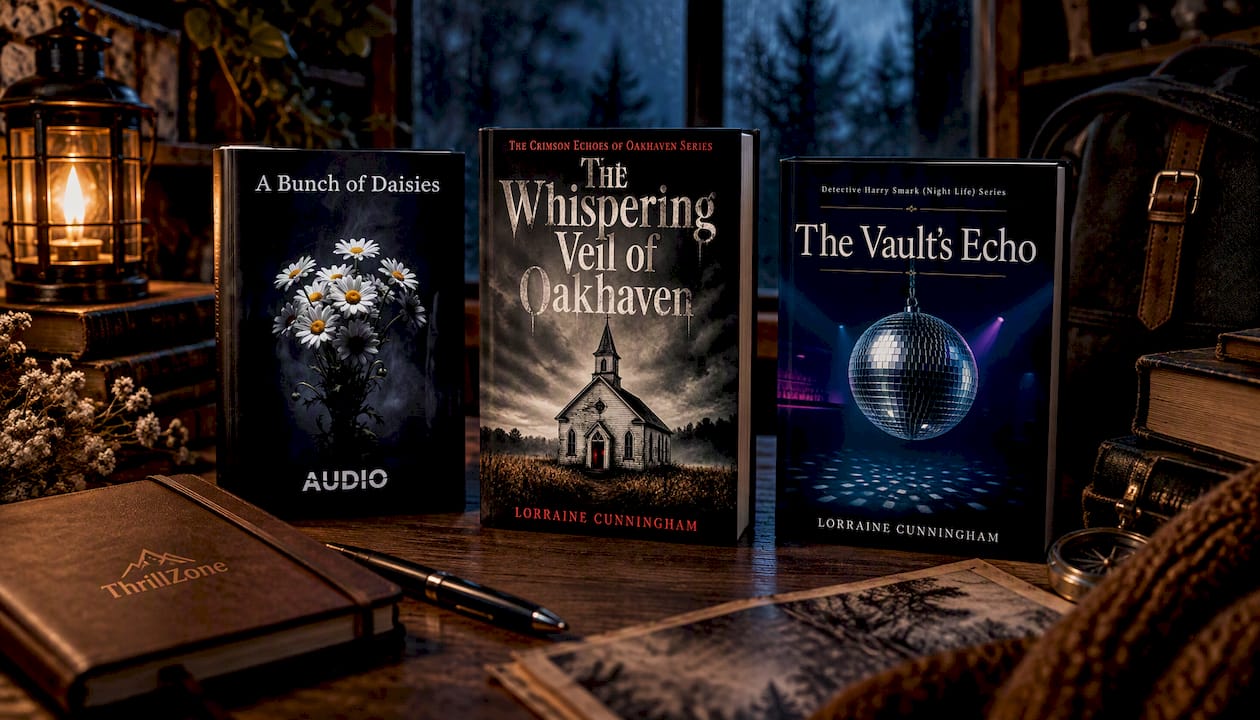
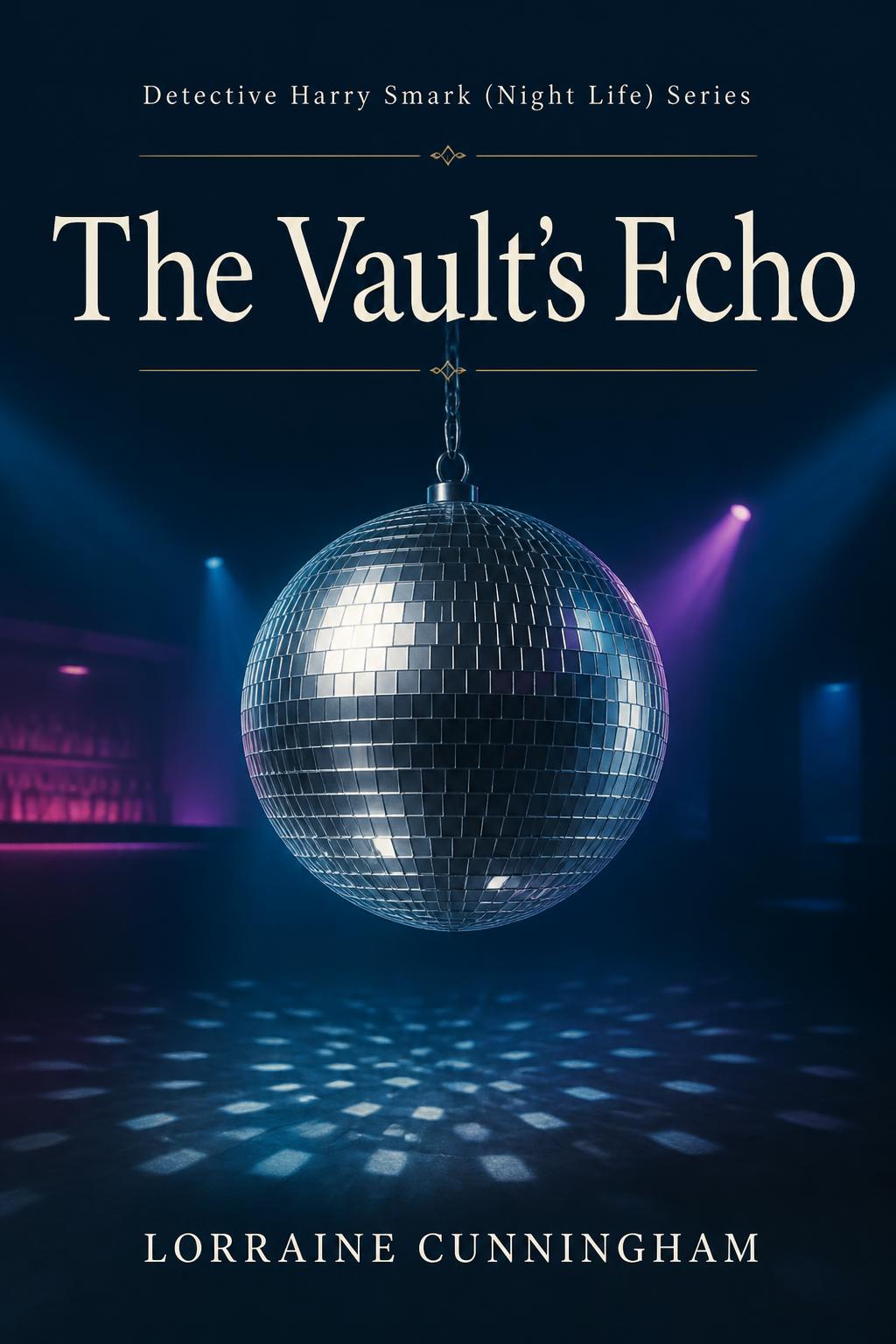
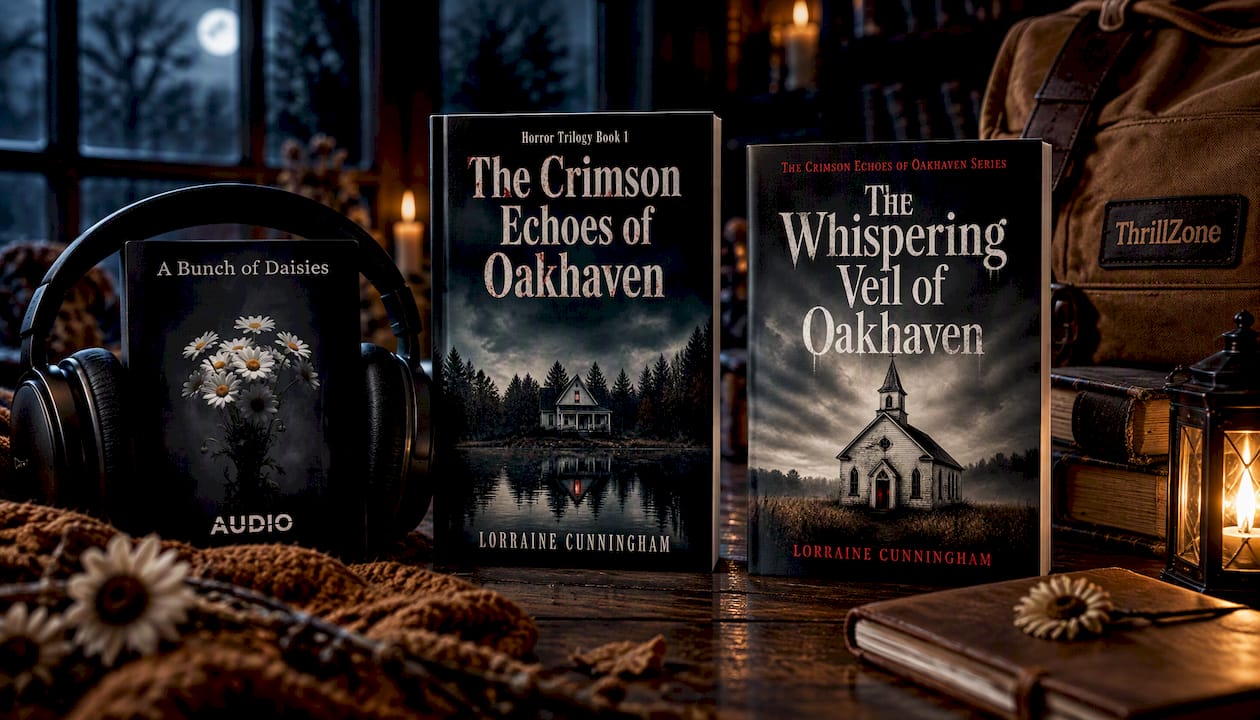
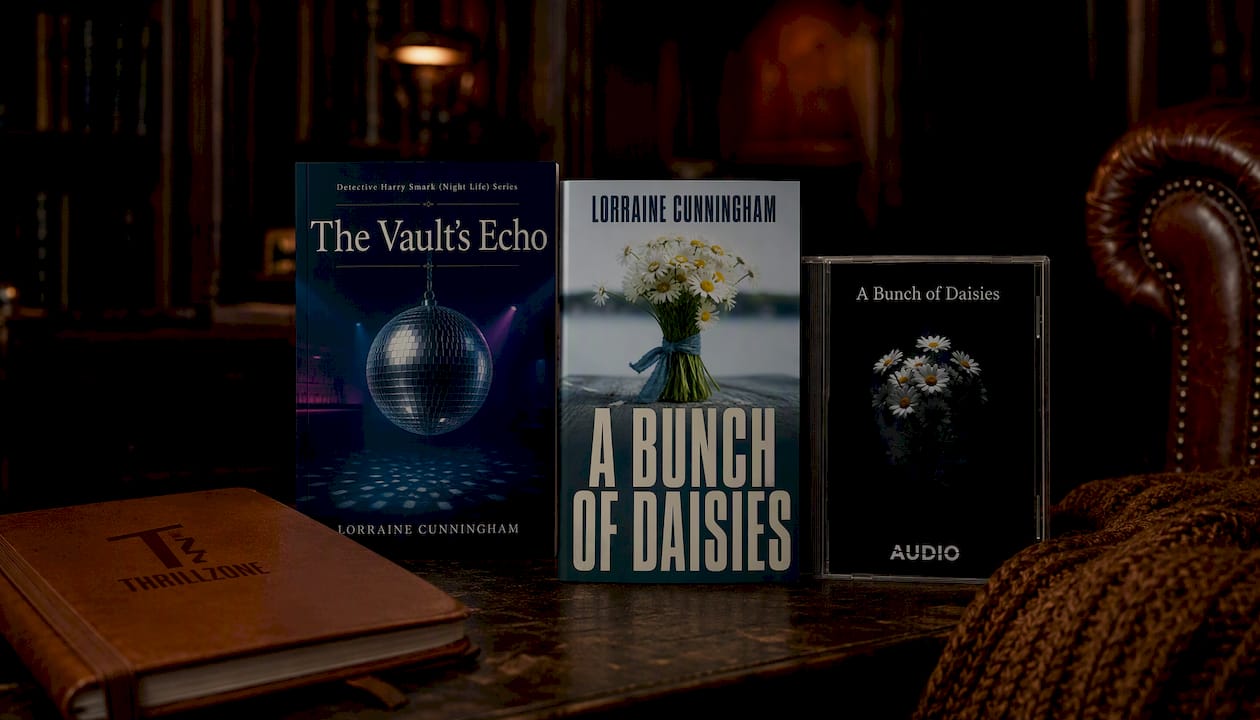
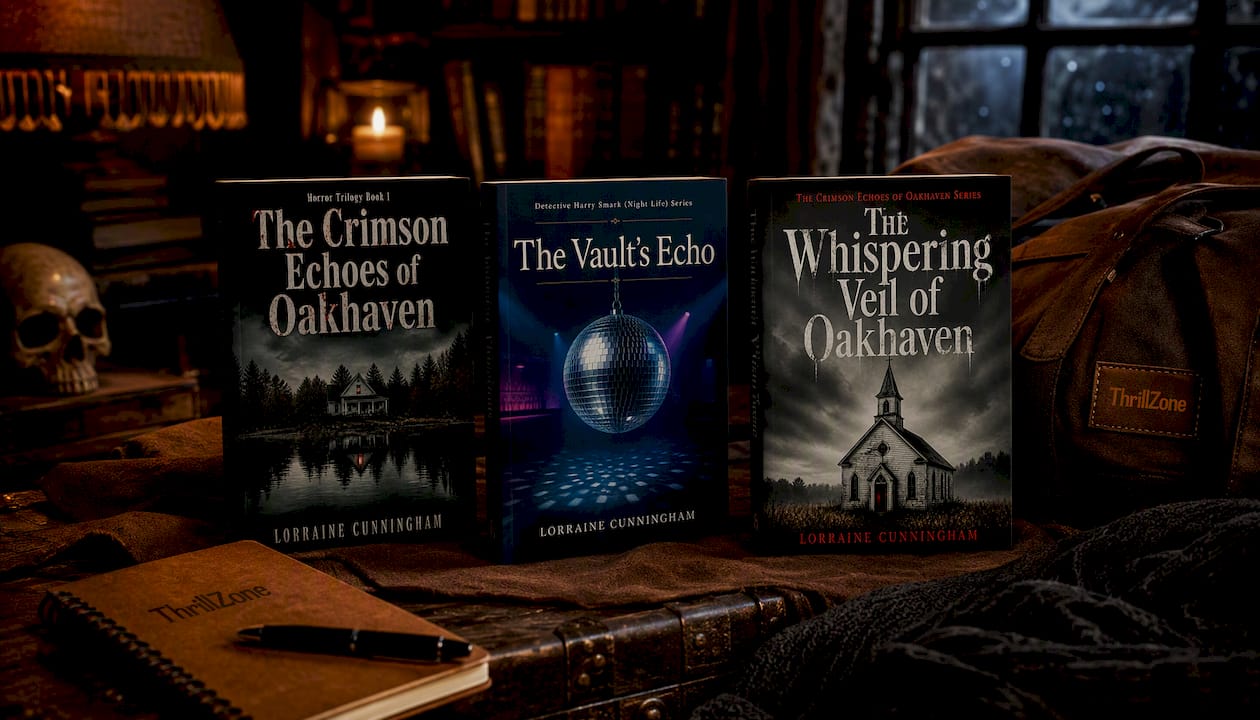
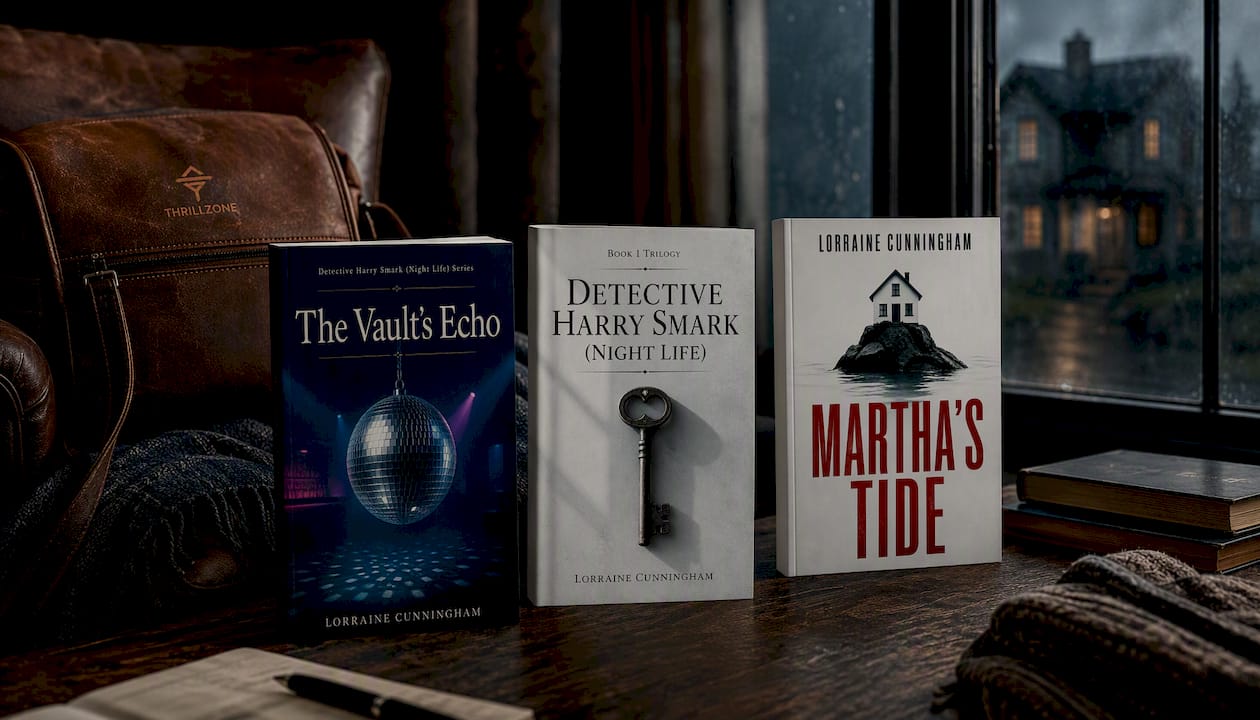
Book club members can start with series openers like The Crimson Echoes of Oakhaven (Book 1), then move to Detective Harry Smark (The Vault’s Echo Book 2) if the first one hooks them.

FAQ

What is the best free alternative to Google Play Books?

For recent thrillers and horror, a public library app is the best free option, since you borrow with a library card at no cost. For older classics, a public-domain library is free and covers the roots of the genre. Expect holds on popular library titles and loans that expire.

Can I preview an ebook before buying it?

Yes, with most stores. Google Play Books has a Free Sample button, and genre-focused stores like ours feature exclusive chapters you can read before purchase. Library apps let you read the whole book when you borrow it, if a copy is available.

Which file format should I look for?

EPUB is the most widely supported open format and works on most e-readers and reading apps. Google Play Books accepts EPUB 3.3, EPUB 3 and EPUB 2. Check each product page for the file type before you buy.

Is a niche store better than a big one for horror and thrillers?

It depends on what you want. A big store has the broadest selection. A niche store gives you a curated shelf where everything fits your genre, and a chance to read a chapter first, which helps you discover new authors with less risk.

What should a book club look for in an ebook service?

Look for standalone or series-opening titles that everyone can start at the same point, samples so members can try before buying, and a download that works on every member’s device. Library apps help if members want to borrow instead of buy.

Sources

New Thriller Authors to Read Now, and How to Sample Them

The best way to find new thriller authors is to pick a subgenre you already love, read a debut or breakout title in it, and sample the first chapter before you pay. Below you’ll find writers worth trying, grouped by the kind of story they tell, plus a quick method for judging a voice in ten minutes.

Thrillerhorrorsuspense
Sample a Thriller Before You Buy
Explore thriller, horror and suspense e-books, with exclusive chapters to preview before you decide what to read.

Browse e-books

TL;DR

  • Start with debuts and second novels: they tend to be the most inventive, and critics track them month by month.
  • Match the author to your taste: locked-room, domestic, survival, medical or high-concept.
  • Read a sample before buying. Chapter one tells you about pacing and voice faster than any blurb.
  • Book clubs do best with thrillers that have a moral knot to argue over, not just a twist.
  • Our store lets you preview exclusive chapters of thriller, horror and suspense e-books before you buy.

Table of Contents

Who counts as a “new” thriller author?

The phrase covers three kinds of writers, and mixing them up is why many lists feel unhelpful.

  1. True debuts. First published novels, often from people who worked in another field first.
  2. Recent breakouts. Writers with a handful of books who have only lately reached a wide audience.
  3. Newly visible independents. Self-published authors with a steady release rhythm who are only now finding readers outside their niche.

Each group rewards a different kind of reading. Debuts give you a fresh premise and a risk of uneven pacing. Breakouts give you a proven voice and a backlist to binge. Independents give you volume and speed, and sometimes the strangest ideas.

To see what the industry itself is watching, Publishers Weekly’s Fall 2026 mysteries and thrillers preview highlights bold debuts, follow-ups to bestsellers and literary authors trying genre fiction. That mix is a good picture of where the genre is right now.

Debut thriller writers worth your attention

Debuts are where the genre’s newest ideas show up first. A few recent ones stand out for their premises.

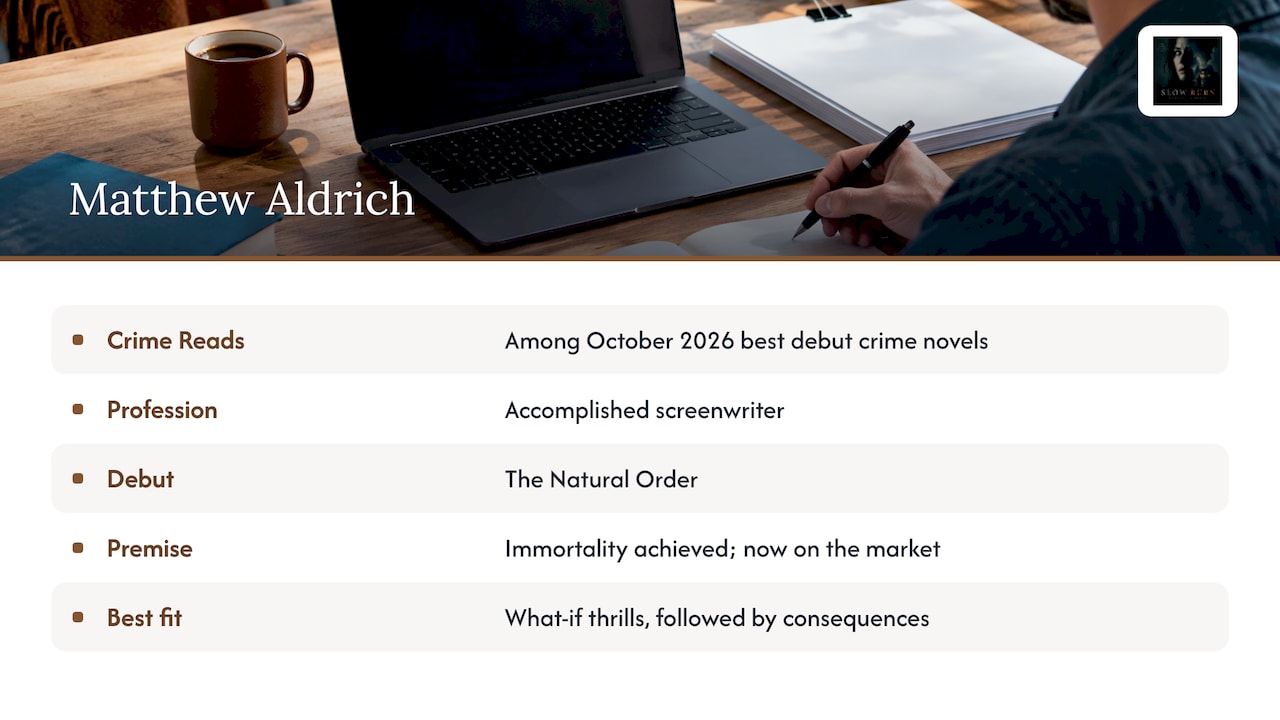
Matthew Aldrich: a screenwriter’s high concept

Crime Reads names Matthew Aldrich among its best debut crime novels of October 2026. He is an accomplished screenwriter, and his debut, The Natural Order, rests on a premise that fits a pitch meeting: immortality has been achieved and is now going on the market. If you like thrillers that ask “what if” and then follow the consequences, this is a clean entry point.

Matthew Aldrich: a screenwriter's high concept

Ellie Levenson, Julie Doar and Tanya Grant

A round-up of debut thrillers from this year points to three first novels with very different moods:

  • Ellie Levenson’s Room 706 came out in January 2026 and drew attention on social media.
  • Julie Doar’s The Gallagher Place centers on family secrets and an unsolved murder in New York’s Dutchess County.
  • Tanya Grant’s Made You Look is an influencer-focused locked-room thriller set in the Catskills.

Those three cover the main appetites: a buzzy contemporary hook, a slow-burn family mystery and a confined-space puzzle.

Abigail Moyer: medicine meets crime

In a Publishers Weekly interview about One of My Patients Is a Vampire, Abigail Moyer says she likes the idea of making diagnosis and crime-solving one and the same. That is a useful lens if you enjoy procedurals but want something with a stranger angle, and it sits where thriller and horror overlap.

A theme running through the debut class

Crime Reads editor Molly Odintz notes that several of the debuts in its June and July 2026 roundup comment on problematic aspects of true crime culture. If you like thrillers that wink at the way we consume crime, this is a thread to follow.

Breakout voices with a backlist to binge

If debuts feel like a gamble, start with writers who have broken through and left a trail of books behind them.

Freida McFadden

Her official books page sorts her catalog into The Housemaid series, standalone thrillers, women’s fiction and short stories. That structure makes her easy to enter: pick a series if you want continuity, or a standalone if you want a single sitting. Her author site describes psychological thrillers built around ordinary women in dangerous situations.

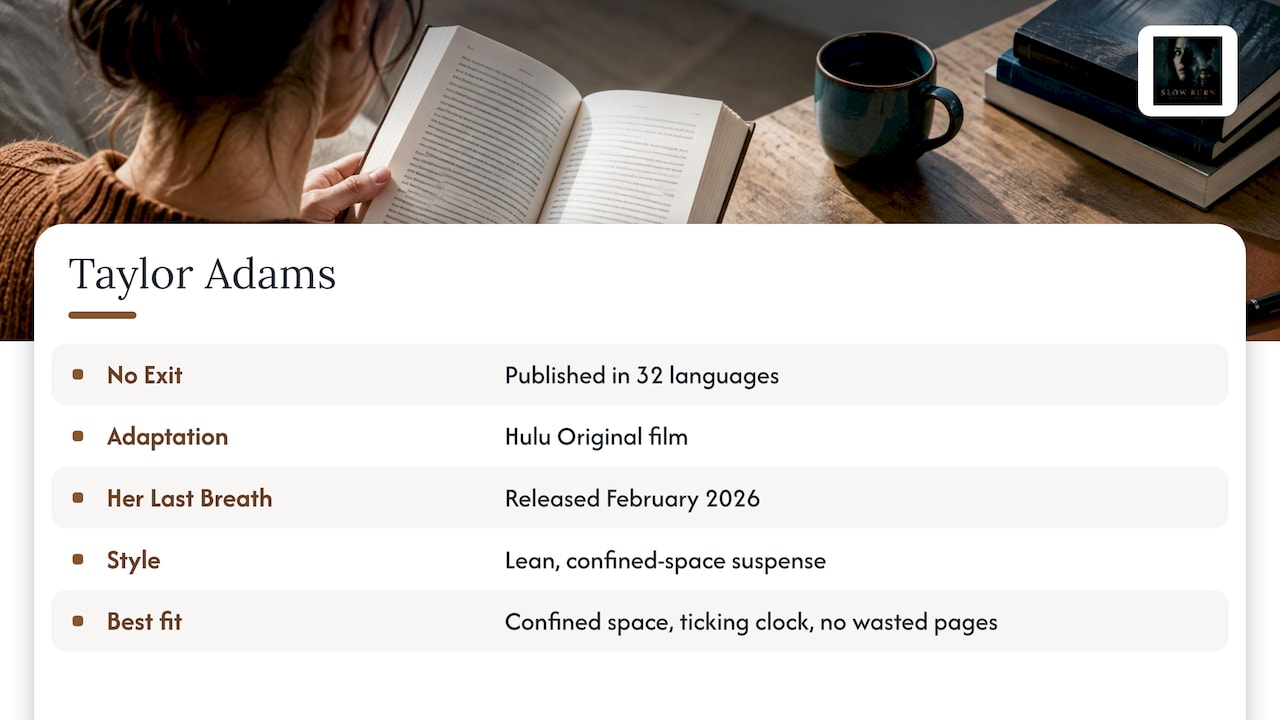
Taylor Adams

Taylor Adams writes lean, confined-space suspense. According to his author bio, No Exit has been published in 32 languages and adapted as a Hulu Original film, and Her Last Breath released in February 2026. His books page also lists Hairpin Bridge, The Last Word, Our Last Night and Eyeshot. Pick him when you want a single location, a ticking clock and no wasted pages.

Taylor Adams

Tracy Sierra

Her second novel, Warning Signs, follows a father-son ski weekend that turns into a fight for survival, and it comes after her first, Nightwatching. If you like survival suspense with a family at its center, start here. Her official site shows both the US and UK covers, which is a handy way to confirm you have the right book.

Elizabeth Day

Elizabeth Day is an award-winning author and broadcaster, and by her own account the author of 10 books. Her novel One of Us was published in the UK in September 2025 and in the US in February 2026, according to her Substack. She is a good pick if you want a literary writer’s attention to character inside a suspense plot.

Kiersten Modglin and the independent scene

One independent-author round-up recognizes Kiersten Modglin as a prolific self-published psychological suspense writer with a fast, steady release schedule. For readers who finish books quickly, a writer with a deep, regular backlist is a gift.

Find your match by subgenre

A name means little until you know what kind of tension you’re in the mood for. Use this as a shortcut.

If you want… Try Why it fits
A confined-space puzzle Tanya Grant, Taylor Adams Locked-room and single-location setups keep the stakes tight
Family secrets and a cold case Julie Doar An unsolved murder and a small-town setting drive the story
Survival against the clock Tracy Sierra A weekend trip turns into a fight to stay alive
A high-concept “what if” Matthew Aldrich A single big idea carries the whole plot
Thriller with a horror edge Abigail Moyer Medicine and the supernatural sit side by side
Page-turning psychological suspense Freida McFadden, Kiersten Modglin Large catalogs, fast pacing

If you want more picks by subgenre, we’ve written guides on action thrillers worth sampling, domestic thrillers with chapter previews and legal thrillers with free previews. Short on time? Our guide to thriller novellas you can finish in one sitting is the place to start.

How to preview a thriller author before you buy

A new author is a small bet, and sampling shrinks it. Here is a routine that takes about ten minutes.

  1. Read the first chapter, not the blurb. Blurbs are written to sell. The opening pages show you the real prose.
  2. Check the hook by the end of chapter one. A good thriller has made you ask a question you need answered.
  3. Notice the sentences. Are they short and propulsive, or long and atmospheric? Neither is better, but one will suit you.
  4. Look at the shape of the catalog. Series, standalones and short stories, like the categories on McFadden’s books page, tell you how to read an author in order or out of it.
  5. Decide at the cliffhanger. If you want the next page right now, buy.

Publishers have long encouraged this habit. Penguin Random House’s author newsletter notes that many online retailers offer a preview from the beginning of a book, and it describes early-reader programs such as a free daily email excerpt service and NetGalley, where readers request digital galleys of forthcoming books. Between those routes and the sample button on a store page, you rarely need to buy blind.

What the bestseller lists tell you, and what they don’t

Bestseller lists are a quick read on what other readers are buying. The American Booksellers Association publishes an indie mystery and thriller bestseller list that offers a snapshot of what is selling in independent bookstores nationwide. It’s a good place to spot an author who is climbing before everyone is talking about them.

Lists reward momentum, though, not fit. A title can top a chart and still not suit your taste. That’s why we pair any list with a sample: the list tells you what’s popular, and the first chapter tells you if it’s for you.

Thrillers that spark book club arguments

A good book club pick gives people something to disagree about. When you scan new authors for your group, look for these qualities:

  • A moral gray zone. If readers can’t agree whether a character was right, the discussion writes itself.
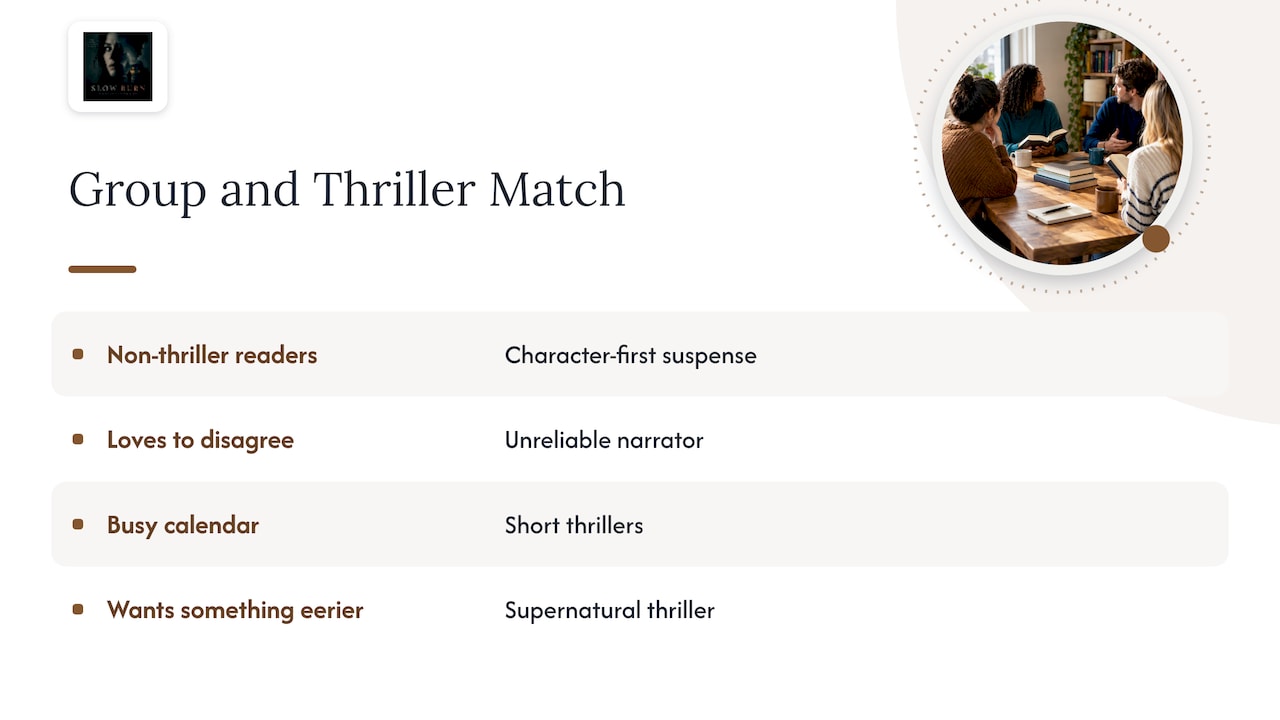
  • An unreliable narrator. Debating what was true and what was spin keeps the conversation going well past the reveal.
  • A theme beyond the crime. The true crime culture thread that critics see in this year’s debuts is a ready-made topic. So is the question of what it would mean if immortality went on sale in The Natural Order.
  • A confined setting. Locked-room stories invite the “what would you have done” question.
  • A manageable length. Novellas and tight standalones are easier to finish before the meeting.

A practical tip for groups: have everyone read the same free sample first, then vote. It turns choosing a book into the first discussion, and nobody gets stuck with a title they dislike.

Our perspective

We built this store around one frustration: buying a thriller you were excited about, then discovering by page thirty that the voice isn’t for you. New authors make that risk bigger, because you have no history with them.

That’s why we focus only on digital thriller, horror and suspense titles and why we offer exclusive chapters you can read before you buy. A preview lets a new writer earn your trust on the page instead of in a blurb. For readers, that means discovering authors you would otherwise skip. For authors, it means being judged on their actual work.

We also think a curated shelf beats an endless one. When every title sits in the same three genres, browsing is faster, and you spend your time reading instead of filtering.

lorraine

Start reading in our store

If you’d like to try a few unfamiliar names, browse our thriller collection or our horror collection. Each collection is built for readers who want something new and want to sample it first.

Detective Harry Smark (The Vault's Echo Book 2)

A few places to begin: the original title Elvis Died I Was There on our home page, The Crimson Echoes Of Oakhaven, Detective Harry Smark (The Vault’s Echo Book 2) and A Bunch of Daisies. If budget matters, our list of thriller e-books under 5 dollars is a good place to start.

A reading plan for your next month

If you want a structure rather than a pile, try this.

  • Week one: one debut. Choose from the premises above and read the sample first.
  • Week two: one breakout author’s standalone. Pick a book that stands on its own so you aren’t committing to a series.
  • Week three: a short read. A novella resets your pace and gives you a quick win.
  • Week four: your wildcard. Take the strangest premise on your list, the one a friend wouldn’t expect you to pick.

Keep a note of what hooked you: the setting, the narrator or the pacing. After four weeks you’ll know what to look for in the next author, and your own list will be better than any ranking.

FAQ

Where can I find new thriller authors?

Start with critic roundups of debut crime novels, the trade previews of upcoming mysteries and thrillers, and the indie bestseller list. Then browse a genre-focused store where you can sample chapters. Following an author you like on their official site also shows you who they recommend and what they publish next.

How do I know if a new author is worth buying?

Read the first chapter. If the voice grabs you and you want the next page, buy. If you find yourself skimming, move on, because the premise alone rarely carries a book.

Are debut thrillers riskier than established authors?

They are less predictable, which is part of the appeal. A sample removes much of the risk, since you see the writing before you spend anything. Debuts also tend to carry fresh premises that established series sometimes lack.

What should a book club look for in a thriller?

Pick a story with a moral question, an unreliable narrator or a theme larger than the crime. Shorter books are easier to finish on schedule. Sharing a sample beforehand helps the group agree.

Sources

YA Thriller Books: Where to Start and How to Choose

YA thriller books are suspense novels written with a teenage protagonist at the center and a story that moves fast. They cover murder mysteries, psychological twists, survival plots and horror-tinged chills. Adults read them in large numbers too. The best way to pick one is to decide which kind of tension you want, check the content, and read a sample chapter before you commit.

Thrillerhorrorsuspense
thrillerhorrorsuspense.store
Find Your Next Suspense Read
Browse thriller and horror e-books, and preview exclusive chapters before buying to see which stories hold your interest.

Browse the collections

TL;DR

  • “YA” means young adult: stories about teens, written for roughly teenage readers, but read and enjoyed by all ages.
  • The core of the genre is a teen who has to solve the problem alone, because the adults who should help cannot or will not.
  • Pick by flavor: whodunit, psychological, dark academia, action or horror-leaning.
  • Check series order and content intensity before you buy, and sample the first chapter.
  • Our thriller and horror collections let you preview chapters first.

Table of Contents

What counts as a YA thriller

Two ideas are packed into the phrase. “YA” tells you the main characters are teens and the emotional concerns are theirs: friendship, loyalty, family, identity, the fear of being believed or not. “Thriller” tells you the story runs on danger, secrets and a ticking clock.

The bones are the same as in adult suspense. Literary agent Rosemary Stimola told Publishers Weekly that YA thrillers share the underlying structure of adult ones: complex characters, fast-moving plots and mounting tension. What changes is the angle of view and the stakes. The threat usually lands inside a school, a friend group, a small town or a family.

Two features show up again and again:

  1. The teen drives the plot. Writer Emma Haughton explains for Writers & Artists that in a YA thriller the protagonist needs real agency, because the story cannot lean on police or parents to resolve the central conflict. That is why so many of these books start with someone nobody believes.
  2. The pace is quick from page one. The same guidance notes that teen readers have plenty competing for their attention, so high conflict and momentum from the first sentence matter. If you like books you can finish in a weekend, this is your corner of the shelf.

The category has also matured. Publishers Weekly reports an increasing overlap with horror and supernatural themes next to the traditional mystery and crime elements. So “YA thriller” now covers a wide range, from a cozy-adjacent puzzle to something that keeps the hallway light on.

Pick your flavor of teen suspense

Most disappointments with a YA thriller come from a mismatch of type, not quality. Here is a quick map.

If you want… Look for What it feels like
A puzzle to solve Whodunit, amateur sleuth, group of suspects Clues, red herrings, a reveal you try to beat
Mind games Unreliable narrator, secrets inside a friend group Doubt about everyone, including the narrator
Atmosphere Dark academia, boarding schools, old estates Rules, societies, and something rotten under the polish
Adrenaline Survival, dystopian chase, conspiracy Short chapters, constant motion
Chills Supernatural thriller, horror crossover Dread first, answers later

If the dark academia row caught your eye, our piece on dark academia thrillers you can sample first goes deeper. For the adrenaline row, action thrillers worth sampling before you buy is a good next stop.

YA thrillers worth knowing

The titles below come from published reviews and publisher announcements. Dates are release dates, so check the retailer page for the edition you want.

Amateur sleuths and crime

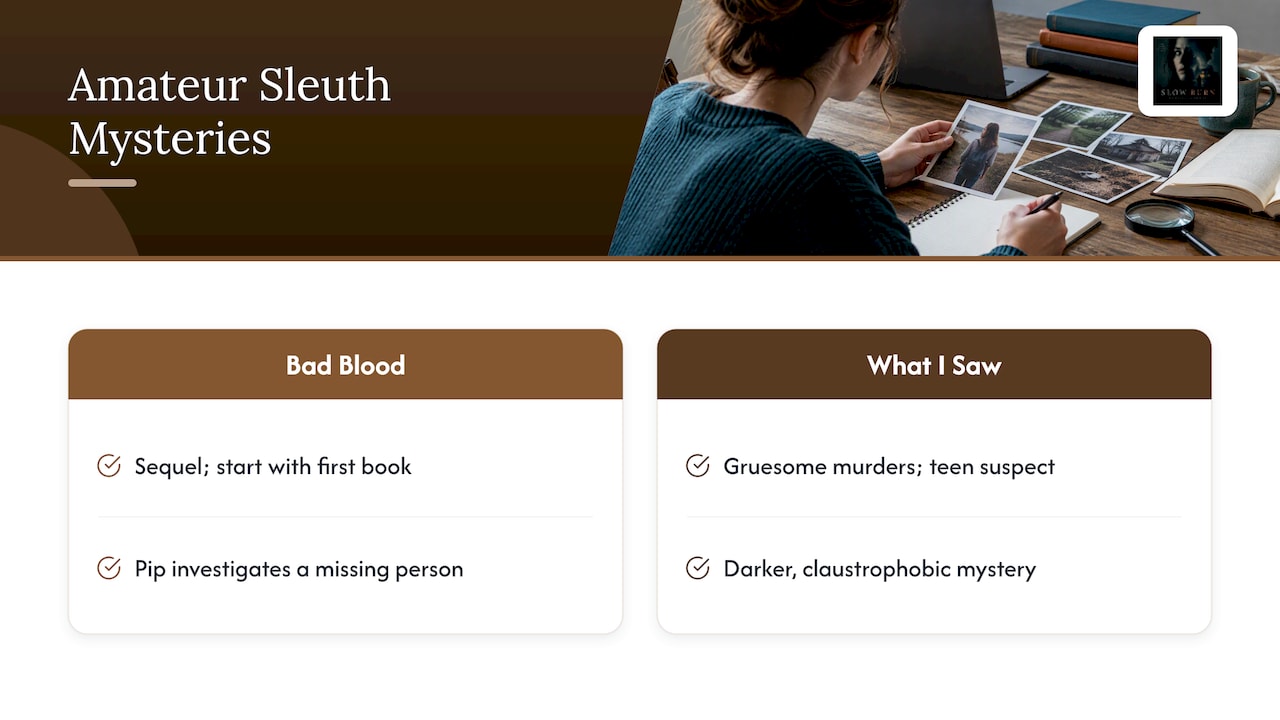
Good Girl, Bad Blood by Holly Jackson is the sequel to A Good Girl’s Guide to Murder. Pip Fitz-Amobi goes looking for a missing person when the police will not act, a clean example of the teen-has-to-do-it-alone setup. Start with the first book, not this one.

I Know What I Saw by K.T. Carlisle, published in January 2025, is built around gruesome murders and a teen suspect. It suits readers who want a darker, more claustrophobic mystery.

Amateur sleuths and crime

Schools, societies and secrets

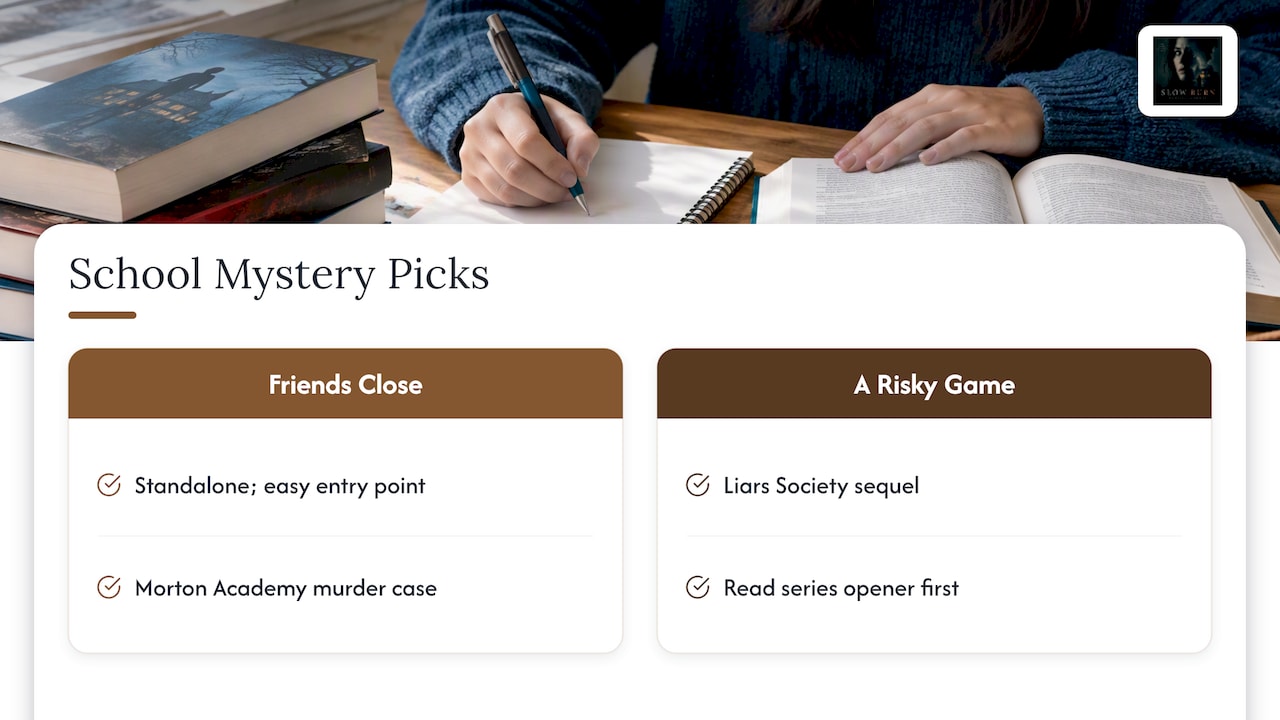
Keep Your Friends Close by Cynthia Murphy is a standalone set at Morton Academy, in the same universe as her Win, Lose, Kill, Die books. Student Chloe investigates murders that resemble punishments from her Book of Crime and Punishment. Because it is standalone, it is an easy entry point.

A Risky Game by Alyson Gerber, released in April 2025, is the second Liars Society book. Friends chase membership in a secret society and uncover a past crime. Read the series opener first.

Schools, societies and secrets

Identity, family and the thriller edge

Sisters in the Wind by Angeline Boulley, released in September 2025, is a standalone interlaced with thriller elements that also explores family, belonging and identity. Choose it if you want emotional weight alongside suspense.

Supernatural and recent releases

Such a Lucky Girl by Wendy Heard, a paranormal thriller slated for June 2026, takes on influencer culture and cults. Tomi Adeyemi’s YA dark academia novel The Siren was announced by Publishers Weekly, and is one to watch if the setting appeals.

A dystopian chase

James Dashner’s The Maze Runner opens a long series and remains a go-to for readers who want action over whodunit.

Series or standalone: how to read in order

Series are common in this genre, and starting in the middle can spoil twists. Reviewers flag this directly: Kirkus notes that readers need to be familiar with the opener to appreciate A Risky Game.

A simple routine saves trouble:

  1. Look for “Book 1,” “Book 2” or a series name on the product page.
  2. If the title is a sequel, buy the first book, or confirm that the sequel works alone.
  3. When a publisher says “standalone” or “same universe,” as with Keep Your Friends Close, you can jump in anywhere.
  4. Read the first chapter sample. If the cast list confuses you, you probably need the earlier book.

What to check before you read: age and content

YA is not one level of intensity. A mystery with off-page deaths and a book with on-page violence and heavy trauma can sit on the same shelf. Use these checks, especially if you are buying for a teen or choosing a book club read.

  • Violence: Is it a puzzle with a body count, or are scenes shown in detail? The publisher description and review excerpts usually tell you. Murder in the premise is a hint, so read it closely.
  • Heavy themes: Abuse, self-harm, grief, addiction, cults and stalking all appear in teen suspense. Reviews from librarians and trade outlets often list them.
  • Horror crossover: Supernatural thrillers can be scarier than they look. A haunted setting or cult in the blurb means dread, not just clues.
  • Romance and language: Usually moderate, but it varies by title. Skim a sample.
  • Reader maturity: You know the reader. A thirteen-year-old and a seventeen-year-old are very different audiences, and so are adult readers who want something breezier.

A parent or caregiver who is unsure can read the opening chapters first. Librarians and school media specialists can also point to a title for a specific reader. Talking about the book afterward is as useful as any rating.

For adult readers, there is nothing to apologize for: the Skokie Public Library points out that YA is consistently read by audiences of every age.

How to choose your next read in five minutes

  1. Name the mood. Puzzle, paranoia, atmosphere, speed or chills.
  2. Check standalone or series. Avoid accidental spoilers.
  3. Read the first chapter. Voice matters more than blurbs. A YA thriller should hook you in the first pages.
  4. Scan the content notes. Match intensity to the reader.
  5. Decide on format. An ebook means no waiting, and you can start the second book of a series at once.

For more ways to match a thriller to your taste, see our guide on how to pick ebook thrillers that keep you awake. If you are watching your budget, thriller ebooks under five dollars is a good place to look.

Our perspective

We built this store around one belief: nobody should pay for a thriller blind. Suspense depends on voice and pace, and you can only judge those by reading. That is why our exclusive chapter previews exist.

For YA suspense and for readers moving between YA and adult thrillers, this matters even more. The tension in these books lives in the first pages: a narrator you trust or doubt, a secret that surfaces too soon. A sample chapter tells you whether that voice is yours.

We also keep the shelf focused. We sell digital horror, thriller and suspense ebooks, nothing else, so browsing by genre is quick and what you find is curated for readers who like to feel their pulse rise. If you like a darker edge, our horror shelf sits one click from the thrillers.

Our advice: sample two or three, follow the voice that grabs you, and then buy.

lorraine

Preview before you buy

If you want suspense you can sample first, browse our thriller collection for mysteries, crime and psychological tension, or our horror collection for something that leans darker. Open the exclusive preview chapter, see whether the voice grabs you, and download only the ones that do.

A Bunch Of Daisies Audio

Every title is a digital ebook, so you can buy and start reading the same evening. The full catalog is on our ebook storefront. If you enjoy series, our store also carries titles such as The Whispering Veil of Oakhaven, Series Book 2.

FAQ

What does YA mean in YA thriller books?

YA stands for young adult. It describes books with teen protagonists and teen concerns, aimed at roughly teenage readers. In practice, readers of all ages pick them up.

What is the difference between a YA thriller and an adult thriller?

The structure is similar: tension, twists and complex characters. The difference is perspective. YA thrillers center a teen who has to act on their own, and they tend to open fast. Publishers Weekly quotes an agent saying the underlying bones are effectively the same.

Are YA thrillers scary?

It depends on the title. Mysteries lean toward puzzles, while supernatural and horror-crossover books lean toward dread. The category now overlaps with horror and supernatural themes, so read the description and a sample chapter.

Which YA thriller should I start with?

For a standalone, try Keep Your Friends Close by Cynthia Murphy. For a crime mystery with a sleuth, start with A Good Girl’s Guide to Murder and continue to Good Girl, Bad Blood. For identity and family alongside suspense, try Sisters in the Wind.

Sources

Cat and Mouse Thrillers: What They Are and Which to Read

A cat and mouse thriller is a novel built around a pursuit: one character hunts, chases or psychologically toys with another, and the pressure climbs as the hunted tries to evade, outwit or even reverse the roles. The best ones are duels between two sharp minds, so you keep turning pages to see who blinks first. Below you will find what defines the genre, books worth starting with, and a practical way to test one before you buy.

Thrillerhorrorsuspense
Find Your Next Suspense Read
Browse digital horror, thriller, and suspense e-books, with exclusive chapter previews to help you discover a story that holds your interest.

Browse the e-books

TL;DR

  • A cat and mouse thriller is a suspense structure where hunter and hunted keep trading advantages, and the tension comes from who knows what.
  • The strongest examples give both sides real skill and real motives, so neither is a cardboard villain or a helpless victim.
  • Good starting points range from serial killer hunts like Rules of Prey to puzzle-box mysteries and horror hybrids with vampires or supernatural killers.
  • Before buying, read a preview chapter and check three things: incompatible goals, layered motives and escalating obsession.
  • These books suit book clubs because the characters’ choices and methods are easy to argue about.

Table of Contents

What makes a book a cat and mouse thriller

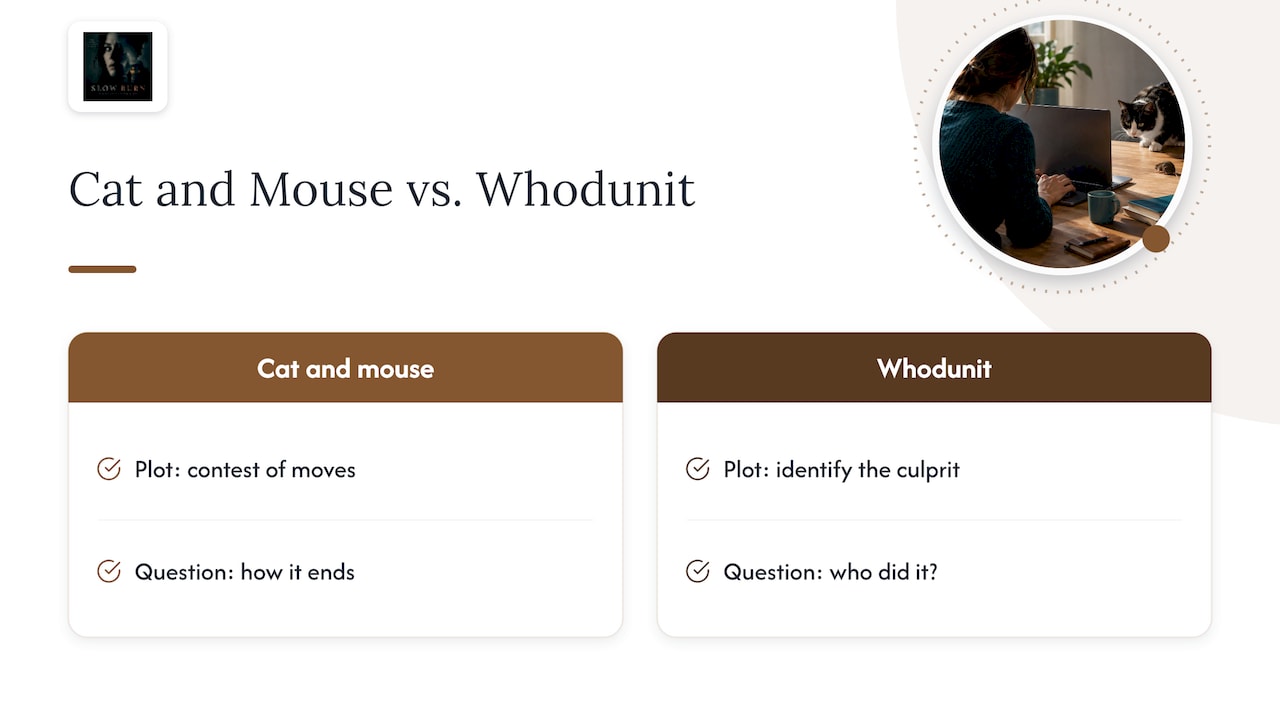
The label gets used loosely, so it helps to be precise. In a cat and mouse story, the plot is the contest itself. A detective closes in on a killer, a fugitive stays one step ahead of the law, or two rivals run schemes against each other. Each move forces a countermove. The reader is not waiting for a twist to be dropped from above; they are watching two people adapt.

That is different from a whodunit, where the question is who did it. In a cat and mouse book you often know, or soon learn, who the hunter and the hunted are. The question becomes how it ends, and whether the roles flip on the way there. Writer’s Digest draws a useful line between genres: thrillers focus on fear, doubt and dread, with a vulnerable hero, villains who aim at specific weaknesses and wants, and ultimate stakes. Cat and mouse is the thriller’s most concentrated form of that idea.

What makes a book a cat and mouse thriller

Two antagonists, not one villain

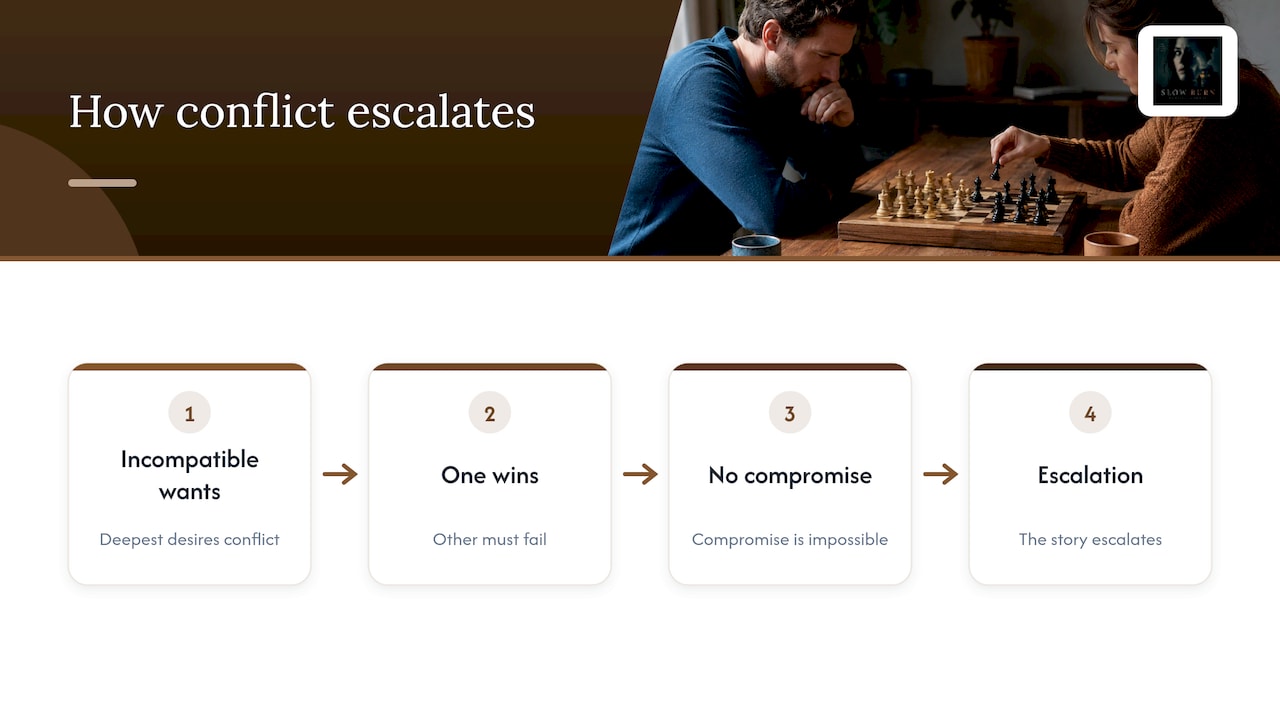
Writer’s Digest notes that well-executed examples often feature two protagonists who discover they are antagonists: their deepest desires are incompatible, so one can only win if the other fails. That single idea explains why the genre grips. If both characters want something badly, and what one wants destroys the other’s chance, compromise is impossible and the story has to escalate.

The same piece says satisfying stories give both antagonists layered motivations, properly motivated even when they are deluded about why they act. In practice, this is the difference between a killer who is simply evil and one whose logic you can follow, even as it horrifies you.

Two antagonists, not one villain

Competence on both sides

Craft guidance from Pendraic Help makes a point readers feel instinctively: these stories demand competent protagonists on both sides, and the pleasure lies in watching them outmaneuver each other in a duel of wit, competence and will. If the hunter is clumsy, there is no threat. If the quarry is helpless, there is no game.

Information is the weapon

Most cat and mouse plots run on an imbalance of knowledge. One side holds evidence or a secret the other lacks, and the story becomes a sequence of strategic adjustments: surveillance, a deliberately timed reveal, a staged alibi. Pendraic Help adds a warning for writers that readers will recognize as a reader’s complaint too: to avoid repetitive tit-for-tat, the dual points of view need discipline, because an unfair perspective advantage can make the game feel rigged.

So when you pick up one of these books, ask whether the author plays fair. Do you learn things at a rate that keeps both sides plausible? Or does the narrative cheat to keep one character ahead?

The main flavors of the genre

Cat and mouse is a structure, not a subgenre, so it shows up everywhere. Here are the forms you will meet most often.

Detective versus serial killer

The classic. A investigator pursues a killer who is clever enough to pursue back. Kirkus Reviews called John Sandford’s Rules of Prey (1989) a first-rate cat-and-mouse thriller about cop Lucas Davenport trying to catch the serial killer Louis Vullion. It is a good model of the form: the reader meets both men, and the contest feels personal.

If this is your lane, we collected related reading in our guides to serial killer thrillers with detectives and a longer starting list of serial killer thrillers and series. For the investigative side, our piece on why forensic thrillers feel so dangerous explains how procedure itself becomes a source of dread.

Puzzle-box and intellectual games

Sometimes the contest is against a structure rather than a single person. BookPage described Stuart Turton’s The 7½ Deaths of Evelyn Hardcastle as an intellectual thriller and a dizzying game of cat and mouse, in which the protagonist must inhabit different guests’ bodies to solve a murder. It shows how far the idea stretches: the hunter, the hunted and the puzzle can all blur together.

Horror hybrids

Add the supernatural and the chase gets stranger. Publishers Weekly described Randy Ribay’s Nest of Tongues as a paranormal cat-and-mouse thriller in which Filipino vampire siblings must evade a legendary monster hunter. Here the roles are deliciously unstable, since the hunted are themselves predators.

Kim Bohyun’s Mothersucker goes darker and more political. BookPage reviewed it as a fusion of supernatural horror with the reality of gender-based violence, following a detective who hunts a serial killer targeting men who have committed crimes against women. The reviewer, Jessica Peng, observed that horror-thrillers like this use supernatural themes to explore all-too-real horrors and push readers to question their own ideas of justice. That is cat and mouse doing more than entertaining: the reader’s sympathies become part of the chase.

For more along these lines, browse our guides to supernatural thrillers and psychological horror books by mood.

Survival chases

When the cat is a person and the mouse is stranded somewhere hostile, or when nature itself closes the net, you get the survival variant. Our roundup of survival thrillers where nature and fear close in covers books that borrow the same escalating pursuit with the landscape as an accomplice.

A quick comparison

Flavor Who hunts whom What drives the tension Good if you like
Detective vs. killer Investigator and a clever offender Personal stakes, evidence, near misses Procedurals, character duels
Puzzle-box Protagonist vs. a structure or hidden adversary Rules, loops, reveals Clever plotting, rereading
Horror hybrid Monsters, hunters, or avengers Shifting roles, dread, moral unease Dark atmosphere, gray morality
Survival Person vs. person or environment Scarcity, isolation, time pressure Fast pacing, physical stakes

How to judge a cat and mouse thriller from a preview

Because the genre depends on the quality of the duel, a first chapter tells you a lot. You do not need to finish the book to know whether the game will work. Use the three tests from the craft guidance above as a checklist.

  1. Are the desires incompatible? By the end of the sample, can you state what each side wants, and see that both cannot have it? If the goals could coexist, the pursuit will feel arbitrary.
  2. Are the motives layered? Look for a reason behind the reason. A hunter who just wants justice is thin; one who wants justice and is haunted by an old failure has something to lose. The same goes for the quarry.
  3. Does obsession drive the behavior? Escalation is the engine. If characters start taking risks they would not normally take, the story has somewhere to go.

Then add a few taste questions. Reading advice from The Index suggests asking whether tension comes from character or plot, how fast the story moves, how much ambiguity you can tolerate and what setting you favor. Pacing matters especially. Some celebrated thrillers start slowly and build to a fast climax, and some listings also flag content like graphic violence, murder, psychological manipulation and abuse. A preview is the cheapest way to find out whether a book’s tone and intensity match what you want tonight.

Two more things to notice in a sample:

  • Information flow. Do you know slightly more than the hunter, slightly less, or the same? Any of these can work, but it should feel deliberate.
  • Voice of the quarry. In the best books, the mouse is not passive. If the hunted character is already making clever choices in chapter one, the reversal later will feel earned.

Why these books work so well for book clubs

Cat and mouse stories give a group something concrete to argue about. Motives and methods are contestable: was the detective justified in crossing a line, was the killer’s logic coherent, did the author play fair with information? Stacey Carroll argues that the genre hooks readers by turning suspense into a mental game and by creating an emotional hook through a clever underdog. That underdog is where discussion usually starts: who did you root for, and when did that change?

Some prompts that work for almost any title:

  • At what moment did the balance of power shift, and who noticed first?
  • Which character had better information, and how did they use it?
  • Did you ever side with the antagonist? What did the author do to make that possible?
  • Would the ending land the same way if the roles had never reversed?

If your group likes darker material, a horror hybrid is a strong pick, because the supernatural frame gives people distance to discuss uncomfortable themes. If your group prefers realism, start with a detective duel.

Series to read in order

Some cat and mouse books sit inside longer series, and order can matter for character arcs. Meg Gardiner’s UNSUB books follow FBI profiler Caitlin Hendrix, and Into the Black Nowhere is the second in that series, so starting at the first spares you from spoilers about the recurring cast. The same logic applies to any title labeled with a book number: check the numbering on the page before you buy, and read from book one if the characters carry grudges or injuries forward.

Our perspective

We built this store around one frustration: paying for a thriller and discovering by chapter three that the game you were promised is not the one on the page. Cat and mouse is the genre where that mismatch hurts most, because the whole pleasure rests on a duel that either works or does not.

That is why we focus only on digital thriller, horror and suspense titles, and why we let readers sample chapters before they commit. A preview is not a gimmick for us. It is how you find out whether the hunter and the hunted are both worth following, and it is how you discover authors you would never have risked a purchase on blind.

Our advice is simple. Read the opening, ask who wants what, and notice whether both sides are given brains. If they are, you are probably in good hands. We would rather you buy one book you love than three you abandon.

lorraine

Try a chapter, then keep the one that hooks you

If you want a pursuit story you can test before paying, start with our thriller collection and open the preview chapters. For something with more dread, the horror collection carries the darker end of the same instinct.

Thrillerhorrorsuspense

If you like series, look at Detective Harry Smark (The Vault’s Echo Book 2) and The Whispering Veil Of Oakhaven (Series Book 2), and check the series numbering on each page. You can also browse everything on the store’s main page.

FAQ

What is the best cat and mouse thriller?

There is no single best, because it depends on the flavor you like. For a classic detective against serial killer duel, Rules of Prey is a strong place to begin. For something more cerebral, try The 7½ Deaths of Evelyn Hardcastle. For horror, Nest of Tongues reverses the usual predator and prey roles.

How is a cat and mouse thriller different from a mystery?

A mystery centers on discovering who committed a crime. A cat and mouse thriller centers on the ongoing contest between two opponents, and the reader often knows who they are early. The suspense comes from each side’s strategy and from who holds which information at any moment.

Can a cat and mouse story be horror?

Yes. Horror hybrids keep the pursuit structure but add supernatural or monstrous elements, as in books about vampires evading a hunter or a detective chasing a killer with uncanny qualities. The fear comes from both the chase and the unsettling nature of the pursuer or the pursued.

What should I look for in a preview chapter?

Check whether the two sides want incompatible things, whether their motives have more than one layer, and whether obsession is already pushing them to take bigger risks. Also judge the pacing and tone, so you know the intensity suits you before you buy.

Are cat and mouse thrillers good for book clubs?

They are among the easiest to discuss. Characters’ methods and motives are debatable, the balance of power shifts, and readers often disagree about whom they sympathized with. A short list of prompts about information, reversals and fairness usually fills an evening.

Sources

Detective Thrillers: What They Are and Which Novels to Read

A detective thriller is a novel where an investigator works a crime while the pressure keeps rising: a killer still at large, a ticking clock, a case that gets personal. It borrows the puzzle of a mystery and the dread of a thriller. This guide explains where the genre sits, shows which novels define it, and helps you pick one that fits your taste or your book club.

Thrillerhorrorsuspense
Find Your Next Dark Read
Browse digital horror, thriller, and suspense e-books, with exclusive chapter previews to help you sample a story before buying.

Browse the e-books

TL;DR

  • A detective thriller pairs an investigator’s search for the truth with real danger and a pace that does not let up.
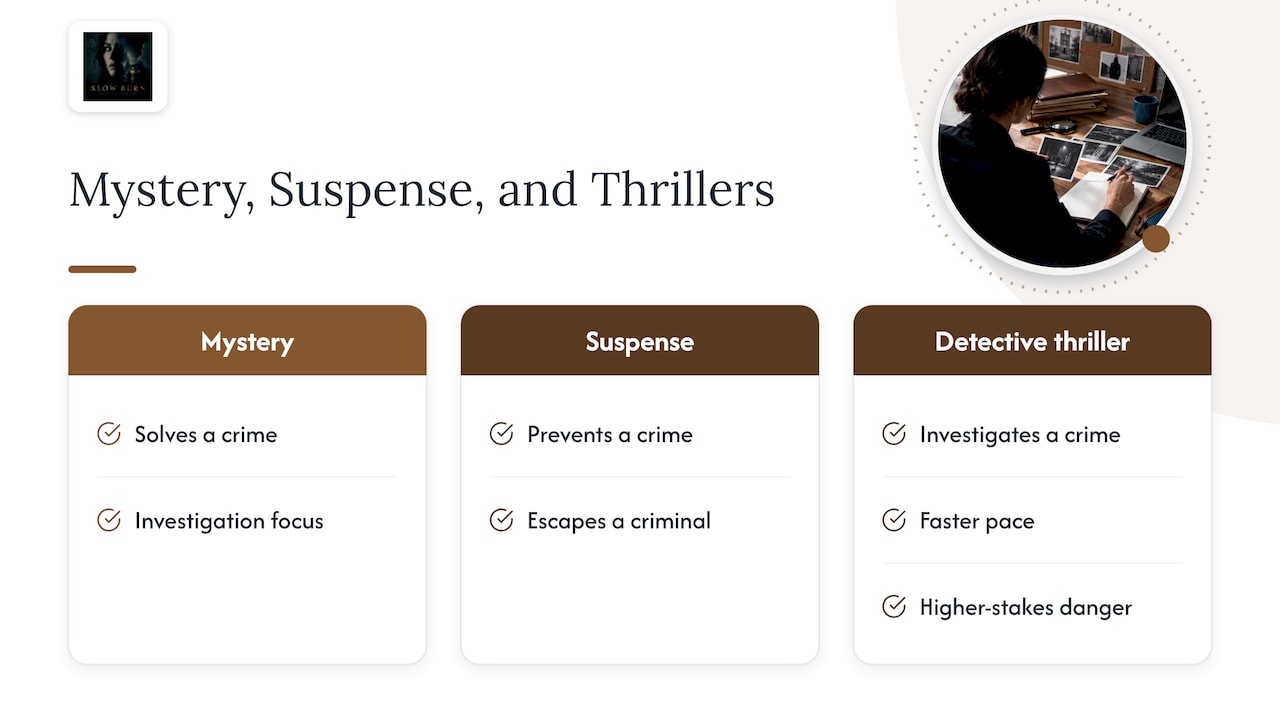
  • Mysteries center on solving a crime, while thrillers lean on preventing one or surviving it. Detective thrillers sit between the two.
  • Strong starting points run from The Maltese Falcon (1930) to Mystic River (2001) and The Last Coyote (1996).
  • If you like dark atmosphere, try a detective story with a supernatural edge, like The Hound of the Baskervilles.
  • Sample a chapter before you buy. Tone and pace show up in the first pages.

Table of Contents

What makes a detective thriller

The label sounds simple, but readers and critics draw the lines in slightly different places. The useful way to see it is as a spectrum.

The American Library Association’s readers’ advisory guidance says mysteries focus on solving a crime, while suspense focuses on preventing a crime or escaping a criminal. The Military Writers Society of America makes a similar split: detective and police-procedural protagonists solve crimes, while thrillers move faster and may involve escaping, rescuing, or eliminating a threat.

Mystery and suspense differences at a glance

A detective thriller keeps both engines running. Someone with a badge, a license, or just stubborn curiosity investigates. But the investigation costs something, and the danger is rarely behind the detective. It is in the room, in the next chapter, or in the detective’s own past.

The detective’s role

Academic work on the form describes detective fiction as often seeking to contain disorder, usually through the detective’s reason and rationality, and occasionally physical prowess. That is the comfort of the genre. Chaos arrives, and a mind pushes back.

The same scholarship notes that the form invites readers to piece together clues alongside the detective, a habit that goes back to Golden Age puzzles. In a detective thriller you still get that game, but you play it at a sprint.

How it differs from a conventional mystery

Writer’s Digest describes mysteries as more cerebral and centered on solving a crime, while thrillers focus on the protagonist’s fear, doubt and dread. In practice:

  • Mystery: the crime has happened. The question is who and why. The tone is puzzle-driven and often measured.
  • Thriller: the danger is live. The question is whether the protagonist, or the next victim, survives.
  • Detective thriller: the crime has happened and the danger is still live. You get the who-and-why and the will-they-make-it at once.

How it differs from horror

The two neighbors overlap more than people admit. The same Writer’s Digest piece calls thrillers a hybrid of mystery and horror. The difference is what the story promises. Horror promises fear for its own sake, often with a monster or a supernatural force at its center. A detective thriller promises that the fear has a source that can, in principle, be found and named. When the monster turns out to be a person, you are in thriller territory. When it might not be a person at all, the book is flirting with horror.

There is also a regional note. Publishers Weekly observed that in the United States the thriller label is often tied to international intrigue, espionage, or medical adventure, with less weight on step-by-step detection. So if you want true detective work with thriller stakes, look for books described as detective thrillers, police procedurals, or crime thrillers rather than just “thrillers.”

For a deeper look at how suspense and thriller differ at the scene level, see our piece on suspense versus thriller.

Detective thriller novels worth reading

Here is a spread of titles across eras and tones, each backed by critical or editorial coverage.

The classics that set the template

Modern American detective thrillers

A fast-moving case with a team

The same 2024 roundup features a novel in which Detective Hiroshi and his team investigate a scam scheme targeting vulnerable elderly women, amid deaths, break-ins and violence. It is a good pick if you prefer a team investigation over a lone-wolf cop.

On our shelves

If you want a detective at the center of a series, look at Detective Harry Smark (The Vault’s Echo Book 2). For something darker and more atmospheric, The Crimson Echoes Of Oakhaven (Book 1) is a good place to sample a first chapter.

Detective Harry Smark (The Vault's Echo Book 2)

When the detective story turns dark

Some readers want the logic of a case and the chill of horror in the same book. The easiest way to find that mix is to look for these signals:

  1. A threat that seems impossible. The investigator faces something that appears supernatural, and the book spends its length deciding whether it is. The Hound of the Baskervilles is the template.
  2. A killer with a pattern. Serial cases give writers room for dread because the next victim is always a possibility. We rounded up some of these in 7 serial killer thrillers with detectives.
  3. Science that feels invasive. Forensic detail can make a book feel frighteningly real. Our piece on why forensic thrillers feel so dangerous digs into the effect.
  4. A sealed setting. Closed circles and impossible crimes tighten the screws. See locked room mysteries and the clues to watch for.
  5. A narrator you cannot trust. If the person telling the story is hiding something, every clue becomes suspect. Read more about the unreliable narrator in domestic thrillers.

How to choose the right one for you

Librarians have thought hard about this question. The Kentucky Department for Libraries and Archives lists character, pace, storyline, tone, and writing style as the appeal factors for mystery readers, with descriptors such as disturbing, offbeat, action-packed, character-driven and plot-driven. Use them as a checklist.

If you like… Look for… Try
Puzzle and logic Plot-driven, clue-rich stories The Hound of the Baskervilles
A personal quest Character-driven, emotional stakes The Last Coyote
Moral weight Tragic, literary tone Mystic River
Gritty city corruption Hard-boiled voice The Maltese Falcon, Blood and Mascara
Dread and psychology Disturbing, slow-building suspense Notes on an Execution

Pace and tone first

Decide whether you want a book you read in two sittings or one that rewards slow attention. Pace shows up in the first chapter, which is why previews matter. If the opening scene hooks you, the rest tends to follow. Our guide on how to pick ebook thrillers that keep you awake walks through what to look for in those first pages.

Check content before you commit

Detective thrillers can include violence against children, domestic abuse, or graphic crime scenes. Look at a description’s content notes before you buy, especially for a shared read. A good description gives the premise, tone, themes and ideal reader without revealing plot developments or the ending, a standard laid out in one reading guide on spoiler-free descriptions.

Picking a detective thriller for a book club

Genre fiction gives groups plenty to argue about. Book Riot reported in 2025 that popular book clubs sometimes choose mysteries, thrillers and true-crime books for exactly that reason. A few practical tips:

  • Ask about content. Librarian Community Connection advises clubs to consider whether members need content warnings and whether spoilers affect the choice.
  • Check the format. The same guidance says to confirm that print, large-print, ebook or audiobook editions are available in time. With an ebook, everyone can start on the same day.
  • Pick a book with a debate in it. Was the detective right to cross that line? Did you guess the culprit? Was the ending fair? Books with moral gray zones, like Mystic River, generate the longest conversations.
  • Keep the clues fair. Because detective fiction invites readers to solve along, a book that plays fair gives the group a shared game to talk about afterward.

Our perspective

We built this store around one frustration: buying a thriller and discovering by chapter three that the tone is wrong. Detective thrillers are especially prone to this. The label covers cozy-adjacent puzzles and brutal serial-killer hunts, and a cover or a blurb rarely tells you which one you are getting.

That is why we focus only on digital horror, thriller and suspense titles, and why we let readers preview chapters before they buy. A first chapter shows you the voice, the pace and how dark the book goes. If the detective hooks you in those pages, you will probably stay for the whole case. If not, you have lost five minutes instead of an evening.

We also think the best detective thrillers are the ones that respect the reader. They play fair with clues, they make the danger feel real, and they leave you thinking about the people involved, not just the twist. Our curated shelves of thrillers and horror are meant to help you find that kind of book without wading through everything else.

lorraine

Start with a preview

The fastest way to find out whether a detective thriller suits you is to read its opening. At ThrillerHorrorsuspense.store, you can sample exclusive chapters before you buy, then download the e-book directly once you are sold. We sell only digital thriller, horror and suspense e-books, so you can browse by genre without the clutter.

Thrillerhorrorsuspense

Browse the thriller collection for investigators and cat-and-mouse chases, or the horror collection if you like your cases darker. You can also start at the main e-book store. Looking for a new voice? Our original title Elvis Died I Was There is another one to sample.

FAQ

What is a detective thriller?

It is a novel in which an investigator pursues a crime while real danger keeps escalating. It blends the puzzle-solving of a mystery with the pace and fear of a thriller. Expect clues, suspects and a threat that does not wait for the detective to catch up.

What is the difference between a detective thriller and a mystery?

Mysteries focus on solving a crime that has already happened, and are often more cerebral. Thrillers focus on the threat of danger and the fear of the protagonist. A detective thriller keeps the investigation but adds ongoing peril, so the reader worries about the characters as well as the answer.

What is the difference between thriller and horror?

Thrillers are often described as a hybrid of mystery and horror, built on a protagonist’s fear and doubt in a dangerous world. Horror leans further into dread and, often, the supernatural. In a detective thriller, the source of the fear is usually something the investigation can uncover.

Which detective thriller should I read first?

Pick by tone. For a personal, character-driven case, try The Last Coyote. For a gothic chill with Sherlock Holmes, try The Hound of the Baskervilles. For a tragic, literary read, try Mystic River. Reading a sample chapter first will tell you quickly whether the voice works for you.

Sources

Underrated Horror Books Worth Reading This Halloween

The best underrated horror books are the ones the big lists skip: Michael McDowell’s The Elementals, Kathe Koja’s The Cipher, Adam Nevill’s The Ritual, Ainslie Hogarth’s Motherthing and a handful of newer releases. Below you will find what each one is about, what mood it suits, and how to judge a lesser-known novel before you spend money on it.

Thrillerhorrorsuspense
Find Your Next Horror Read
Browse digital horror, thriller, and suspense e-books, with exclusive chapter previews to help you sample a story before buying.

Browse the collection

TL;DR

  • Start with The Elementals for Southern Gothic dread, The Cipher for strange, stripped-down horror, and The Ritual for wilderness fear.
  • Pick Motherthing if you want horror that is darkly funny and grotesque at the same time.
  • Newer hidden gems include Secret Lives of the Dead by Tim Lebbon and Dead But Dreaming of Electric Sheep by Paul Tremblay.
  • Check three things before you buy: the narrator, where the dread comes from, and how the ending behaves.
  • Read a sample chapter first. Ten pages tell you more about voice than any list can.

Table of Contents

What “underrated” really means in horror

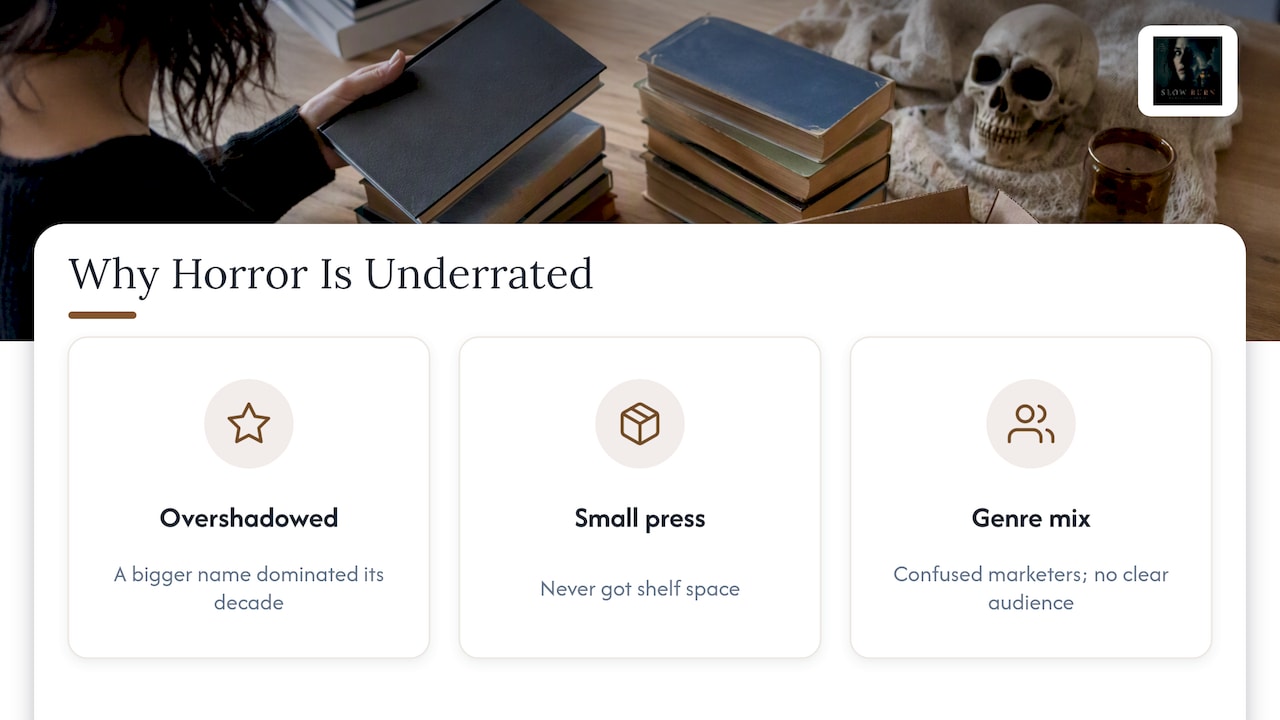
In horror, underrated rarely means bad sales. It usually means one of three things. The book was overshadowed by a bigger name in its decade. It came from a small press and never got shelf space. Or it mixed genres in a way that confused marketers and left it without a clear audience.

That third group is where many of the best finds sit. A folk horror revenge thriller, a science-fiction horror hybrid or a ghost story that works as a comedy does not slot neatly into a bookstore aisle. Readers who like a mood more than a label tend to do best with these books.

The picks below are grouped by that mood, not by publication date, so you can go straight to the kind of fear you want tonight.

What "underrated" really means in horror

Slow-burn dread and haunted places

The Elementals by Michael McDowell

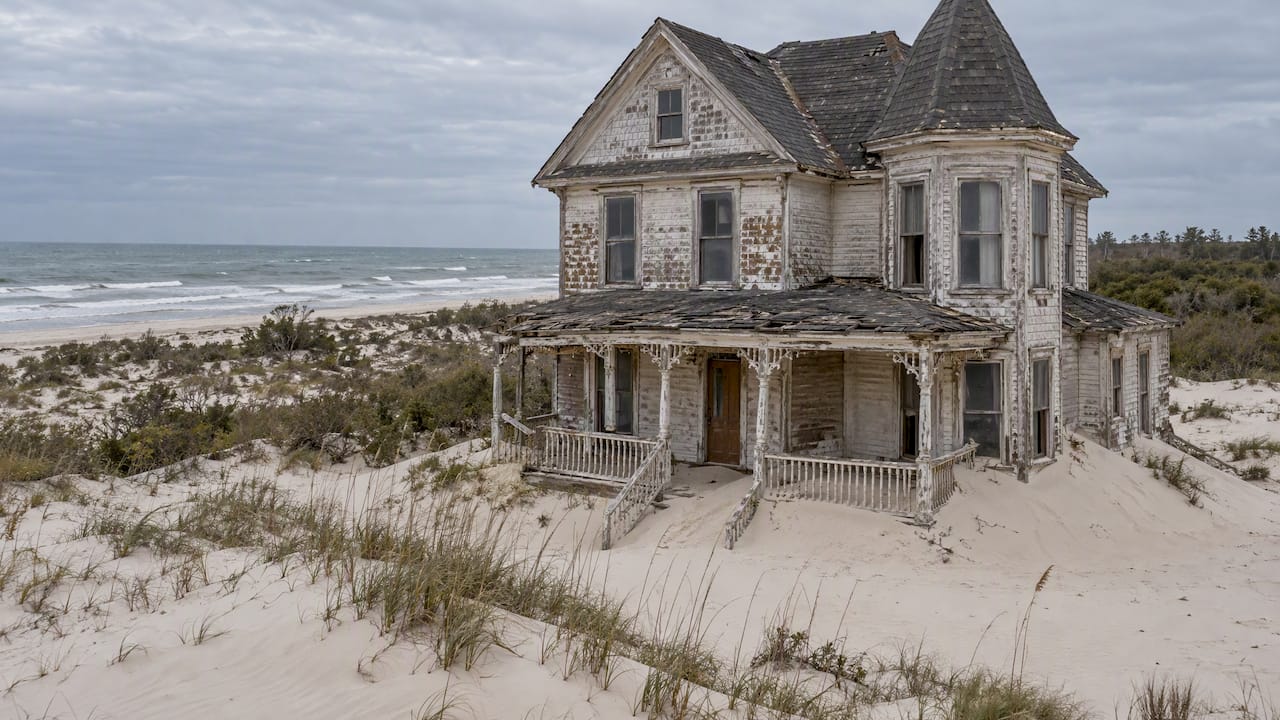
This is the book to hand to anyone who says they have read everything. The Elementals is a Southern Gothic haunted-house novel set at Beldame on Alabama’s Gulf Coast. Two Victorian houses stand there in good repair, and a third is being buried by sand but is still occupied by something deadly, according to the publisher’s listing for the 1981 novel. The setting does much of the work: heat, sand and a house that is slowly disappearing.

Victorian Gulf Coast house partly buried in sand

If you like the idea of a house as a character, it pairs well with our guide to books like The Shining for haunted-house fans.

The Good House by Tananarive Due

Publishers Weekly’s review of The Good House notes that Due uses the traditional haunted-house story to explore family ties, racial identity and moral responsibility. That is the reason to read it if you find standard haunted-house plots too familiar. The house is the frame, and the family is the story.

The Silent Companions by Laura Purcell

Purcell builds her dread on uncertainty. A reader-facing breakdown of the novel points out that it leaves open whether Elsie sees the companions move or whether grief, isolation and her psychological state are producing something like madness. If you enjoy a book that never lets you settle on one explanation, start here.

Getaway by Zoje Stage

Friends reunite for a Grand Canyon hiking trip and discover they are being stalked, as described in this reader roundup of hidden horror gems. It is a good choice if you want horror that moves fast and leans on isolation more than on the supernatural.

Strange, literary and unsettling

The Cipher by Kathe Koja

This 1990s novel strips horror down to the basics. A black hole appears inexplicably in the floor of a couple’s apartment in Detroit, as The Week’s list of horror books you’ve never read describes it. There is no monster in the usual sense. The horror is what the hole does to the people who stare into it.

Motherthing by Ainslie Hogarth

This is a darkly comic horror novel about Abby and Ralph, whose mother-in-law’s ghost turns vengeful after her suicide. Penguin Random House’s US page positions it as a feminist, darkly funny and grotesque horror experience, with family trauma, mental illness and haunting at its center. It was published in September 2022 and runs 288 pages. Content note: the story involves suicide and mental illness, so check that the subject matter works for you before starting.

Eutopia by David Nickle

A historical horror novel set in early twentieth-century Idaho and Montana, Eutopia explores the dark philosophies of the American eugenics movement, according to Blue Ink Review’s feature on forgotten indie masterworks. It is horror rooted in real history, which makes it harder to shake than most monster stories.

At Night All Blood Is Black by David Diop

Publishers Weekly describes this 2020 novel as a feverish, psychologically intense confession from a Senegalese soldier in the First World War trenches who descends into madness while serving the French army. It sits at the edge of the genre, and that is why many horror readers miss it.

Wilderness, folk horror and cults

The Ritual by Adam Nevill

Four old college friends reunite in the uncharted wilderness of northwestern Sweden. The Week’s list calls the ending perfect, arriving in the final sentence (see the full entry). It suits readers who like hiking-trip dread and a slow slide from discomfort to panic.

The Burning by Graham Masterton

A San Diego man fights a cult led by a former Nazi, whose followers, the Salamanders, burn themselves to gain immortality and help found a Fourth Reich, as Publishers Weekly summarizes the book. It is pulpy, extreme and very much of its era, so it fits readers who want a faster, bloodier ride.

The Lighthouse at the Edge of the World by J.R. Dawson

This one weaves together Greek myth, Jewish tradition and queer romance in a melancholy tale set in a liminal spot between worlds, per Publishers Weekly. It leans closer to dark fantasy than to gore, which makes it a gentler on-ramp for readers new to horror.

If folk horror is your lane, we also keep a longer list of folk horror books with a preview chapter.

Newer hidden gems from 2025 and 2026

Underrated can also mean not yet discovered. A few recent releases are worth putting on your list before everyone else does.

  • Secret Lives of the Dead by Tim Lebbon (2025). A blend of folk horror and revenge thriller involving a botched robbery at a country home and a perilous quest to collect cursed relics, per Book Riot’s August 2025 roundup.
  • Dead But Dreaming of Electric Sheep by Paul Tremblay (2026). A science-fiction horror hybrid in which brain-implant technology lets the dead be operated like puppets, as covered in The Guardian’s July 2026 genre roundup.
  • The Carrier by Ruth Newton (2026). A psychological thriller that uses the premise of people paid to process others’ emotional labor as an allegory for the commercialization of human feelings, covered in the same Guardian roundup.
  • Sublimation by Isabel J. Kim. It reimagines the immigrant experience through a speculative lens, where migration literally splits immigrants in two, according to Publishers Weekly’s summer reads 2026 list.

Notice how many of these cross genres. If you like the thriller side of that crossover, our underrated thrillers guide covers the same territory from the suspense end.

What BookTok is recommending

Much of the recent attention on lesser-known horror starts on BookTok. Book Riot’s list of BIPOC BookTokkers to follow names @Chazreadshorror, @booksinthefreezer and @bearleebooks as creators who recommend horror across subgenres and vibes, and it notes that Bear also regularly discusses indie-press horror.

What drives the attention is usually vibe-based recommending: creators sort books by feeling (unsettling, cozy-creepy, gross, sad) instead of by plot. That is useful for you, because a mood tag predicts whether you will like a book better than a star rating does. It is also how small-press titles break out without a big marketing budget.

A practical tip: when a video sells you a book, look for what the creator says about the narrator and the ending, not just the premise. That leads to the next section.

How to tell if a lesser-known novel fits you

Without a bestseller badge, you need your own filter. Three questions do most of the work.

  1. Do you want an unreliable narrator? The Silent Companions breakdown above lists an unreliable narrator, creeping dread and ambiguity over whether events are supernatural or psychological as the things to look for. If you want a clear explanation by the final chapter, skip books that advertise any of these.
  2. Where does the fear come from? Cris Tolomia, quoted in Quartz’s list of essential horror reads, says the most effective horror novels often use untrustworthy narrators, setting-based dread that comes before any explicit threat, and endings that avoid clean resolutions. A setting-driven book like The Elementals delivers the second. A character-driven one like Motherthing delivers the first.
  3. What kind of ending can you live with? If an open ending frustrates you, favor books with a concrete threat, like The Burning or Getaway. If ambiguity is the point for you, aim at The Cipher or The Silent Companions.

The trauma-as-haunting idea is also worth knowing. Polygon’s essential horror reading piece credits The Haunting of Hill House with pioneering the trope in which people are haunted by their trauma, with fear showing up as an abstract feeling with no designated source. If that idea appeals to you, books like Motherthing and The Good House are its modern descendants.

A quick matching guide

If you want Try Why
Atmosphere over action The Elementals A setting-driven haunting on the Gulf Coast
Pure weirdness The Cipher An unexplained black hole in a Detroit apartment
Hiking-trip panic The Ritual or Getaway Isolated groups, hostile terrain
Dark humor Motherthing Grotesque and funny in the same scene
Horror with history Eutopia Built on the American eugenics movement
Something new Secret Lives of the Dead Folk horror meets revenge thriller

Our perspective

We built this store around one frustration: buying a book on a cover and a blurb, then finding out by chapter three that the voice is wrong for you. Horror is the genre where that mismatch hurts most, because the whole effect depends on tone.

That is why we let readers preview chapters before they buy. A preview shows you the narrator, the pacing and how quickly the dread builds. It also gives new authors a fair chance, because a reader who would never gamble on an unknown name will happily read an opening chapter.

We keep the catalog focused on digital horror, thriller and suspense, so browsing feels curated instead of endless. If you like the books on this list, you will probably like the kind of title we stock: stories that sit slightly outside the usual shelf.

lorraine

Find your next read here

If you want to try this approach yourself, start with our horror collection and read a preview chapter before you commit. Readers who lean toward suspense can browse the thriller collection the same way.

A Bunch Of Daisies Audio

If you want a series to sink into, the Oakhaven books are on the store: The Crimson Echoes Of Oakhaven (Book 1) and The Whispering Veil Of Oakhaven (Book 2). Check the product pages for current details. For more October reading, our Halloween horror reading list has twenty more ideas.

More paths into lesser-known horror

A few ways to keep exploring once this list is done:

  • Follow the authors, not just the titles. Nevill, Koja, Due and McDowell each wrote more than the book named here, and a writer you like is the safest bet in a crowded genre.
  • Try short fiction. Short horror is a low-risk way to sample an unfamiliar voice, and our guide to short horror story ebooks shows what to look for.
  • Read across the line into suspense. If you like the psychological end, our list of books like Stephen King for psychological horror fans is a natural next step, and our explainer on the unreliable narrator in domestic thrillers helps you spot that device early.
  • Mix old and new. Pair a 1980s or 1990s cult favorite with a 2025 or 2026 release. You will see how the genre has changed, and which fears have not.

One last habit that pays off: keep a short note of what you liked about each book (the setting, the voice, the ending) rather than just a rating. After five or six books, your notes will tell you what to search for better than any recommendation list.

FAQ

What are some underrated horror books for beginners?

Start with books that have a clear story and a distinct mood. The Ritual is a wilderness story with a concrete threat, Getaway is a fast stalking story, and Motherthing is short at 288 pages and funny enough to soften the scares. Avoid ambiguity-heavy picks like The Cipher until you know you enjoy unexplained horror.

Are the horror books on BookTok actually underrated?

Some are, and some are simply popular on one platform. The useful signal is whether a creator describes the book’s mood and ending instead of just praising it. Creators who focus on indie-press horror, as Bear does according to Book Riot, are a good place to find small-press titles that have not reached big lists.

How do I find hidden gem horror novels I will actually like?

Decide what scares you most (a setting, a person, or an unexplained event), then choose books built around that. Read a sample chapter to check the narrator’s voice. On our store, preview chapters let you do this before buying.

Are there good underrated horror ebooks?

Yes. Many lesser-known horror titles are available digitally, and an ebook makes it easy to read a sample before you commit. Browse our horror collection to preview exclusive chapters from original titles.

Sources

Book Club Thriller Picks That Start Real Arguments

The best thriller for a book club is one with a puzzle to solve and a moral question to fight over. Pick Big Little Lies if your group wants character and conversation, Gone Girl if it is ready to argue, The Silent Patient if it loves a twist, and And Then There Were None if it wants a clean puzzle. Below you will find how to match a pick to your members, questions that will not spoil the ending, and how to start a thriller club from scratch.

Thrillerhorrorsuspense
Find a Thriller for Your Book Club
Browse digital horror, thriller, and suspense e-books, with exclusive preview chapters to help your group sample a story before buying.

TL;DR

  • Look for two engines in one book: a mystery that pulls readers forward and a character choice members can disagree about.
  • Match the pick to the group: character-driven, argument-ready, twist-focused or puzzle-focused.
  • Check pace, length and content notes before you vote, because comfort with violence differs more than taste in plots.
  • Open every meeting with first reactions, and save the ending for after everyone has finished.
  • Sample first. A preview chapter shows whether the voice works before twelve people commit to a month of reading.

Table of Contents

What makes a thriller work for a group

A thriller you love alone can fall flat in a living room. The reading is fast and private, and the book is over before anyone has formed an opinion. A good book club thriller slows the conversation down by giving members something to push against.

The editors at ThrillerRanked describe the best club thrillers as having two engines: a puzzle to solve and a moral argument to debate. They add that friction between members over a character’s choices is what drives the most successful meetings. That matches what we see. A book where everyone agrees the villain is the villain gives you twenty minutes of talk. A book where half the group sympathizes with the narrator gives you the whole evening.

Domestic suspense and psychological thrillers dominate that list for a practical reason. They draw on marriages, neighborhoods and memory, which every member has an opinion about, so the themes need no explanation.

Five thriller picks that hold up in discussion

These are the titles the research keeps pointing to, described without spoilers.

Title Type Best for Main thing to debate
Big Little Lies Ensemble domestic drama Groups that want character and conversation Humor against high stakes, and what neighbors hide
Gone Girl Marriage thriller Groups ready to argue Who to believe, and when the book changes its mind
The Silent Patient Therapy-room mystery Twist-focused readers How a twist reframes everything before it
And Then There Were None Classic puzzle Puzzle-focused groups Fair clues and moral judgment
I Let You Go Psychological thriller Groups that like emotional stakes Guilt, grief and starting over

Big Little Lies

This is the safest opening pick for a mixed group. ThrillerRanked calls it an ensemble domestic drama that balances humor and high stakes, and recommends it for groups that want character and conversation. Members who say they do not usually read thrillers tend to be comfortable here, because the book leads with relationships. If your group includes someone who dreads gore, start with this one.

Gone Girl

The same source describes it as a marriage-warfare classic with mid-book reversals and suggests it for groups ready to argue. The debate is about moral ambiguity and reliability: how much of what you read can you trust, and when did you decide? Hold your first reactions until the whole group reaches the same point, because the reversals are the point of the book.

The Silent Patient

A therapy-room mystery with a high-impact twist, according to ThrillerRanked, which recommends it for twist-focused readers. The meeting question writes itself: once you know, which earlier scenes read differently? Twist books are best discussed after a short agreement about spoilers, covered below.

And Then There Were None

The puzzle-focused classic on the same list. It suits groups that like to compare theories, and it is a good choice when you want a pick everyone can borrow from a library or find in any format. The discussion centers on the clues and whether the solution plays fair.

I Let You Go

Clare Mackintosh’s novel follows Jenna, who leaves everything behind to start afresh in a remote cottage on the Welsh coast, haunted by a night that changed her life. It works for groups that want a thriller with real emotional weight, and its opening premise is easy to share without giving anything away.

Match the pick to your group

The wrong question is “what is the best thriller?” The useful one is “who is in this room?” Four patterns come up again and again.

The group that says it does not read thrillers. Choose character-first suspense. Domestic drama with a mystery underneath lets members talk about relationships first and plot second. Our guide to domestic thrillers with preview chapters lists twelve options, three of them with exclusive sample chapters you can read together before voting.

The group that loves to disagree. Pick a book with a narrator you cannot fully trust. Members will split over who was lying and when. If this is your group, our explainer on the unreliable narrator in domestic thrillers gives you language for the argument, and our roundup of unreliable narrator books with sample chapters helps you shortlist.

The group with a busy calendar. Choose something short. ThrillerRanked notes that most of its picks run under 400 pages so a group can finish in a month. If members still fall behind, try short thrillers you can finish in a sitting for a lighter month.

The group that wants something eerier. If your members enjoy the uncanny, a supernatural thriller sits between thriller and horror and gives you a different kind of debate: what counts as real. See what supernatural thrillers are and which to read for a way in.

Four book club types matched to thriller picks

Check pace, length and content before you vote

Tone is where thriller clubs quietly lose members. One person’s gripping is another person’s unreadable. ThrillerRanked’s advice is to weigh pace, length, content notes and the level of intensity members are comfortable with, and to favor picks with themes that invite debate.

A simple routine takes five minutes:

  1. Before the vote, each member names one thing they do not want in a book, such as graphic violence, harm to children or cruelty to animals.
  2. The host reads content notes for each shortlisted title and shares them in the group chat.
  3. Members read the first chapter of the top two choices. A preview does this job well, since you learn the voice and pacing without buying.
  4. The group votes only after the samples.

Nobody has to explain why they are skipping a title, and no one gets surprised on page 200.

Spoiler-safe questions for the meeting

The trick with a thriller is order. Start with reactions, then move to craft, then to the ending. A book club kit published by a major publisher suggests agreeing in advance whether you will discuss the whole book or stop at a chapter, keeping a shared list of predictions, and opening with first reactions before taking on the ending once everyone has finished.

For questions, discussion guides for psychological thrillers, such as this one from a reader and writer, center on first impressions, the reliability of the narrator, how the setting creates tension, the validity of the clues and how characters’ decisions shaped the ending. Here is a set built on those areas that stays clear of any specific plot.

Before the ending

  • What did you expect from this narrator on page one, and did that change?
  • Where did the pace speed up or slow down, and did it help?
  • Which character’s choice did you disagree with most, and why?
  • How does the setting create tension: a house, a town, a single room?
  • Which clue did you notice early? Which did you only see in hindsight?

After everyone has finished

  • Was the ending earned by the clues, or did it ask you to forget something?
  • Did you trust the narrator at the start? When did you stop?
  • Which character would you defend, and which would you not?
  • If you could change one decision a character made, what would change in the book?
  • Would you hand this to a friend who does not read thrillers?

A useful house rule: anyone who has not finished may attend and listen, but only answers from the first list are open to them. People rarely skip the meeting then.

How to start a thriller book club

Starting is easier than most people think. You need a handful of readers, a rhythm and a first book.

Find your people. Three to eight readers is a workable first group. Ask friends, coworkers and neighbors, and say clearly that it is a thriller club so you attract the right crowd. If you would rather join than build, Thrillers by the Book Club, a network with 27+ chapters across North America, can be found through Instagram or Bookclubs. Its founder also offers an information packet to people who want to host a new chapter.

Choose a rhythm. One book a month is the common pattern. The network above selects a single book per month, holds discussions and hosts Zoom author events, and its online chapter keeps spoilers back until the discussion date. Copying that spoiler rule helps any group that talks in a chat between meetings.

Pick a gentle first book. Do not open with the most extreme title on your shelf. A domestic suspense novel with a strong hook, such as Big Little Lies, gives everyone an easy way in. Save the harder material for month four, when the group trusts each other.

Set a format. In person, online or a mix. Agree on the length of meetings, the spoiler rule and who chooses next month’s book. Rotating the choice keeps the group from becoming one person’s taste.

Keep a prediction list. Each member writes a guess about the ending before they finish. Reading them out loud at the meeting is the most fun part of a thriller club, and it costs nothing.

How to start a thriller book club

Our perspective: sample before you commit the group

We run a store that sells only digital thrillers, horror and suspense, so we spend our days thinking about the moment a reader decides on a book. For a club the stakes are higher. One bad choice costs a whole month for everyone, and a member who drops out after a book they hated is hard to win back.

That is why we built the store around chapter previews. A first chapter tells you things a blurb cannot: whether the prose is crisp or overwritten, whether the narrator pulls you in, whether the tension is the kind your group enjoys. When a club shares a sample before voting, the choice stops being a guess. We also think clubs should look past the famous names. A lesser-known author with a tight premise often gives you a better meeting than a bestseller everyone has already seen on screen, because no one arrives with a fixed opinion.

Our honest advice is to choose for the room, not for the shelf. A book your group finishes and argues about is better than the “right” book half of them abandon in chapter three.

— lorraine

Find your next club read

If you want a pick that is not on every list, browse our Thriller collection for suspense you can sample first, or head to the Horror collection if your group wants something darker. Every title is a digital download, so each member can have the book in hand within minutes, wherever they live. Read the exclusive preview chapters first, then decide together.

Detective Harry Smark (The Vault's Echo Book 2)

The full catalog is on our e-book storefront, and our Thriller section includes original works such as Elvis Died I Was There, which you can sample before buying.

FAQ

What is the best thriller for a book club that does not usually read thrillers?

Start with domestic suspense where relationships drive the story. Big Little Lies is recommended for groups that want character and conversation, and it balances humor with high stakes. Avoid graphic or very fast books for a first meeting.

How do we discuss a thriller without spoiling it for members who have not finished?

Open with first reactions, then talk about pace, setting, characters’ choices and clues. Hold the ending until everyone has finished, or agree to stop at a set chapter, as one publisher’s club kit suggests. A shared list of predictions keeps the early talk lively without revealing anything.

How long should a thriller be for a book club?

Short enough to finish in a month alongside normal life. ThrillerRanked says most of its picks are under 400 pages for that reason. If your group is busy, choose a shorter book, or alternate long and short months.

How many people do we need to start a thriller book club?

There is no official number, but three to eight readers is a practical size for a first group. Smaller groups give everyone room to speak, and larger ones often split into two. You can also join an existing network such as Thrillers by the Book Club, which has 27+ chapters across North America.

Should members read a sample before the group picks a book?

Yes. A first chapter shows voice, pace and tone, and it lets members who are sensitive to violence or dark themes opt out before they buy. It also makes the vote more informed, which keeps the group together over several months.

Sources

Inkitt Alternatives for Thriller and Horror Readers

If you came to Inkitt to read free stories and want something more polished, more focused on thrillers and horror, or simply easier to trust, you have four kinds of options: other free story platforms, library-style discovery tools, big general e-book retailers, and small curated stores where you sample a chapter before you pay. Which one fits depends on what annoyed you about Inkitt. This guide sorts the alternatives by type, shows what each does well, and tells you what to check before you spend a dollar or an evening.

Thrillerhorrorsuspense
Find Your Next Thriller or Horror Read
Browse digital thriller, horror, and suspense e-books, with an exclusive chapter preview for every title before you buy.

Browse the e-book store

TL;DR

  • Inkitt is a reader-powered story platform: lots of free, unedited fiction, with its best performers pushed toward a paid subscription app.
  • Alternatives fall into four types: other free story sites, catalog and recommendation tools, giant retailers, and curated genre stores.
  • If you want finished, edited thrillers and horror you own as a download, a curated store with chapter previews is the lowest-risk swap.
  • Before you commit anywhere, check price, file format, whether you own the book, and how the platform treats the author.
  • Our own store sells only digital thriller, horror and suspense e-books, and every title lets you read a chapter first.

Table of Contents

What Inkitt is, and why readers look elsewhere

Inkitt describes itself as a reader-powered publisher: writers post stories, readers vote with their attention, and the platform promotes what performs. For a reader, that means a huge free library with very uneven quality. You can find a gripping serial killer story and, three taps later, a draft that has never met an editor.

The business model explains a lot of what you see. Bloomberg’s 2025 reporting says Inkitt offers to publish its most successful free-platform stories on its paid app, Galatea, which costs $69.99 for an annual subscription. The same report notes that this model can lead authors to tune stories to the metrics that drive subscription revenue. In practice, a reader may notice that stories chase cliffhangers and engagement rather than finish well.

Other common reasons readers leave:

  • Quality is hit and miss. Free and unedited means you do the filtering.
  • Genre focus is thin. Thriller and horror sit beside romance and fantasy, so recommendations lean toward whatever the crowd favors.
  • You never own anything. Stories live inside an app, and what is free today can move behind a paywall later.
  • Trust. Public reviews are mixed. At the time of writing, Inkitt’s Trustpilot page shows a low overall score from a small number of reviews, with some people praising the free reading and others complaining about the company’s conduct. Treat that as a signal to read the terms, not as a verdict.

Is Inkitt legitimate?

Inkitt is a real company running a real reading platform, and plenty of people read there happily and for free. Legitimate does not mean it is the right fit for you, though, and the more serious questions concern authors rather than readers.

Bloomberg reported in April 2025 that Inkitt’s contract gives it exclusive rights to adapt material for books, film, television, games and merchandise, and that it does not require author consent for editorial changes. If you care about how the people who write your books are treated, that is worth knowing. If you only want to read, the practical issue is different: how much of the experience is free, and how hard the app nudges you to pay.

On that point, serialized-fiction apps in general rely on prompts. A 2022 article from Novelists, Inc. explains that these apps send notifications about new episodes and reminders to redeem tokens or keep reading. That is how the format works, and it is worth recognizing so you decide when to read, not the app.

The four kinds of Inkitt alternatives

Rather than a ranked list of brands, here are the types of places readers move to, with the trade-offs that matter for thriller and horror fans.

1. Other free story and fan-fiction platforms

These are the closest cousins: open publishing sites where anyone can post and readers browse by tag. Some are volunteer-run archives, others are commercial apps with coin systems.

Good for: zero cost, enormous variety, fresh voices, niche subgenres that no publisher would touch.

Watch out for: inconsistent editing, abandoned serials that stop mid-story, and the same engagement-driven nudges you may be trying to escape. Search is usually by tag, so finding a tight psychological thriller means wading through a lot.

2. Catalog and recommendation tools

These do not sell you a story; they help you decide what to read. Some are free, ad-free libraries with curated best-of lists. Others let you import your shelves from another reading service and give recommendations based on what you actually read rather than what is trending.

Good for: discovery without a sales pitch, tracking what you have read, escaping popularity-driven feeds.

Watch out for: catalog accuracy, since wrong covers or editions are an everyday frustration, and the fact that you still need somewhere to get the book.

3. Large general e-book retailers and subscription libraries

The big stores and all-you-can-read subscriptions carry millions of titles, including every bestselling thriller. They are the obvious step up from free serials if you want edited, complete novels.

Good for: selection, price promotions, one account for everything.

Watch out for: the sheer size. A search for “psychological thriller” returns thousands of near-identical covers, reviews are easy to game, and the preview is often just the first few pages in a small window. Subscription libraries can also remove titles, and some formats are locked to one app.

4. Curated genre stores with chapter previews

This is the category we belong to. A small store that sells only one cluster of genres can curate instead of dump, and a real chapter preview lets you judge voice and pacing before paying.

Good for: readers who already know they want thrillers, horror or suspense, who would rather pay for a finished book than gamble on a serial, and who want to check the writing first.

Watch out for: a smaller catalog by design. You will not find every title ever published, which is exactly the trade for a more selective shelf.

How the options compare

Type Cost to start Editing quality Do you own the book? Best for
Free story platforms Free Varies widely No, it lives in the app Browsing raw, niche stories
Catalog and recommendation tools Often free Not applicable Not applicable Deciding what to read next
Large retailers and subscriptions Per book or monthly fee Mostly professional Depends on the store or plan Maximum selection
Curated genre stores Per book Finished, selected titles Yes, as a download Thriller, horror and suspense readers who want to sample first

The table covers the type, not a promise about every site in it. Always read the product page for the specific price and terms.

Serial reading vs. previewing and buying: what actually changes

The difference between Inkitt-style reading and buying a finished e-book is easy to underestimate.

Serial reading rewards you in small doses. Chapters arrive, you hit a cliffhanger, you come back. It is built for habit. The story may or may not end well, and the author may change direction based on what the audience votes for.

Preview and buy puts the decision at the start. You read an opening chapter, decide whether the voice works, and then own a complete book. For thriller and horror, where pacing and dread depend on an author who planned the ending, that matters. A twist only lands if the writer knew it from page one.

There is also a practical difference in discovery. On a serial platform, popular stories rise because many people read them, which favors the formulaic. A preview lets a lesser-known author be judged on the page. That is why we built our store around it: previews help you find new authors and avoid buying a book that does not match what you wanted.

Serial reading vs. previewing and buying: what actually changes — overview diagram

Perspective: how we think about leaving a free-story app

We sell only digital thriller, horror and suspense e-books, so we see the same moment again and again: a reader who loved the thrill of free stories hits a wall of mediocre ones and wonders whether paid books are worth it. Our honest answer is that they are only worth it if you can taste before you buy.

That is why every title on our store has a chapter preview, and why we keep the catalog narrow. A narrow shelf is easier to browse by mood: you can move from thrillers to horror without scrolling past romance and cookbooks. If you are not sure which side you lean toward, our guide on how to decide between thriller and horror in four checks walks through it using preview chapters.

We would also say this: free platforms are a fine place to start and a fine place to stay if you enjoy the chase. Move to a curated store when you want a finished book with an ending someone planned.

— lorraine

What to check before you choose a platform

Whatever you pick, run through these six checks. They take two minutes and save regret.

  1. Price and billing. Is it per book, a monthly fee, or an annual plan? For reference, the paid companion app tied to Inkitt lists an annual plan at $69.99 per Bloomberg’s report; always confirm current pricing on the provider’s own page.
  2. Ownership. Can you download the file, or only read in the app? If the service closes or the title is withdrawn, what happens to your access?
  3. Format. Check whether the book works on your e-reader, phone or tablet, and whether it needs a specific app.
  4. Preview. How much can you read first? A single paragraph is not a preview. A full opening chapter is.
  5. Completeness. Is the story finished? Abandoned serials are the most common disappointment on free platforms.
  6. Author treatment. If it matters to you, look at how the platform handles rights and edits. Contracts that claim broad rights over adaptations are one reason some writers and readers look elsewhere.

How to find thrillers and horror once you have moved

Discovery is the real skill. On serialized platforms you follow tags and trending lists. In a curated store, you can browse by subgenre and by mood.

A few starting points from our own guides:

A simple routine works well: pick one subgenre, read three previews, buy the one whose first page you could not put down. Then repeat. After a few rounds you will know your taste better than any trending list does.

Where to start in our store

If you want a first try, our original title Elvis Died I Was There is a good place to test whether our approach suits you: open the preview, read the first chapter, and decide. Other titles worth a look are Martha’s Tide and Control Freak.

Thrillerhorrorsuspense

You can browse everything on the main e-book page, or jump straight to the thriller and horror collections. Every book is a digital download, and every one can be sampled before you buy.

Which alternative suits which reader

Here is a quick way to decide.

  • You love the free, endless scroll and just want fewer duds. Stay with free story platforms, but use catalog and recommendation tools to filter. Follow readers whose taste matches yours rather than the front page.
  • You want any book ever published, at the best price. A large retailer or subscription library is the practical choice. Budget time for filtering, and check how long previews run.
  • You want complete, edited thrillers and horror, and to own them. A curated genre store is the closest step up. You trade breadth for a shelf where each title is a deliberate choice.
  • You run or join a book club. Pick finished books so everyone reads the same ending, and have each member read the preview chapter before voting. Serials are awkward for groups because people read at different paces and updates may land mid-discussion.

Most readers end up using two types: a free platform for experiments and a curated store for the books they actually want to keep.

FAQ

Can you read on Inkitt for free?

Yes. Inkitt describes its library as free to read on the app and the web. The company also promotes a paid companion app, Galatea, where selected stories move, and Bloomberg reported its annual subscription at $69.99. Check the current terms on each app before subscribing.

Are there sites like Inkitt that focus on thrillers and horror?

Most free story sites mix every genre and sort by tags. If you want a focused shelf, a curated genre store is the nearest equivalent. Ours carries only digital thriller, horror and suspense e-books, with a chapter preview on each title so you can judge the writing before you buy.

Is a free story platform better than buying an e-book?

Neither is better outright. Free platforms give you volume and cost nothing, but quality varies and stories can be unfinished. A bought e-book is a complete, edited work you can keep as a download. A preview chapter lets you test the book without paying first.

What should I check before paying for a reading app?

Look at the billing period, whether you can cancel easily, what happens to your access if you stop paying, and how much you can read for free. Serialized apps often prompt you with reminders and token offers, so decide your own limit before you start.

How do I find a new thriller author I will actually like?

Read the first chapter before anything else. Voice and pacing show up in the opening pages. Choose one subgenre, sample three titles, and buy only the one you want to keep reading. That routine beats trending lists for finding authors outside the mainstream.

Sources

Horror Comedy Books: 15 Funny, Frightening Reads

The best horror comedy books make you laugh at the exact moment you should be afraid, then remind you why you were afraid. Start with Horrorstör if you want a haunted-workplace romp, John Dies at the End if you want cosmic dread with jokes, and Suburban Hell if you want demons in the cul-de-sac. Below you will find 15 funny horror novels sorted by the kind of humor they use, plus a way to pick the right one before you spend money.

Thrillerhorrorsuspense
Sample a Story Before You Buy
Browse digital horror, thriller, and suspense e-books, with exclusive chapter previews to help you find a story that suits your taste.

Browse e-books

TL;DR

  • Horror and humor share the same machinery: timing, surprise and release. That is why the mix works so often.
  • For scares plus laughs in equal measure, start with Horrorstör, John Dies at the End or The Devils You Know.
  • For satire with a bite, try Suburban Hell, Bunny or Act of God. For gentler, quirkier monsters, try Breathers or Gil’s All Fright Diner.
  • Check the tone and the age rating first: some titles here are gruesome, and one is written for kids.
  • Read a sample chapter before you buy. Humor is personal, and a preview tells you in ten pages whether the jokes land.

Table of Contents

Why horror and humor fit together

It sounds like a contradiction, but the two genres run on the same engine. Both build tension, both depend on timing, and both end in a physical reaction: a laugh or a gasp. A writer who can control one usually can control the other.

The cultural-criticism site Reactor makes a related point in a piece on books and films that blend humor and horror: horror offers a safe space to process difficult emotions, while humor helps people cope, so the genres can reinforce each other instead of canceling out. Anyone who has laughed nervously in a haunted house already knows this.

What changes from book to book is the kind of humor. Roughly, you will meet four types in this list:

  1. Workplace and suburban satire, where the monster is a stand-in for something ordinary people already dread.
  2. Absurdist and supernatural romps, where the rules of reality bend and the narrator keeps cracking wise.
  3. Dark, bleak comedy, where the laughs are uncomfortable and the violence is real.
  4. Gentle or family-friendly spooky humor, where the fear is mild and the jokes lead.

Knowing which one you want saves you from the most common mistake: picking a book for its funny cover and discovering it is relentlessly grim, or the reverse.

The quick list: 15 funny horror books at a glance

Book Author Year Humor style Best for
Horrorstör Grady Hendrix 2014 Workplace satire Scares and laughs in balance
John Dies at the End David Wong 2009 Absurdist, existential Cosmic horror fans
Suburban Hell Maureen Kilmer 2022 Domestic satire Book clubs
Act of God Jill Ciment 2016 Screwball comedy Literary readers
Breathers: A Zombie’s Lament S.G. Browne 2009 Romantic zombie comedy Light, quirky reads
Gil’s All Fright Diner A. Lee Martinez 2005 Monster-of-the-week comedy Easy, fast fun
Hollow Kingdom Kira Jane Buxton 2019 Absurdist, animal narrator Something truly different
The Devil You Know Mike Carey 2007 Supernatural noir, wisecracking Mystery lovers
The Devils You Know M.C. Atwood 2017 Gory adventure comedy Creature-feature fans
Bunny Mona Awad 2019 Dark, bizarre satire Literary horror readers
Patricia Wants to Cuddle Samantha Allen 2022 Reality-TV satire Queer horror fans
Ricky’s Hand David Quantick 2022 Body-horror comedy Weird-premise lovers
Crisis Zone Simon Ings 2021 Relentless, laugh-out-loud gags Strong stomachs
The Suicide Shop Jean Teulé 2013 Blackly humorous Dark-humor readers
The Polter-Ghost Problem Betsy Uhrig 2022 Light, family-friendly Young readers

The sections below say what each one is actually like.

Satire where the haunting is the point

Horrorstör by Grady Hendrix

If one book defines the modern funny horror novel, it is this one. Horrorstör is set in a Cleveland furniture superstore, and its publisher describes it as combining genuine scares with laugh-out-loud absurdity. The book is even designed like a catalog, which is a joke that keeps paying off as the building turns on its staff. It is a strong first pick because neither half of the genre is shortchanged.

Suburban Hell by Maureen Kilmer

A group of suburban moms build a backyard She Shed and accidentally release a demonic force, according to the publisher’s description. It is a natural book-club choice: the humor comes from recognizable social dynamics, and the horror gives everyone something to argue about afterward.

Act of God by Jill Ciment

This one starts as a screwball comedy about identical twin sisters in Brooklyn and turns into horror when a phosphorescent growth begins consuming the walls of their building, per the publisher’s page. The Washington Times, quoted there, says the wit keeps questions about responsibility and forgiveness in check until the last page. It suits readers who like their horror with literary polish.

Undead, supernatural and absurdist romps

John Dies at the End by David Wong

Publishers Weekly describes it as a spoof of horror that is also genuinely horrifying, swinging between existential dread and laughter. That swing is the whole appeal. Expect strangeness, drug-fueled digressions and jokes that sit right beside real menace. It is a cult favorite for a reason, and it is one of the first titles readers recommend when someone asks for funny horror.

Breathers: A Zombie’s Lament by S.G. Browne

A romantic zombie comedy from 2009 about a man adjusting to his undead existence after joining an Undead Anonymous group, as a Pasadena Public Library list describes it. The tone leans sweet and satirical more than scary, so it is a good gateway for readers who usually avoid gore.

Gil’s All Fright Diner by A. Lee Martinez

The same library list covers this 2005 novel: a werewolf and a vampire pass through a county plagued by undead cattle and other occult troubles. It is a breezy, episodic read, closer to a monster buddy comedy than a nightmare. Pick it up when you want something fast and cheerful for a rainy weekend.

Hollow Kingdom by Kira Jane Buxton

This zombie-uprising story is narrated by a domesticated crow, and Library Journal’s review is where to start if you want to judge the premise. The narrator’s name is not printable here, which tells you something about the voice. It is absurdist, tender and strange, and it works best if you let the premise carry you.

The Devil You Know by Mike Carey

This is supernatural noir: an exorcist investigates a violent ghost. Publishers Weekly highlights the engrossing mystery, the weird supernatural threats and the protagonist’s wisecracking cleverness. The humor lives in the narration rather than the plot, so it suits readers who like a detective story with a smart mouth.

The Devils You Know by M.C. Atwood

Creepy dolls, killer unicorns, reanimated sharks and a sinister house: the publisher’s page promises suspense, gore and wicked humor at a fast pace. It is the most gleefully over-the-top pick here, and it asks you to enjoy the ridiculousness.

Darker, weirder and more pointed comedy

Bunny by Mona Awad

Publishers Weekly calls it darkly comedic and bizarre, following Samantha as she slips into the increasingly twisted games of the Bunnies. The laughs are the uneasy kind. If you enjoy campus satire turned nightmare, this is your book.

Patricia Wants to Cuddle by Samantha Allen

A queer horror-comedy set on a mysterious island where reality-TV contestants compete for love and their lives against a misunderstood local named Patricia, as the publisher describes it. Reality television makes an easy target and a good horror setup. If you want more queer horror after this, we keep a curated list of LGBTQ horror books.

Ricky’s Hand by David Quantick

A Miami Beach paparazzo discovers that his body parts are being replaced by someone else’s, which leads to a strange partnership with a pop star, per the publisher’s summary. It is body horror with a showbiz grin.

Crisis Zone by Simon Ings

Library Journal says it escalates depravity at a relentless pace while delivering laugh-out-loud gags and genuine pathos. Read that as a content warning as much as a recommendation. This is not the cozy end of the shelf.

The Suicide Shop by Jean Teulé

Library Journal describes it as a blackly humorous story created with a delicate touch. The subject matter is heavy, and readers who are struggling should weigh that before starting. If you are in the U.S. and in crisis, you can call or text 988 to reach the Suicide and Crisis Lifeline.

One for younger readers

The Polter-Ghost Problem by Betsy Uhrig is listed by its publisher for ages 8 to 12, with a haunted orphanage, an angry poltergeist, flying furniture and laugh-out-loud humor. Do not confuse it with the teen-and-up end of the genre: Abby Howard’s The Last Halloween: Children pairs sarcastic, nonstop comedy with genuinely gruesome violence, and Publishers Weekly lists it for ages 13 and up. Two books with similar covers can sit worlds apart.

How to choose the right funny horror book

Ask three questions before you commit.

How much fear do you want? If you want to be genuinely unsettled, choose Horrorstör or John Dies at the End. If you want mostly fun with a little menace, choose Breathers or Gil’s All Fright Diner.

What kind of laugh do you like? Dry satire points to Suburban Hell or Act of God. Absurdism points to Hollow Kingdom. Quippy narration points to The Devil You Know. Bleak, uncomfortable humor points to Bunny or Crisis Zone.

What can you tolerate? Gore, body horror and heavy themes appear in several of these books. Read the publisher description and a few reviews first. A funny premise is no guarantee of a light read.

Three questions guide funny horror book choice

If you are choosing for a group, pick something in the middle: Horrorstör or Suburban Hell give people plenty to discuss without pushing anyone too far.

Our perspective on funny horror

We sell digital thriller, horror and suspense, so we spend a lot of time thinking about what makes a reader trust a book. Humor is the hardest thing to judge from a blurb. Two readers can read the same description and one expects a spoof while the other expects a nightmare. That mismatch is the main reason people feel let down by a purchase.

Our view is that the mix works best when the writer commits to both halves. A book that is only jokes loses its tension, and a book that is only dread makes the humor feel like a disguise. The titles that last are the ones where the laugh makes the next scare land harder.

That is also why we built our store around previews. A chapter shows you the voice, the pacing and the gore level in a few minutes, and that is worth more than any category label. When you browse our horror collection, read the sample first and judge the tone with your own ears. If the first chapter does not make you grin or shiver, move on.

— lorraine

Try a chapter before you buy

Humor is subjective, so we make previewing part of the shopping experience. At ThrillerHorrorSuspense.store you can read exclusive chapters of our digital titles before you purchase, which means you find out whether a voice suits you before you commit. Our catalog is limited to thriller, horror and suspense, so what you browse is curated rather than buried in everything else.

The Crimson Echoes Of Oakhaven (Book 1)

Start with the horror collection or the thriller collection, or look at our original Oakhaven series opener, The Crimson Echoes of Oakhaven. Our originals lean toward atmosphere and suspense rather than comedy, so they are a good pairing when you want something darker after a funny read.

If you want more themed lists for the season, our guide to Halloween horror books covers 20 reads for a spooky October, and our roundup of short horror story ebooks suits readers who like their scares in small doses.

Do sample chapters exist for the books above?

Usually, yes, but it depends on where you buy. Most major e-book stores offer a free sample of the opening pages for books they carry, and public libraries often let you borrow digital copies at no cost. Availability changes by title and by format, so check the page of whichever store or library app you use. The same rule applies everywhere: do not buy a funny horror book blind when ten pages will tell you whether the humor suits you.

FAQ

What is the best horror comedy book to start with?

Horrorstör is the safest first pick. Its publisher describes a balance of genuine scares and laugh-out-loud absurdity, and the haunted furniture-store setting is easy to picture. If you prefer something stranger and more cosmic, John Dies at the End is the usual next step.

What do you call a horror comedy?

The genre goes by horror comedy, comedic horror or comedy horror, and some people say funny horror or horror with humor. Within it, you will see sub-labels such as horror satire, dark comedy and splatstick for the very gory, very silly end. In practice, the label tells you less than a sample chapter does.

Are horror comedy books actually scary?

It depends on the book. Horrorstör and John Dies at the End are described as delivering real horror alongside the jokes, while Breathers and Gil’s All Fright Diner lean lighter. The humor usually lowers your guard rather than removing the fear.

Are there funny horror books for kids or teens?

Yes, but check ages carefully. The Polter-Ghost Problem is listed for ages 8 to 12, while The Last Halloween: Children is listed for ages 13 and up and contains genuinely gruesome violence. Never assume a comic tone means a book is suitable for younger readers.

Sources

Books Like The Shining: 14 Reads for Haunted-House Fans

If you finished The Shining and want the same slow squeeze, start with Shirley Jackson’s The Haunting of Hill House for a house that thinks, Robert Marasco’s Burnt Offerings for a family being eaten by a rental, and Mark Z. Danielewski’s House of Leaves for a building that breaks the rules of space. Below are 14 novels that echo the Overlook in different ways, grouped by what you want more of: a hungry house, brutal isolation, a mind coming apart, or King himself.

Thrillerhorrorsuspense
Find Your Next Haunted Read
Browse digital horror, thriller, and suspense e-books, with exclusive preview chapters to help you sample a story before buying.

Browse the collection

TL;DR

  • Want the closest cousin? Read Burnt Offerings and The Haunting of Hill House, two haunted-house classics that sit right beside King’s novel.
  • Want isolation and a family under siege? Try The Cabin at the End of the World or Maynard’s House.
  • Want something newer? Episode Thirteen, A House with Good Bones and Solace House update the formula.
  • Want more King? Doctor Sleep continues Danny’s story, and Pet Sematary swaps the hotel for grief.
  • Not sure a book will land? Sample a preview chapter first. That is how we sell books.

Table of Contents

What makes The Shining hard to replace

People say “like The Shining” and mean four different things. Some mean the building: a place that wants something from the people inside it. Some mean the winter isolation, with no road, no phone and no help. Some mean Jack Torrance, a decent man whose weaknesses are slowly turned into weapons. And some mean the Torrance family itself, a marriage and a child caught in the crossfire.

No single book does all four, so the best way to choose is to decide which one you want most. The sections below follow that split. If you would rather browse by feeling than by title, our guide to psychological horror books by mood works the same way.

Four themes behind The Shining's appeal

Haunted houses that feel like the Overlook

These are the nearest matches. The setting is a character, and it targets the people who live in it.

The Haunting of Hill House by Shirley Jackson

First published in 1959, this is the template most later haunted-house fiction borrows from. Four people enter Hill House while an occult scholar investigates its supposed haunting. Penguin Random House lists the Penguin Classics Deluxe Edition at 272 pages and $18.00, with a shorter paperback and ebook edition at $17.00.

How it differs from The Shining: King gives you a visible, escalating menace. Jackson keeps everything ambiguous. You are never fully sure whether the house is evil or Eleanor is unraveling, and that uncertainty is the fear. It is quieter, shorter and colder.

Burnt Offerings by Robert Marasco

A family rents an isolated country mansion for the summer, and the house slowly begins to manipulate them. Lists of The Shining’s closest relatives, including this roundup of King-inspired horror, return to this 1973 novel again and again. The setup will feel familiar: a bargain too good to be true, a parent who changes, a child in danger.

How it differs: The house here feeds on upkeep and devotion rather than on a single man’s rage. It is more domestic and more insidious, and the dread builds through small, ordinary details.

Hell House by Richard Matheson

Published in 1971, Hell House sends a physicist, his wife and two mediums into the Belasco House in Maine, called the most haunted house in the world, for a week-long investigation. The house works on each visitor’s particular weakness, much as the Overlook works on Jack’s drinking.

How it differs: It is a team story with a skeptic and a believer arguing about method. It is also far more lurid than King, so expect cruelty and sexual menace alongside the scares.

Episode Thirteen by Craig DiLouie

Paranormal investigators film inside a run-down mansion, and the shoot becomes a nightmare. The 2023 novel uses an epistolary format and modern technology, which gives a fresh angle on King’s classic setup. Choose it if you like haunted houses but want something that reads at a modern pace.

Solace House by Will Maclean

This is the newest title here. Grove Atlantic lists Solace House as a 512-page hardcover published October 13, 2026, at a $28.00 U.S. list price. University students clear out a neglected Victorian mansion and uncover its secrets, and a review quoted on the publisher’s page compares its descent into madness to The Shining. It is long and slow, so it suits readers who like to settle in.

A House with Good Bones by T. Kingfisher

This 2023 novel mixes Southern Gothic humor with slow-burn unease in a family home. The dread comes from relatives, memory and the question of what has been going on in that house for decades. It is lighter in tone than King, but the sense of something rotting under the floorboards is the same.

If haunted houses are your main interest, our list of gothic mystery novels for haunted house fans goes deeper into the subgenre.

Isolation and a family under siege

The Overlook is terrifying partly because nobody can leave. These books keep the snowbound claustrophobia.

The Cabin at the End of the World by Paul Tremblay

A family in a remote cabin faces strangers who demand an impossible choice. Published in 2018, it has the same pressure as the second half of The Shining: nowhere to run, no authority to call, and decisions with no good answer. It is short and fast, with the supernatural kept at arm’s length.

Maynard’s House by Herman Raucher

Published in 1980, this follows a solitary Vietnam veteran in a Maine cabin through the winter. Isolation feeds his psychological deterioration in a way that mirrors Jack Torrance’s decline. It is an older, harder-to-find book, but a good pick if Jack’s slide was your favorite part.

The Grip of It by Jac Jemc

A couple moves into a house that warps around them and strains their relationship. It was published in 2017 and puts domestic dysfunction at the center. If the Torrance marriage held your attention more than the ghosts did, this is the closest match here.

Minds coming apart

Some readers love The Shining for the question it asks: is Jack haunted, or is he simply breaking? These books keep reality unstable.

House of Leaves by Mark Z. Danielewski

The story is about a house that is larger on the inside than the outside, told through colored words, vertical footnotes and appendices. Penguin Random House lists the remastered full-color hardcover at 736 pages and $55.00 U.S. It is the most demanding book on this list and the most rewarding if you want a house that defies logic. Expect to rotate the book in your hands.

A Head Full of Ghosts by Paul Tremblay

A family’s daughter undergoes an exorcism that becomes reality television. The novel explores family trauma, mental illness and ambiguous reality. Like Jackson, Tremblay never settles whether the horror is supernatural, and the cultural satire adds something King does not attempt.

The Strange Case of Jane O.

A woman experiences blackouts and hallucinations that turn daily life into a psychological minefield. It echoes the reality-shifting tension of The Shining and suits readers who care less about ghosts than about being unable to trust your own perception.

American Psycho by Bret Easton Ellis

This is not a haunted-house book, and it is only for readers who can handle extreme violence. Penguin Random House describes Patrick Bateman as a Wall Street earner in 1980s Manhattan who expresses his true self through torture and murder. The link to The Shining is the portrait of a man whose polite surface is a thin lid. The U.S. paperback is 416 pages at $18.00.

More from Stephen King

Sometimes the answer to “what’s like The Shining” is simply more King.

  • Doctor Sleep (2013): The direct sequel. It follows Danny Torrance as an adult still facing the trauma of the Overlook. Read it if you want closure for the characters.
  • Pet Sematary: King’s novel about Dr. Louis Creed, whose family moves to Ludlow, Maine, near a makeshift pet graveyard and a second burial ground that lures people with promises. Simon & Schuster lists the Scribner hardcover at 416 pages and $30.00. Here the engine is grief, not a hotel.

For a wider tour of his style, see our guide to authors like Stephen King and the longer list of books like Stephen King for psychological horror fans.

Quick comparison

Book Best if you loved… Tone Supernatural?
The Haunting of Hill House The ambiguity of the Overlook Quiet, literary Ambiguous
Burnt Offerings A family consumed by a place Creeping, domestic Yes
Hell House A house that exploits weakness Lurid, intense Yes
Episode Thirteen Modern haunted-house pacing Fast, found-footage feel Yes
The Cabin at the End of the World Siege and no escape Tense, short Ambiguous
The Grip of It The marriage under strain Slow, unsettling Ambiguous
House of Leaves A house that breaks reality Experimental, dense Ambiguous
Maynard’s House Jack’s isolation and decline Bleak, realistic No
Doctor Sleep Danny’s story Epic, emotional Yes

How to choose your next read

  1. If the Overlook itself was the star, start with Burnt Offerings, then Hell House.
  2. If you want to doubt what’s real, go to Hill House, A Head Full of Ghosts or House of Leaves.
  3. If isolation was the hook, pick The Cabin at the End of the World or Maynard’s House.
  4. If Jack’s collapse was the hook, read Maynard’s House or American Psycho, with its content warning.
  5. If you want something published recently, try Episode Thirteen, A House with Good Bones or Solace House.

A word on length and difficulty. Hill House and The Cabin at the End of the World are quick weekend reads. Solace House and House of Leaves are commitments of 500 pages or more. Match the book to the time you really have, because a slow-burn novel abandoned at page 100 does nothing for you.

Our perspective: spoilers, previews and picking well

We sell only digital horror, thriller and suspense, so we spend a lot of time watching readers choose. The pattern we see is that people rarely regret a book for being too scary. They regret it for being the wrong kind of scary. Someone who wanted a haunted hotel ends up with a gore-heavy slasher, or someone who wanted a puzzle box gets a quiet character study.

Our perspective: spoilers, previews and picking well — overview diagram

That is why we let readers sample a chapter before buying. An opening chapter tells you more about voice, pace and tone than any blurb or ranked list, including this one. With a haunted-house novel, the first chapter usually shows whether the author builds dread slowly or goes straight for shocks. If you like what you read, buy it. If you don’t, you have lost five minutes rather than a purchase.

Our advice for King fans is to pick one book from a different corner of the genre rather than five near-copies. The Shining works because of a specific combination, and no imitation reproduces it. Read widely around it, and notice which element you chase.

— lorraine

Find your next scare on our store

If you want to try this approach, browse our horror collection for haunted and psychological titles, or the thriller collection if the human threat appeals to you more than ghosts. Our titles are digital, and you can read an exclusive preview chapter before you commit. Our originals include the Detective Harry Smark series, which starts with Night Life, and Martha’s Tide. You can also start from the main e-book storefront.

Detective Harry Smark (The Vault's Echo Book 2)

It’s October, so if you want something seasonal, our Halloween horror reads list is a good companion, and our guide to supernatural thrillers covers books that blur the line between ghost story and crime.

FAQ

What book is most similar to The Shining?

Most lists name Burnt Offerings and The Haunting of Hill House first. Burnt Offerings gives you a family and an isolated house that manipulates them, while Hill House gives you the atmosphere and the ambiguity. For a modern pick, Episode Thirteen offers an updated take on the same setup.

Is there a book like The Shining but not by Stephen King?

Yes, almost everything on this list. Shirley Jackson, Robert Marasco, Richard Matheson, Paul Tremblay and Craig DiLouie all write about threatened people trapped in unnerving places. Jackson and Marasco are the best starting points.

Should I read Doctor Sleep before other recommendations?

Only if you want to know what happens to Danny. Doctor Sleep is a direct sequel and follows him as an adult dealing with the trauma of the Overlook. It feels more like an adventure than a haunted-house story, so read it for the characters, not for a repeat of the original atmosphere.

How can I check a horror book won’t spoil itself or disappoint me?

Read a sample before you buy. A preview chapter shows the voice and pace without revealing the plot, and it is spoiler-light by nature. On our store you can read an exclusive chapter of our titles first, then decide.

Sources

Verified by MonsterInsights