An unreliable narrator is a storyteller whose version of events the text itself undercuts, a device Wayne C. Booth named and that the Oregon State guide to literary terms explains as requiring readers to read past bias to find the real story. Below, we group the best unreliable narrator books by mood and genre, map the main types of unreliability, and flag which titles are safe to research and which depend on a late twist.
TL;DR:
- Research The Remains of the Day and House of Leaves freely; avoid spoilers for Gone Girl, We Were Liars, Shutter Island, and Fight Club.
- Self deception and trauma tend to invite introspective rereading, while deliberate lies and limited cognition drive faster, plot focused thrillers.
- For a short, intense read, Poe’s story takes under thirty minutes; Pale Fire and The Sound and the Fury reward slower, repeated reading.
- Sample the first chapter before buying a book that depends on a late twist, since its voice can signal concealed instability without revealing the turn.
Table of Contents
- 1. Curated picks across psychological thrillers and literary fiction
- 2. What kind of unreliable narrator are you reading?
- 3. Spoilers and reading strategy: research freely or go in blind?
- 4. Matching your mood and available time to the right pick
- 5. Why trust this guide: curation and publisher previews
- 6. When unreliable narration is most satisfying
- 7. Try preview chapters and exclusive originals from ThrillerHorrorSuspense.store
- FAQ
- Sources
1. Curated picks across psychological thrillers and literary fiction
Psychological thrillers lean hardest on unreliable narration because doubt drives suspense. Gone Girl by Gillian Flynn splits the story between two narrators whose competing versions of a marriage both bend the truth, and it is widely regarded as a key work exemplifying dueling unreliability. The Girl on the Train by Paula Hawkins uses a narrator whose drinking clouds her memory, a case of limited cognition rather than deliberate deceit. We Need to Talk About Kevin by Lionel Shriver filters a mass shooting through a mother’s letters, where grief and guilt distort what she chooses to reveal.
Detective Harry Smark (Night Life Book 1), available through ThrillerHorrorSuspense.store, fits readers who want a noir detective whose own account of a case shows signs of unreliability, and a preview chapter is available before purchase. Its sequel, Detective Harry Smark (The Vault’s Echo Book 2), found at this product page, continues exploring the narrator’s faltering reliability, and it also offers a sample chapter.
Literary classics built the template modern thrillers borrow from. Lolita by Vladimir Nabokov gives the deliberate liar a seductive, lyrical voice that readers must actively resist. The Remains of the Day by Kazuo Ishiguro shows self-deception at work in a butler who reconstructs his past to avoid facing it. The Catcher in the Rye by J.D. Salinger filters adolescence through a narrator whose grief and anger shape every judgment he makes about other people.
Contemporary fiction keeps expanding what unreliability can do. Fight Club by Chuck Palahniuk builds its entire structure around a narrator who has split his own identity without realizing it. My Sister, the Serial Killer by Oyinkan Braithwaite uses a narrator whose loyalty to her sister warps her account of violence into something closer to inconvenience. ELVIS DIED I WAS THERE, available at ThrillerHorrorSuspense.store, features a narrator whose claims about witnessing a famous death increasingly strain credibility, with a preview chapter available for readers to sample the voice first.
Coming-of-age and YA fiction often use unreliable narration to dramatize how young narrators misread their own circumstances. The Perks of Being a Wallflower by Stephen Chbosky gives readers a narrator whose letters slowly reveal trauma he has not named even to himself. We Were Liars by E. Lockhart uses memory loss to delay a reveal that reframes everything that came before it.
Experimental fiction stretches unreliability into form itself. House of Leaves by Mark Z. Danielewski nests multiple unreliable narrators inside footnotes and typographic tricks, so the unreliability becomes structural rather than psychological. Pale Fire by Vladimir Nabokov turns a scholarly commentary into the vehicle for a narrator’s obsession, letting the apparatus of annotation become the lie itself.
A few more worth naming by mode and fit:
- American Psycho by Bret Easton Ellis: a narrator whose violent claims may be delusion, suited to readers who want ambiguity that never fully resolves.
- The Tell-Tale Heart by Edgar Allan Poe: a short, intense study in a narrator insisting on his own sanity while proving the opposite.
- Life of Pi by Yann Martel: a survival story that offers two competing versions of events and lets the reader choose which to believe.
- The Sound and the Fury by William Faulkner: four narrators of varying cognitive reliability, demanding patience but rewarding it with structural depth.
- Atonement by Ian McEwan: a narrator whose guilt reshapes a childhood misunderstanding into fiction that masquerades as memory.
- Shutter Island by Dennis Lehane: a detective narrator whose investigation and sense of reality come apart together.
If domestic thrillers with dueling perspectives are your preferred register, our roundup of twelve domestic thrillers with preview chapters groups more titles in that specific vein.
2. What kind of unreliable narrator are you reading?
Narratology generally treats reliability as a spectrum rather than a binary label, and the Duke University Press overview of narrative unreliability maps several formal approaches scholars use to classify it. Four modes cover most of what you will encounter:
- Self-deception: the narrator believes their own distortion, as with the butler in “The Remains of the Day” who reconstructs the past to protect himself from it.
- Deliberate lying: the narrator knows the truth and withholds or twists it, the mode Humbert Humbert works in “Lolita.”
- Limited cognition: memory, intoxication, youth or impairment narrow what the narrator can accurately report, as in “The Girl on the Train.”
- Traumatic distortion: grief or shock reshapes the account without full awareness, visible in “We Need to Talk About Kevin.”
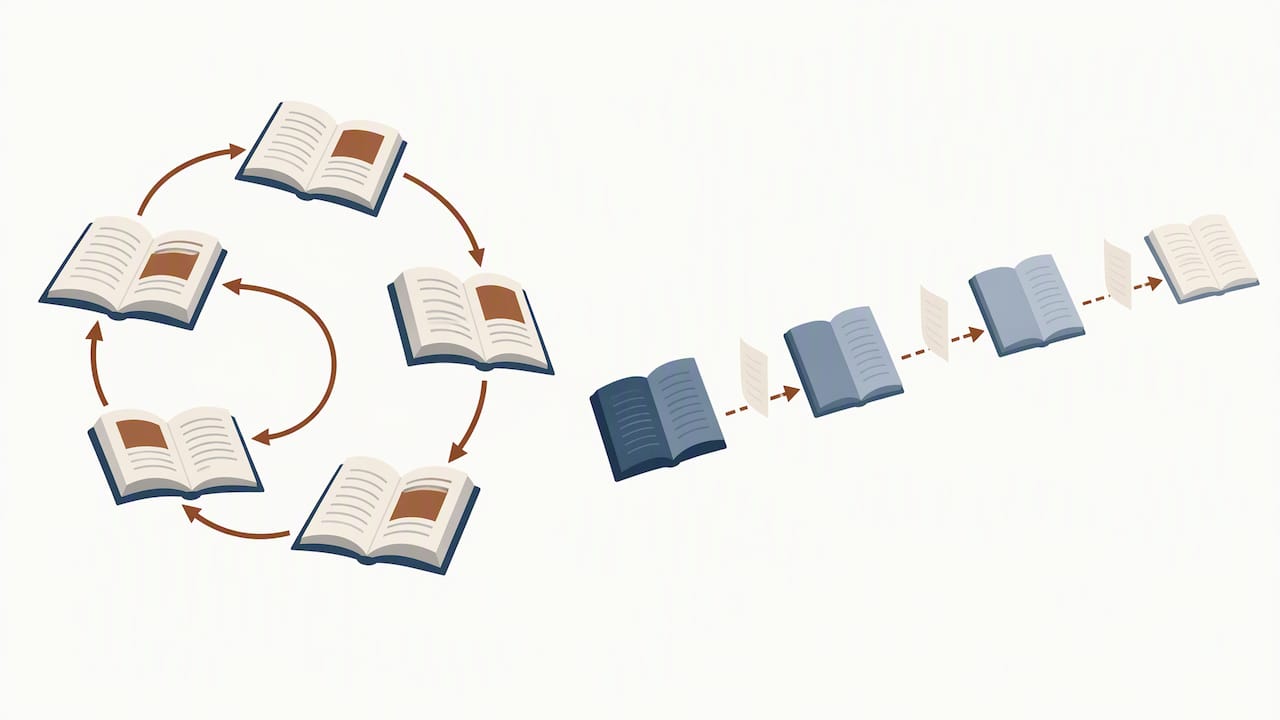
Readers dynamically shift their trust in a narrator as a story unfolds, and a recent mixed-methods study on reader responses to unreliable narration found that the order in which information arrives changes how much suspicion a reader attaches to a narrator’s claims. That has a practical consequence: a book that reveals its narrator’s unreliability early invites you to read for how the distortion works, while one that saves the reveal for a twist invites you to read for whether you can catch it first.
Self-deception and traumatic distortion tend to produce slower, more introspective books built for close rereading. Deliberate lying and limited cognition tend to drive plot-forward thrillers where the pleasure comes from catching the gaps in real time.
3. Spoilers and reading strategy: research freely or go in blind?
Some unreliable narrator novels announce their unreliability on page one; others hinge entirely on a reveal you do not want spoiled. Sorting your reading list by this distinction saves you from accidental spoilers while still letting you prepare for the books that reward preparation.
Safe to research before reading:
- “The Remains of the Day,” “The Catcher in the Rye,” and “House of Leaves” declare their narrators’ limitations early, so background reading adds context rather than ruining a reveal.
- “Pale Fire” and “The Sound and the Fury” are structurally unconventional enough that knowing the setup in advance makes the first chapters easier to follow.
Better to avoid spoilers:
- “Gone Girl,” “We Were Liars,” and “Shutter Island” depend on a late turn that changes how every earlier chapter reads, so reviews and plot summaries are worth skipping.
- “Fight Club” belongs in this group too, since its structural twist is the whole engine of the book.
Pro Tip: Read the first chapter of a suspected twist-driven book as a free preview before buying, since a few pages of voice usually tell you whether the narrator’s tone is hiding something without giving away what.
When you do want secondhand opinions, search for “spoiler-free review” rather than a general discussion thread, and stop reading the moment a comment references “the ending” or “the reveal.”
4. Matching your mood and available time to the right pick
Quick reads for a single sitting or a weekend:
- “The Tell-Tale Heart” delivers its entire unreliable confession in under thirty minutes and suits anyone who wants concentrated intensity without a time commitment.
- “Detective Harry Smark (Night Life Book 1),” available with a preview chapter, moves at thriller pace and fits a reader who wants noir doubt without a long investment.
Dense literary fiction for slower, rereadable sessions:
- “Pale Fire” and “The Sound and the Fury” both reward multiple passes and suit readers who enjoy puzzling out form as much as plot.
- “The Remains of the Day” asks for patience with a quiet narrator whose self-deception unfolds gradually rather than through incident.
Binge-friendly series for readers who want to stay with one voice:
- The Detective Harry Smark series, including Detective Harry Smark (The Vault’s Echo Book 2), previewable here, gives you a recurring narrator whose reliability keeps shifting across installments.
- Readers who finished Gillian Flynn’s catalog and want more of the same tension can check our list of authors like Gillian Flynn with preview chapters for similar voices in a similar register.
5. Why trust this guide: curation and publisher previews
This list comes from pairing established literary unreliable narrators with newer thriller titles that use the same device, so that readers moving between the two traditions have a map rather than a cold start.
- Every original title in this guide offers a preview chapter, so you can judge the narrator’s voice before paying for the full book.
- The catalog stays narrow by design, covering thriller and horror rather than spreading across every genre, which keeps each recommendation closer to a direct match.
- In-house titles like “ELVIS DIED I WAS THERE” and both Detective Harry Smark books sit alongside classic picks specifically so a reader who liked Nabokov’s unreliable narrators has a contemporary thriller equivalent to try next.
Preview chapters exist precisely because that gap can be hard to judge from a cover description alone, and sampling the first pages tells you more about a narrator’s trustworthiness than any summary can.
6. When unreliable narration is most satisfying
The best unreliable narrator books earn their twist rather than ambush you with it. The pleasure is retrospective: you finish, think back over the early chapters, and realize the clues were visible the whole time. That second read, even if it is only a mental rewind rather than a literal reread, is where most of the payoff lives.
I’d rather recommend a book that rewards a careful reread than one that only works once. When you discuss these books with other readers, lead with the narrator’s mode of unreliability rather than the reveal itself. It keeps the conversation useful without ruining the discovery for someone else, and it is also why sampling a preview chapter before committing tends to save you from the wrong book at the wrong moment.
— lorraine
7. Try preview chapters and exclusive originals from ThrillerHorrorSuspense.store
We built our catalog around one specific frustration: buying a thriller only to find the narrator’s voice does not land for you. 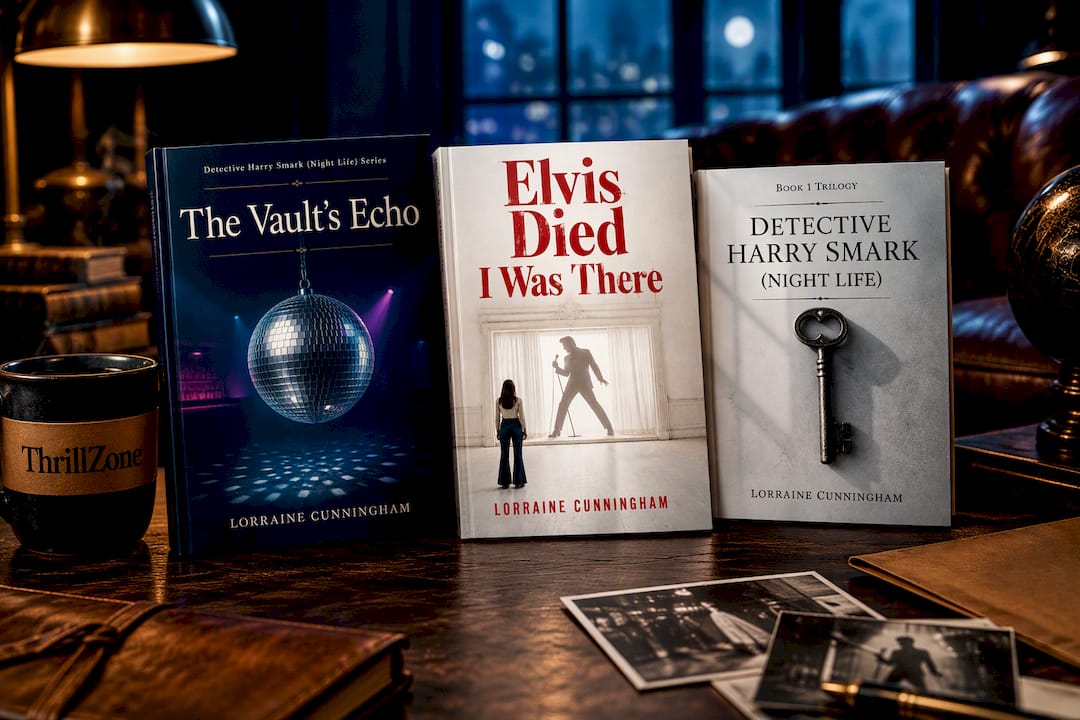
Our storefront lets you read a sample chapter of original titles before you buy, helping you judge an unreliable narrator’s voice firsthand instead of guessing from a blurb. The catalog stays focused on thriller and horror, so every title you browse is already in the genre you came for.
- Detective Harry Smark (The Vault’s Echo Book 2) continues the series with the same narrator further off balance, sample it first.
- ELVIS DIED I WAS THERE follows a narrator whose claims grow stranger the closer you look, read a preview chapter.
Browse the full E-BOOKS collection to start sampling, and download your pick instantly once you find the voice that fits.
FAQ
What is an unreliable narrator in fiction?
An unreliable narrator is a storyteller whose account the text itself does not fully endorse, a term coined by Wayne C. Booth and explained in the Oregon State guide to literary terms. Readers have to read past the narrator’s bias, memory gaps or outright lies to recover what actually happened.
What book does Stephen King regret writing?
Stephen King asked that his novel “Rage,” published under the pen name Richard Bachman, be taken out of print after it was linked to real-life school shootings, a decision detailed in Slate’s reporting on the book’s history. The withdrawal is often cited as an example of an author pulling a work for public-safety reasons rather than literary ones.
What is the most controversial book of all time?
There is no single agreed-upon answer, since controversy depends on era, culture and context, and claiming one definitive title would overstate what any source actually establishes. Works get labeled controversial for very different reasons, from banned content to real-world harm linked to a book’s reception, as with the Stephen King example above.
What are some movies with unreliable narrators?
Film adaptations of unreliable narrator novels, along with original screenplays built on the same device, use techniques like twist reveals, shifting flashbacks or narration that contradicts what the camera shows. The underlying device matches what you find in print: a narrator whose account the story eventually undercuts, which is the same definition that applies to unreliable narration in fiction.
How do I know if a narrator is unreliable?
Look for gaps between what a narrator claims and what other characters or events in the story suggest, since detecting unreliability is partly an interpretive act readers perform as they go. Signs include inconsistent details, a narrator who other characters openly doubt, or a voice that seems too insistent on its own version of events.
Sources
- What is an Unreliable Narrator? || Oregon State Guide to Literary Terms | Oregon State University
- (Un)Reliability in Narrative Discourse: A Comprehensive Overview | Poetics Today | Duke University Press
- Empirical study on reader responses to unreliable narration (MDPI)
- Stephen King wrote a book about a school shooter. Then it allegedly inspired several real-life shootings. (Slate)
Recommended
- Preview Chapters Let Avid Readers Sample Dark Academia Thrillers
- Decide in 4 Checks: Thriller vs Horror for Readers (Preview Chapters)
- Preview Chapters First: 12 Domestic Thrillers, 3 Exclusive Previews – Thriller Suspense
- Use Preview Chapters to Pick Publisher Curated Tech Thriller eBooks