Gothic horror books trade jump scares for dread: crumbling houses, buried secrets, isolation and a past that refuses to stay buried. If you want one place to begin, read Dracula, Frankenstein or The Haunting of Hill House for the foundations, then move to a modern gothic novel that borrows the same machinery. This guide explains what the genre is, which books earn their reputation, how modern gothic horror differs, and how to choose a first read without wasting money.
TL;DR
- Gothic horror is built on atmosphere: decaying settings, isolation, and the weight of the past, not gore or constant shocks.
- The core canon is Frankenstein (1818), Dracula (1897) and The Haunting of Hill House (1959). Start there if you want the roots.
- Modern gothic horror reuses classic motifs, like the haunted house or the doppelgänger, to talk about trauma, technology and identity.
- Pick by mood, not by label: slow-burn and psychological, folk-tinged, or body-focused all live under the gothic umbrella.
- Preview before you buy. A chapter tells you more about a gothic book’s pacing and prose than any blurb.
Table of Contents
- What makes a book gothic horror
- The classics worth reading first
- Modern gothic horror: what changed and what didn’t
- How to choose your gothic horror book by mood
- What is the scariest gothic novel?
- Our perspective: read the first chapter, then decide
- Where to find gothic e-books to preview and buy
- A simple reading path for your first three gothic books
- FAQ
- Sources
What makes a book gothic horror
The genre is old, and its rules are looser than most readers expect. Britannica describes gothic fiction as a move from the ordered everyday world into a dark region of dread, where decay is everywhere and death is always close. It dates the genre’s origin to around 1764 and Horace Walpole’s The Castle of Otranto, and places its rise in the late 18th century as a reaction against the Age of Reason.
In practice, you can spot a gothic horror book by a handful of ingredients:
- A setting with a personality. A mansion, castle, estate or moor that feels like it has opinions about the people inside. Collider’s ranking points out that places such as Manderley in Rebecca or Hill House act almost like characters working against the protagonist’s sense of self.
- Atmospheric dread over physical horror. The Ann Arbor District Library’s staff picks frame gothic horror as a genre where decaying environments and supernatural elements explore characters’ psychological and emotional states, with themes like death, isolation and feeling overwhelmed.
- The past pressing into the present. Family curses, inherited sins, a first wife’s shadow, a house that remembers.
- Psychological insecurity. The uncanny matters more than the monster. You often can’t tell whether the threat is supernatural or in the narrator’s head.
- Documents and voices. Letters, journals and found papers remain a hallmark. According to Collider, the epistolary format adds authenticity and intimacy, making you feel like a witness to forbidden events.
One caution: scholars themselves resist a tidy definition. The Oxford Research Encyclopedia entry on the contemporary Gothic notes that works under the Gothic umbrella vary so much in style and theme that a single overarching definition becomes problematic. That is good news for readers. It means the label covers a wide range of moods, and you can shop for the one that suits you.
The classics worth reading first
Three books come up in nearly every serious list, and each shows a different side of the genre.
Frankenstein by Mary Shelley (1818)
The gothic as a story of ambition and abandonment. It is told through nested narration and letters, and its horror is moral as much as physical. Read it if you like dread that grows from a character’s choices.
Dracula by Bram Stoker (1897)
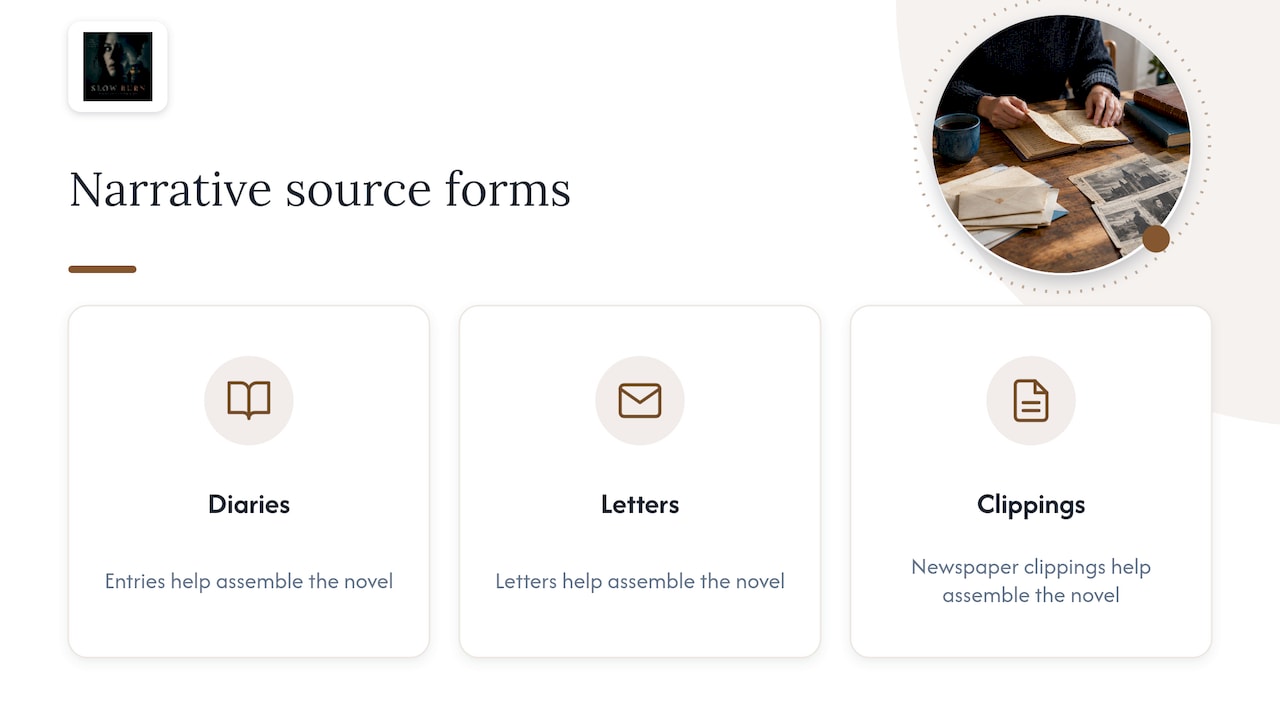
Stoker’s novel is assembled from diary entries, letters and newspaper clippings, which is the epistolary habit at its most effective. Its popularity is easy to measure: on Goodreads’ gothic horror shelf, Dracula carries an average rating of 4.03 across more than 1.5 million ratings, and Frankenstein sits right beside it as one of the most shelved titles.
The Haunting of Hill House by Shirley Jackson (1959)
If you want the best argument that a house can be a character, this is it. Jackson keeps the horror quiet and psychological, and the book is regularly named among the definitive works of the genre, alongside the two above, according to Collider.
Other classics, by what you want
| If you want… | Try | Why it works |
|---|---|---|
| A brooding estate and an unreliable inner life | Rebecca, Jane Eyre, Wuthering Heights | Setting and obsession do the haunting |
| A short, sharp, creepy read | The Turn of the Screw | Ambiguity: ghosts or a fraying mind? |
| Older vampire fiction | Carmilla (1872) | Predates Dracula and is compact |
| Duality and the divided self | Strange Case of Dr Jekyll and Mr Hyde (1886) | A doppelgänger story at novella length |
Carmilla and Jekyll and Hyde appear with their dates in the Wikipedia overview of gothic fiction, which traces how the genre evolved through these works. For a different editorial take on where to begin, the BBC’s list of eight gothic books, chosen by novelist Freya Berry, mixes classics with newer favorites.
Modern gothic horror: what changed and what didn’t
A reader asking for modern gothic horror usually wants the old atmosphere with a current nerve. The mechanics are familiar. The anxieties are new.
Academics describe the contemporary Gothic as a mode that keeps recycling historical fears to mirror present-day worries. The Oxford encyclopedia entry above treats it as an undying mode, not a fixed genre, one that reflects concerns about society, technology and identity. Xavier Aldana Reyes, writing in a study of gothic horror cinema, argues that this form stays popular because its familiar motifs, such as towering mountains, decaying estates and irrational passion, let audiences engage with history from a modern and often traumatized vantage point.
The Cambridge Companion chapter on the contemporary Gothic examines the enormous popularity of the Gothic in novels and film since the Second World War. Related branches, including folk horror, eco-gothic and queer Gothic, repurpose classic tropes like the haunted house and the double.
In plain terms, here is how modern gothic horror tends to differ from the classics:
- Pacing. Often tighter, with shorter chapters and more scene-level tension.
- Point of view. Narrators are more varied. Many modern gothic novels center characters the Victorian canon ignored.
- Targets of dread. Colonial history, family trauma, medicine, class and the body replace some of the older fears of the Church and the aristocracy.
- Settings. The estate may sit in 1950s Mexico, a Southern farmhouse or a contemporary suburb, but it is still a place that holds on to its dead.
If you loved Mexican Gothic and want more of that mood, our books like Mexican Gothic guide comes with a quick checklist for matching tone. Readers drawn to the haunted-house end of the spectrum can go straight to our gothic mystery novels for haunted house fans.
How to choose your gothic horror book by mood
“Gothic” is a wide room. These are the doors most readers actually walk through.
You want slow-burn dread
Choose books where the house or landscape does the work. Expect quiet, then a long, creeping wrongness. Hill House and Rebecca are the template. The staff list from the library mentioned earlier is a good model of what slow-burn gothic means in practice.
You want to be inside someone’s head
The unreliable narrator is a gothic staple. When you can’t trust the person telling you the story, every creak in the hall gets heavier. Our guide to psychological horror books by mood walks through how to match the flavor of unease to your taste. If you gravitate to modern authors, books like Stephen King for psychological horror fans is a natural next step.
You want the landscape itself to be the threat
Gothic and folk horror overlap where isolated places and old customs press on outsiders. Our folk horror reading list covers classics and newer regional voices.
You want the body to be the haunted house
Some modern gothic leans into flesh and transformation, which is an old gothic worry going back to Frankenstein. See our body horror picks to preview first for classic and modern options.
You want new voices in the canon
The genre’s history has been narrow, and its best current work is not. Our list of Black horror authors to read first includes preview chapters so you can sample the prose before you commit.
What is the scariest gothic novel?
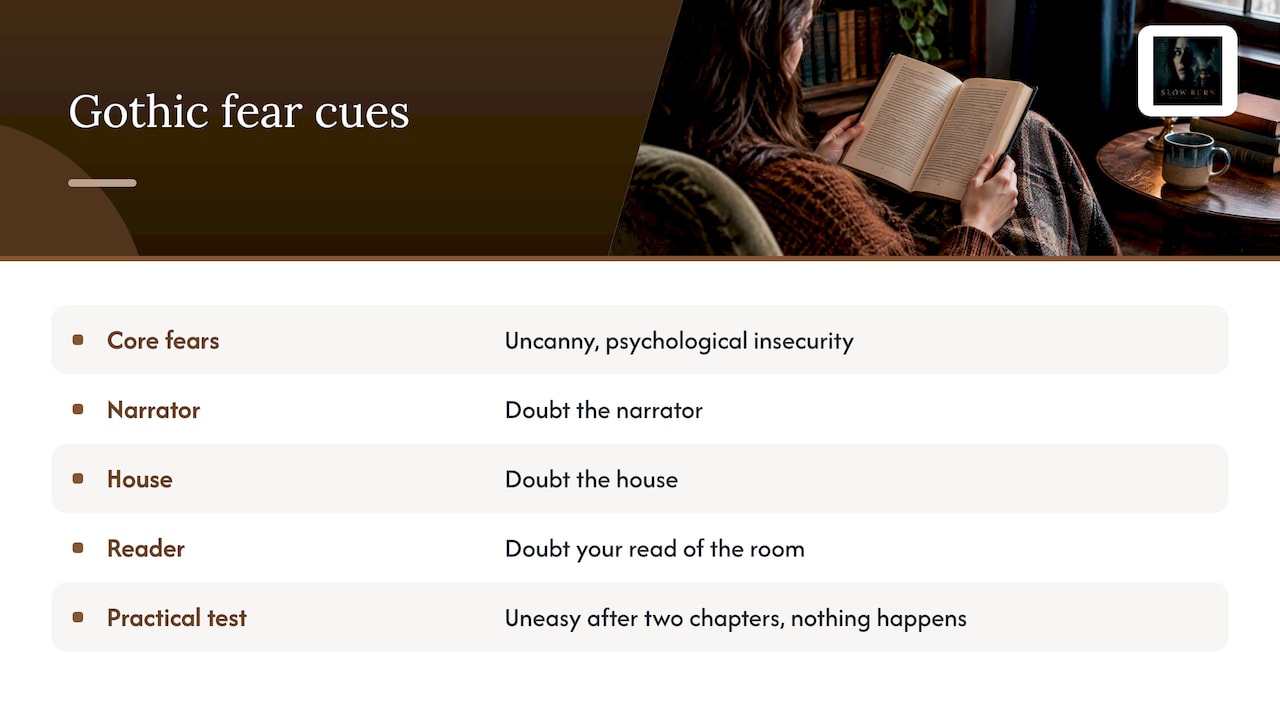
There is no single answer, because gothic fear is personal. But the experts’ pattern is consistent. Collider notes that the scariest gothic novels rarely rely on cheap thrills and focus on the uncanny and on psychological insecurity. If a book makes you doubt the narrator, doubt the house and doubt your own read of the room, it is doing gothic horror right.
A practical test: after the first two chapters, ask whether you feel uneasy even though nothing has “happened”. If yes, the book has understood the genre.
Our perspective: read the first chapter, then decide
We run a store that sells only digital horror, thriller and suspense e-books, so we see the same problem again and again. Gothic horror is the genre where a book’s blurb tells you the least. Two novels can both promise a haunted estate and a family secret, and one reads like a ghost story told by candlelight while the other races like a thriller. Neither is wrong. They just aren’t for the same reader on the same night.
That is why we built the store around previews. A chapter shows you the sentence rhythm, how long the author lingers on a room before something moves, and whether the dread is earned. In a genre built on atmosphere, those are the things that decide whether you finish the book.
Our advice to a first-time gothic reader:
- Read one classic for the roots and one modern book for the voice. The contrast teaches you what you like.
- Preview before buying, especially when the cover and description look identical to ten other books.
- Do not mistake slow for dull. If chapter one makes the hair on your arms stand up quietly, trust it.
- Follow the mood, not the label. If you like gothic but not heavy gore, say so when you browse, and choose accordingly.
We also like e-books for this genre for a plain reason: a gothic novel reads well at night on a screen with the lights down, and you can carry a whole haunted library with you.
— lorraine
Where to find gothic e-books to preview and buy
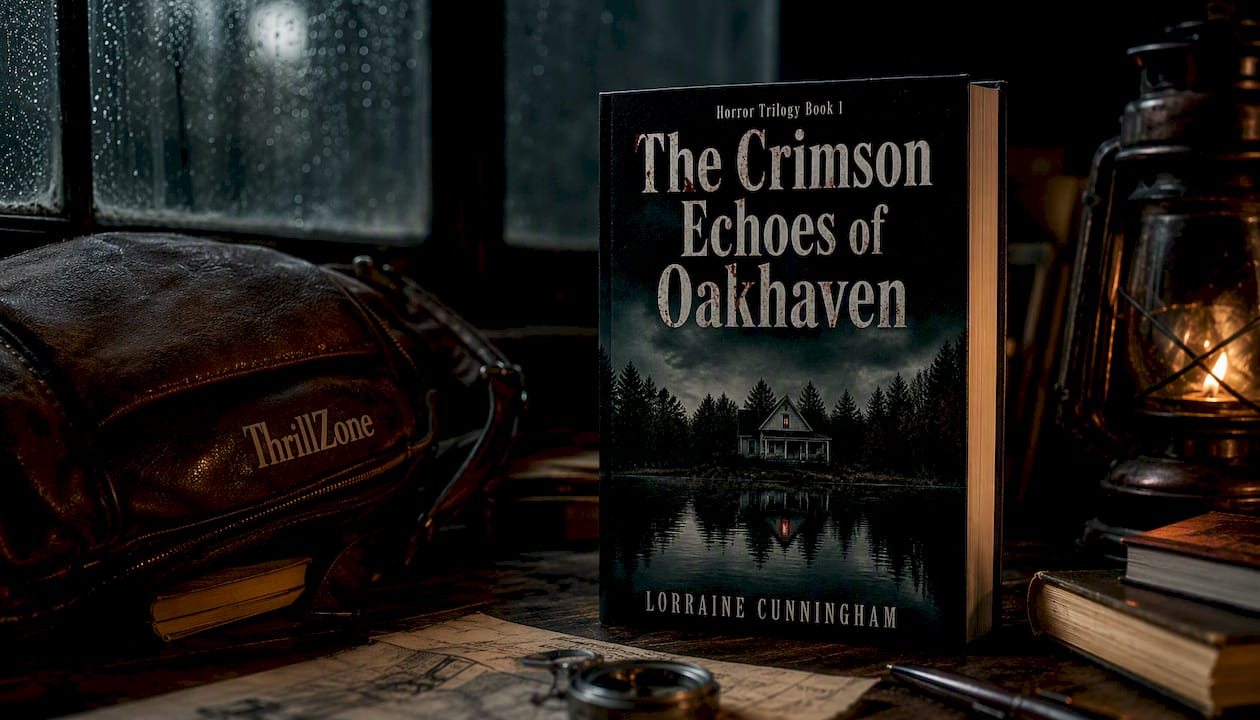
Our Horror collection and Thriller collection are where gothic-leaning reads live, since many gothic stories sit on the line between the two. You can browse by genre, open an exclusive preview chapter, and buy the e-book only if the first pages hook you. For a title with a gothic-sounding hook, try the preview for The Crimson Echoes of Oakhaven (Book 1) and see whether its voice suits you. You can also start from the main e-book store.
A simple reading path for your first three gothic books
If you would rather not choose at all, this path works for most readers.
- Book one: a classic short enough to finish. Carmilla or Jekyll and Hyde gives you the genre’s vocabulary in a weekend.
- Book two: a house story. The Haunting of Hill House or Rebecca shows you what a setting can do to a mind.
- Book three: a modern gothic novel in the mood you liked best. Preview two or three before picking, and let the voice decide.
If by book three you want more intensity, move toward psychological horror. If you want more landscape, try folk horror. If you want more mystery, go back to the haunted house mysteries. The genre has room for all of it.
FAQ
What are the top gothic novels to read first?
Most lists agree on Frankenstein, Dracula and The Haunting of Hill House. Rebecca, Jane Eyre and Wuthering Heights also appear often for readers who like brooding estates and obsessive love. Start with whichever matches your mood: ambition and monsters, vampires and letters, or a haunted house.
Is gothic horror the same as gothic fiction?
They overlap heavily. Gothic fiction is the wider tradition, and the term gothic horror is used mostly for work that leans into fear and haunting, especially in the 20th century, according to the Wikipedia entry. In practice, shops and readers use the two labels interchangeably.
What counts as modern gothic horror?
Modern gothic horror keeps the classic motifs, such as decaying homes, family secrets and the uncanny, and applies them to current concerns like trauma, technology and identity. It often includes subgenres such as folk horror, eco-gothic and queer Gothic. The best way to see whether a modern title fits you is to read its first chapter.
Are gothic horror e-books worth buying?
Yes, if you can sample first. Gothic books depend on prose and mood, and a preview chapter shows both. On our store, exclusive preview chapters let you judge the voice before you purchase.
Sources
- Gothic fiction, Britannica Kids
- 10 Best Gothic Horror Books of All Time, Collider
- Staff Picks: Slow-Burn Gothic Horror Reads, Ann Arbor District Library
- The Contemporary Gothic, Oxford Research Encyclopedia of Literature
- Contemporary Gothic Horror Cinema, Taylor & Francis
- The contemporary Gothic, Cambridge Companion to Gothic Fiction
- Gothic Horror Books, Goodreads
- Gothic fiction, Wikipedia
- The eight best gothic books of all time, BBC Culture
Recommended
- Folk Horror Books: Classics, New Regions, and a Preview Chapter
- Pick Cosmic Horror in 5 Minutes: Formats and Previews for New Readers
- 10 Mood Driven Books for Mexican Gothic Fans and a 5 Minute Checklist
- Japanese Horror Novels: Where to Start, What to Read Next