A noir thriller is a crime or suspense story where the darkness comes from the people in it, not just the plot. Desire, money, obsession and a bad decision made for an understandable reason push an ordinary person toward ruin. Neo-noir is the same instinct carried past the classic era into color, new settings and modern institutions. Below you will find how to spot the real thing, a starter canon, the modern branches, and how to pick a noir you will actually finish.
TL;DR
- Noir is defined by moral entrapment and fatalism, not by shadows, rain or a trench coat. If the hero’s own want is what destroys them, you are in noir territory.
- “Film noir” was named in 1946 and usually refers to a Hollywood cycle from roughly 1940 to 1960. Neo-noir is the later revival, and it often moves the threat from one bad lover to a corrupt system.
- Start with the classics (Hammett, Chandler, Cain), then branch into psychological, gothic and horror-tinged noir depending on your mood.
- Read a sample chapter first. Noir lives or dies on voice, and you can tell within a few pages.
Table of Contents
- What a noir thriller actually is
- Noir versus neo-noir
- A starter canon on screen
- Reading noir: where to begin on the page
- How to spot a good modern noir thriller
- Our perspective on noir
- Try a noir-leaning read before you buy
- Watch, then read: pairing ideas
- FAQ
- Sources
What a noir thriller actually is
Strip away the cliches and a noir thriller is a suspense or crime story built around moral ambiguity, fatalism, obsession, betrayal, corruption and compromised choices. It often uses a fractured timeline, an unreliable narrator or an expressionist, heightened atmosphere. That summary tracks how Criterion’s Imogen Sara Smith treats noir: less a rigid genre than a flexible set of plot, theme, visual and narrative conventions.
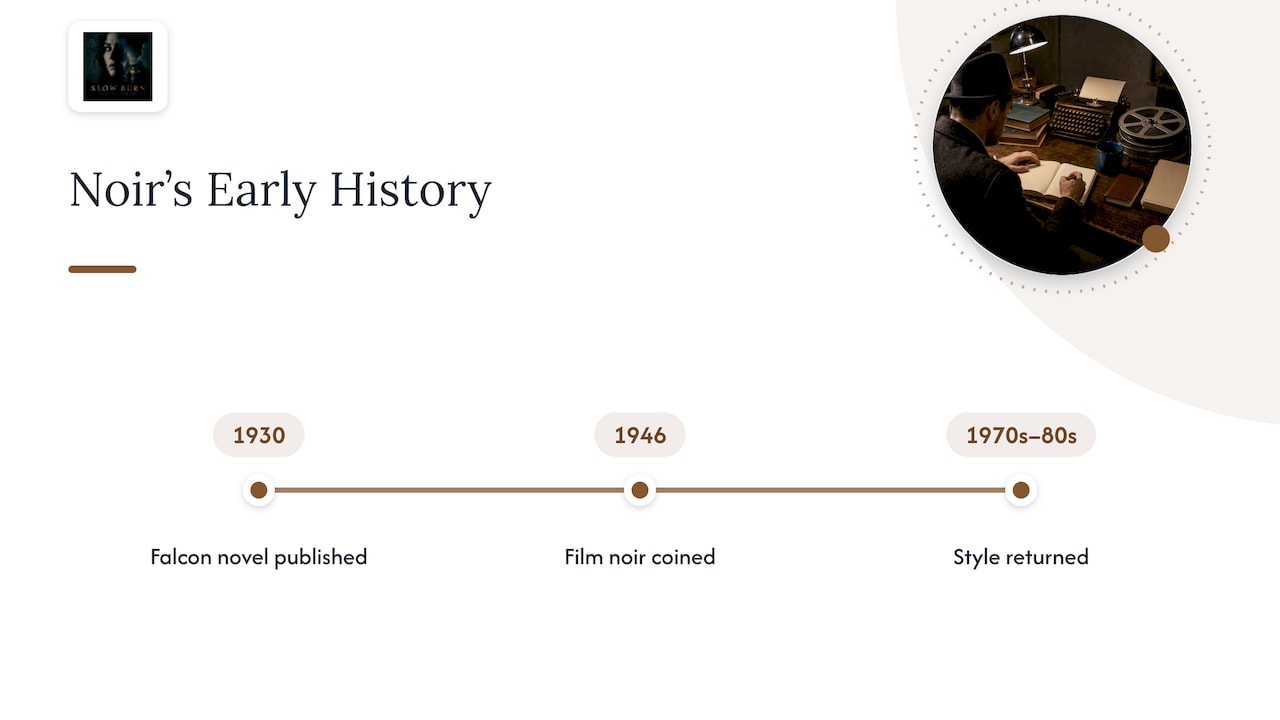
The term itself is older than most people think. Critic Nino Frank coined “film noir” in 1946, describing a wave of dark American films, and the classic cycle is generally placed around 1940 to 1960. The BFI describes it as a particular cycle of cynical American crime films, whose style later crossed to Britain, France and beyond and came back in the 1970s and 80s.
That last point matters for readers. Noir was a film label first, but the fiction came before and fed it. Hammett’s The Maltese Falcon appeared in novel form in 1930, years before the film cycle, and James M. Cain’s work supplied some of its best-known plots.
The one-question test
Wondering whether a book counts? Ask what ruins the protagonist. In a plain crime story, a villain does. In noir, the protagonist’s ordinary desire (money, status, sex, escape, professional success) becomes the mechanism of their downfall. The Library of Congress essay on Ace in the Hole argues the film almost demands an honorary expansion of the term: no private eyes in seedy offices, no neon-lit doorways, yet unmistakably noir. The darkness is psychological and institutional, not nocturnal.
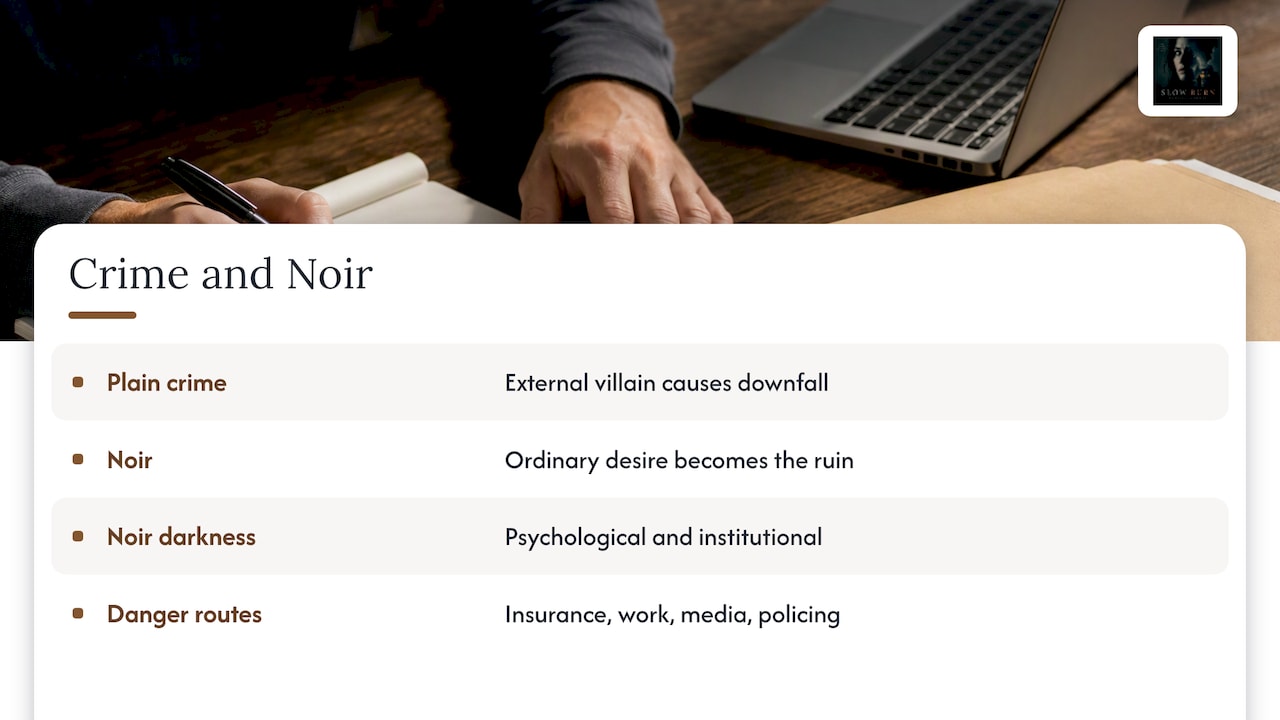
The same Library of Congress writing on Double Indemnity gives a second clue. Cain’s story was not really a mystery but a steamy drama about a man’s self-deception, and the film preserved the idea of the protagonist investigating himself. Noir cynicism beats reassurance, and everyday systems such as insurance, work, media or policing turn into routes into danger.
Noir versus neo-noir
Readers type both terms, and the line between them is blurry on purpose. A workable rule:
| Classic noir | Neo-noir | |
|---|---|---|
| Rough period | 1940s to 1950s | 1970s to today |
| Typical threat | A lover, a partner, a bad deal | Corporations, politics, the state |
| Look and tone | Black and white, urban night | Color, daylight, small towns, suburbs |
| Hero | Private eye, drifter, insurance man | Cop, journalist, ordinary professional, sometimes no detective at all |
| Ending | Doom, often earned by the hero | Doom, or a victory that costs everything |
The classic cycle runs roughly 1940 to 1959, as Rotten Tomatoes’ classic-noir guide frames it. Neo-noir widens the fear. Vulture’s neo-noir list points to The Parallax View, usually filed as a political thriller, where corporations and political systems are the source of dread. The BFI’s survey of 1990s neo-noir shows L.A. Confidential and Basic Instinct updating corruption, sexuality and unreliable identity for a newer audience.
If you want a mood shortcut: classic noir says you cannot trust the person you love. Neo-noir adds that you cannot trust the building you work in.
A starter canon on screen
Most people searching this topic want to watch, and the films make good reading companions because many were adapted from novels. This is a balanced viewing list, not a single objective ranking. Rotten Tomatoes’ guide puts Laura, Shadow of a Doubt, The Maltese Falcon, The Third Man, Sunset Boulevard, Sweet Smell of Success, Strangers on a Train, Kiss Me Deadly, Detour and Double Indemnity in its top ten by Tomatometer. The BFI canon adds Out of the Past, The Big Heat, Touch of Evil and Murder, My Sweet.
Twenty titles that cover the range:
- The Maltese Falcon (1941)
- Shadow of a Doubt (1943)
- Laura (1944)
- Double Indemnity (1944)
- Detour (1945)
- The Big Sleep (1946)
- Out of the Past (1947)
- The Third Man (1949)
- Sunset Boulevard (1950)
- In a Lonely Place (1950)
- Strangers on a Train (1951)
- Ace in the Hole (1951)
- The Narrow Margin (1952)
- The Big Heat (1953)
- Pickup on South Street (1953)
- Kiss Me Deadly (1955)
- Night of the Hunter (1955)
- The Killing (1956)
- Sweet Smell of Success (1957)
- Touch of Evil (1958)
A few are worth a note. Detour is, in a Criterion essay, called one of the most disorienting B movies ever made, a reminder that noir thrives on low budgets and squalor. Night of the Hunter and In a Lonely Place show how far the label stretches into gothic menace and psychological drama.
Reading noir: where to begin on the page
The fastest way into noir fiction is the founding trio of American hard-boiled writers.
- Dashiell Hammett. The Maltese Falcon (1930) is the cleanest origin point for the private-eye archetype, per this overview of essential noir novels.
- Raymond Chandler. The Big Sleep introduced Philip Marlowe, and the same overview praises its dialogue. Chandler also co-wrote the Double Indemnity screenplay with Billy Wilder, as the Library of Congress essay notes.
- James M. Cain. Double Indemnity and The Postman Always Rings Twice are short, fast and unforgiving. If you want the “ordinary desire becomes a trap” structure in its purest form, start here.
After that, the useful question is not “which noir is best” but “which kind of dread do I want tonight.” Noir has a lot of cousins, and several are easy to find in a modern thriller catalog.
If you like unreliable minds
Noir has always been suspicious of the narrator. When the person telling you the story is hiding something from you, or from themselves, the genre overlaps heavily with unreliable narrator books. Look for first-person confessions where the narrator keeps explaining why they had no choice.
If you like cops and killers
The hard-boiled detective grew into the modern investigator, and the moral weight stayed. Our list of serial killer thrillers with detectives is the closest we have to modern police noir: tired professionals, institutions that do not help, cases that cost more than they pay.
If you like it quiet and domestic
Noir moved indoors a long time ago. Betrayal, money and hidden lives in a marriage are noir material, which is why a roundup of twelve domestic thrillers overlaps with it more than people expect.
If you like it gothic or haunted
The Library of Congress and Criterion pieces both stress that noir is flexible, which is why horror-noir hybrids belong in the conversation. Our picks of gothic mystery novels for haunted house fans and psychological horror books by mood are good hunting grounds when you want fatalism with a supernatural or psychological edge.
If you want it short
Noir’s natural length is short. Cain’s books are lean, and tight plotting suits the form. For an evening-sized dose, try our thriller novellas you can finish in one sitting.
How to spot a good modern noir thriller
Cover copy will call almost anything “noir” now. These checks save you time.
- Is the hero complicit? The best noir protagonists made at least one choice they could have refused. If they are purely a victim, it is probably a standard thriller.
- Does an institution lean on the story? Insurance, a newsroom, a police force, a company, a church. Noir reads social pressure as plot.
- Is the ending honest? Noir does not owe you justice. A story that ties everything up warmly is borrowing the costume.
- Is the voice doing work? Flat, sardonic or confessional narration carries a lot of the genre’s pleasure. Style is not decoration here.
- Does it still work in daylight? Because noir can work in color, outside the city and without a detective, a sunlit small-town setting is not a red flag. It can be a good sign.
A common mistake is treating every dark thriller as noir. A gruesome slasher with a clear villain and a clean resolution is horror or a thriller. A quiet story of a bookkeeper who skims a little, then a little more, is noir.
Our perspective on noir
We run a store built only around thrillers, horror and suspense, and noir is one of the places where those three genres keep meeting. Here is how we think about it.
First, readers rarely need a definition. They need a way to avoid a bad match. “Noir” on a cover can mean a hard-boiled detective, a slow psychological spiral or a ghost story with a cynical streak, and those are very different evenings. That is why we put sample chapters on the site: noir is a voice-first genre, and a few pages tell you more than any description.
Second, we think the best way to explore noir is sideways. Start with one classic, then follow what you enjoyed: the narrator’s unreliability, the doomed investigator, the household that hides everything. The genre labels in our thriller and horror collections are starting points, not fences.
Third, be generous with the definition. The critics we cite disagree about the edges of noir, and that disagreement is part of the fun. If a book gives you moral entrapment and a sense that the walls are closing, you can call it noir without anyone checking your papers.
— lorraine
Try a noir-leaning read before you buy
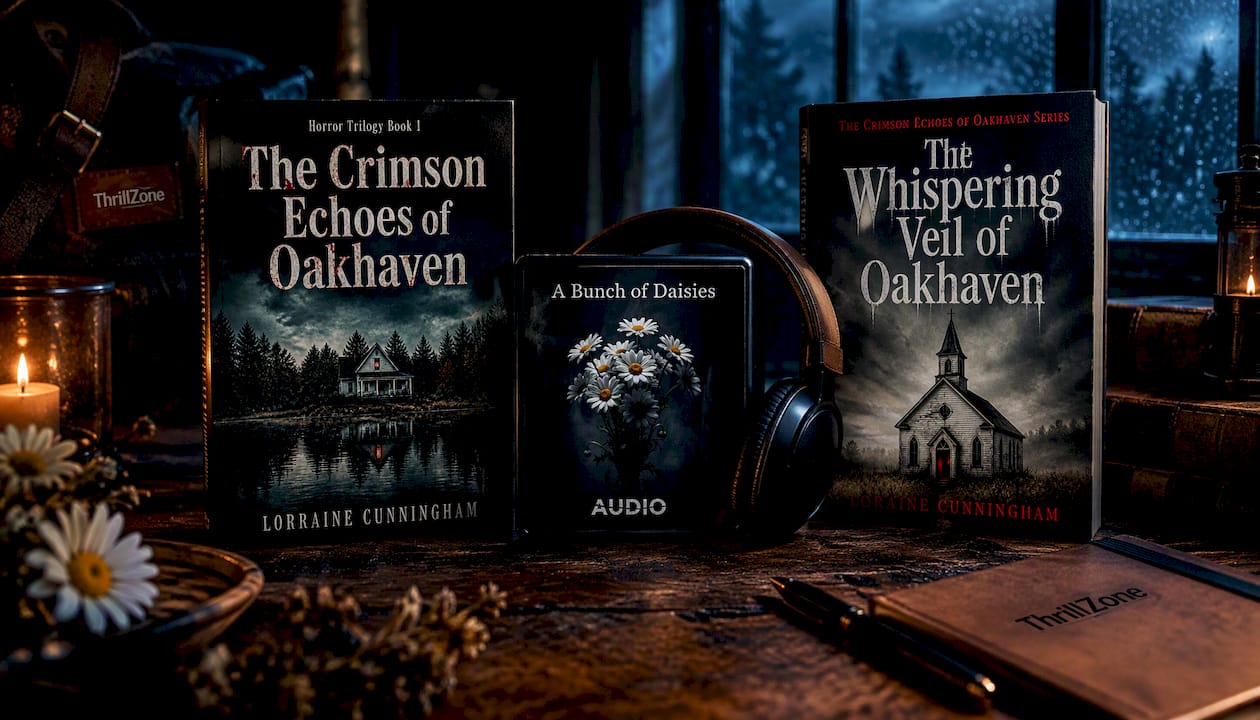
We sell digital thriller, horror and suspense e-books only, and each title can be previewed with sample chapters before you commit. That matters for noir more than most genres, because you will know in a few pages whether the narrator’s voice is one you want to spend a weekend with. Browse the thriller collection for investigators, obsession and slow-burn dread, or the horror collection for darker, stranger fatalism. You can also start from the main e-book catalog.
Watch, then read: pairing ideas
A pleasant way to deepen the genre is to pair a film with a book that shares its mechanism.
- After Double Indemnity, read something where a respectable professional talks himself into a crime.
- After Ace in the Hole, look for a thriller where media or officialdom feeds the disaster.
- After The Parallax View, pick a conspiracy story where nobody can say who is really in charge.
- After Night of the Hunter, try a gothic or rural thriller where menace wears a friendly face.
This keeps you reading the structure, not just the surface, and it is how you get from “I like noir” to “I know which noir I like.”
FAQ
What is a noir thriller?
It is a suspense or crime story driven by moral ambiguity, fatalism, obsession and betrayal rather than by a simple good-versus-evil chase. The protagonist’s own desires usually become the trap. The label covers classic 1940s and 1950s work and later neo-noir.
What is the difference between noir and neo-noir?
Classic noir refers to the roughly 1940 to 1960 Hollywood cycle and the hard-boiled fiction around it. Neo-noir revives those themes later, often in color and with institutions, corporations or politics as the source of menace. Many critics and readers use the two terms loosely, so treat the line as a guide.
Does a noir thriller need a detective?
No. The Library of Congress essay on Ace in the Hole notes that film has no private eyes or femmes fatales yet still reads as noir. What matters is the doomed choice, the cynical worldview and the pressure from the surrounding system.
Where should a new reader start with noir fiction?
Pick one of the founding hard-boiled writers: Hammett’s The Maltese Falcon, Chandler’s The Big Sleep or Cain’s Double Indemnity. Then follow your taste into psychological, domestic or gothic territory, and preview a chapter of anything modern before buying.
Sources
- Is The Red Shoes a Film Noir? Criterion Current
- Some Detours to Detour, Criterion Current
- 10 great film noirs, BFI
- 10 great American neo-noirs of the 1990s, BFI
- 100 Best Film Noir Movies Ranked by Tomatometer, Rotten Tomatoes
- The Best Neo-Noir Movies, Vulture
- Double Indemnity, Library of Congress
- Ace in the Hole (1951): Noir in Broad Daylight, Library of Congress
- Best Noir Books: 25 Classic Noir Novels
Recommended
- Start Here: 20 Serial Killer Thrillers, 10 Series, Plus Paired Ebooks
- Finish Thriller Novellas in One Sitting: Curated Picks with Previews
- Preview Chapters First: 12 Domestic Thrillers, 3 Exclusive Previews